
Kosovo and anrline: Establishment possible, sustainability uncertain
In his policy address to the Kosovo Assembly ahead of the election of the current government, Kosovo Prime Minister Albin Kurti announced the launch of a process to establish an airline with public capital. According to Kosovo Online’s interlocutors, establishing such an airline is possible, but they warn that the existence of a market alone does not guarantee successful operations. They identify high costs, strong competition, political and regulatory obstacles, as well as the need for qualified personnel and a sustainable business model, as the main challenges.
Written by: Slobodan Cagic
“During this term, we will launch the process of establishing an airline with public capital, in partnership with experienced companies from the country and abroad,” Kurti announced in his policy address on September 13, 2026.
This is not the first time the establishment of an airline has been proposed in Kosovo. In 2017, during the government of Ramush Haradinaj, the possibility of establishing a state-owned carrier was considered, with the name “Air Kosova” also being mentioned at the time.
Then-Infrastructure Minister Pal Lekaj said that he was consulting experts and that work on the project would be approached more seriously during 2018. The initiative, however, did not result in the establishment of a licensed carrier.
The idea resurfaced in the LDK’s 2025 election platform, which proposed a mixed public-private ownership model and an initial investment estimated at €170 million. That figure was part of the party’s proposal rather than an official government estimate.
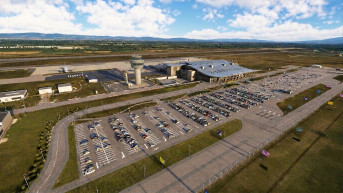
Passenger numbers at Pristina Airport indicate a substantial market. In 2025, Adem Jashari International Airport handled 4,600,484 passengers, an increase of 13 percent compared with the previous year. According to Civil Aviation Authority data, the busiest destinations were Basel, Zurich and Dusseldorf.
Kosovo Online contacted the Kosovo Civil Aviation Authority with questions regarding the regulatory, technical, financial and staffing requirements for establishing an airline, the necessary licenses and certificates, and potential restrictions on its operations. We did not receive a response. The Authority confirmed to Radio Free Europe that the legislation currently in force does not prohibit the establishment of an airline with public capital, but that before launching commercial flights it would have to obtain an Air Operator Certificate and an operating license.
We also submitted questions to the Office of the Prime Minister of Kosovo regarding estimated costs, the financing model, potential private partners, the timeframe for launching the project, expected benefits, and plans for the education and training of qualified personnel. We received no response from the Prime Minister’s Office either.
Public-private partnership the only sustainable model
Pristina-based economist Shkumbin Misini told Kosovo Online that establishing an airline in Kosovo could be sustainable only through a public-private partnership, with leased aircraft and professional management. However, he stressed that no private consortium has so far publicly announced plans to invest capital in such a project.
“The most concrete interest from the business sector has come from major travel agencies in Pristina, which already dominate the diaspora travel market. In 2025, Play announced that talks were already at an advanced stage on launching a virtual airline based in Kosovo together with the three largest travel agencies in Pristina,” Misini said. He sees the state, local tour operators and a foreign airline that would provide aircraft and expertise as potential founders.
According to Misini, a new carrier would have to compete with airlines that already have established route networks and greater capacity.
“An airline with several leased aircraft and a focused route network serving Switzerland, Germany and Scandinavia could operate without losses. That would only be possible if the airline were run on a commercial basis, without politically motivated hiring or unprofitable routes introduced for prestige,” Misini said.
Regarding the role of institutions, he believes the state should primarily create the conditions for doing business, provide an appropriate regulatory framework and support the training of pilots and technical personnel. In his view, incentives should be temporary and tied to specific results, such as new destinations, lower ticket prices and job creation.
If the state were to invest public funds, Misini proposes that it hold a minority stake alongside a strong private and foreign partner, with a transparent selection process and an independent board of directors.
“The worst possible outcome would be to establish an airline run by political appointees and dependent on the state budget year after year. The state’s job is to create the right conditions; the business itself should be run by people who know how to manage an airline,” Misini concluded.
Political framework as a key obstacle
Former JAT Director General and Centavia founder Predrag Vujovic recalled that establishing a national airline once carried symbolic significance as well.
“In the last century, when African countries were gaining independence, the key things were to create a flag, an anthem and an airline. Everyone had their own airline, and that was how a country demonstrated its existence as a state. That principle and that mentality disappeared a long time ago. It turned out to be extremely expensive, irrational and to bring no real benefit,” Vujovic told Kosovo Online.
His experience with Centavia, which he launched in the mid-2000s, showed him that even a well-prepared project did not guarantee survival if political circumstances were not taken into account.
“We did everything, as they say, by the book, exactly as the profession requires. However, we failed to anticipate the political factors that were present at the time,” Vujovic said.
When it comes to Kosovo, he does not rule out the possibility of securing the necessary funding, aircraft and qualified personnel, but believes that the international status of a future carrier would first have to be clarified.
“Who is establishing the airline? What certificates will it operate under? What happens with an airline bearing Kosovo’s name and holding a Kosovo-issued AOC when it comes to countries that do not recognize Kosovo? What does that mean? What repercussions would there be? How would it operate, and what would happen when it needs to lease certain equipment or even an aircraft from a third party, which is something that will inevitably happen in the course of operations? How would that affect the airline’s operations? That is one of the first questions that needs to be addressed,” he said.
Vujovic warned that aviation was an extremely expensive business, but that funding and personnel were not the only issues that needed to be resolved.
“Finding engineers, commercial staff, flight attendants and pilots is the easier part. It is not simple, but it can be done. What needs to be resolved before anyone even considers establishing an airline is the political framework and whether you will be treated on an equal footing with any other airline in Europe,” Vujovic concluded.
Gradual development of in-house capabilities
Retired captain Slobodan Petrov told Kosovo Online that one possible model for Kosovo would be cooperation with an existing carrier. Such an airline would initially operate the flights while the local partner developed its own brand, sales network and professional capabilities.
“I would particularly consider initial cooperation with an existing airline through a wet-lease arrangement, including aircraft, crew and associated services, or an appropriate charter arrangement, preferably using the type of aircraft planned for the airline’s future in-house fleet,” Petrov said.
According to his proposal, such an arrangement would enable the gradual training of local employees and transfer of expertise.
“An even more important element of such cooperation would be knowledge transfer and the practical training of local personnel through approved programs, the necessary supervision and appropriate authorizations. This would include flight crews, cabin crews, technical, operational, commercial and ground personnel,” he stressed.
As an example, Petrov cited his experience with Nigeria’s Sosoliso Airlines, whose launch he helped facilitate.
“We started with JAT’s DC-9 and its resources, and the airline subsequently developed a fleet of five aircraft, including the MD-83,” Petrov said.
Slobodan Petrov is a retired captain, instructor and type-rating examiner. During his career, he worked for JAT and later participated in the launch and development of airlines in Europe, Africa and Asia. At Centavia, he held a key position in the AOC certification process and crew training.
The market exists, but competition is strong
Tango Six editor Petar Vojinovic told Kosovo Online that establishing an airline in Kosovo was formally possible, but that finding a sustainable business model would be considerably more difficult. A significant proportion of passengers using Pristina Airport are members of the diaspora, meaning that, in his assessment, demand for a new carrier would largely be concentrated on a limited number of destinations in Western Europe.
“It is almost certain that this is essentially ethnic traffic involving a very limited number of destinations where, to put it simply, aircraft are consistently full flying from, for example, Kosovo to certain cities in Western Europe—Switzerland, Germany and other destinations where that population lives outside Kosovo,” Vojinovic said.
He pointed out that transfer and connecting traffic was already covered by traditional airlines, primarily the Lufthansa Group, while the largest share of direct traffic was handled by low-cost carriers.
One option, in his view, would be a model in which the Kosovo airline had its own brand while flights were operated by an existing licensed carrier.
“The simplest solution would be to hire someone else, paint the aircraft in national colors, call it a national airline and see how it goes,” Vojinovic concluded.




0 comments