
Misini: Public-private partnership the only viable sustainable solution for an airline in Kosovo
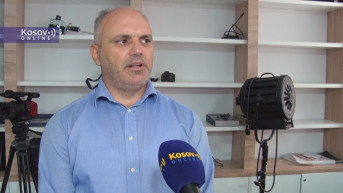
Pristina-based economics professor Shkumbin Misini told Kosovo Online that establishing a Kosovo airline could be sustainable if it were based on a public-private partnership, leased aircraft and professional management, with a limited role for the state. He identified strong competition, seasonal demand and political obstacles in air transport as the main challenges, warning that an airline run according to political rather than commercial criteria could become a permanent burden on the budget.
So far, no private consortium has publicly announced plans to invest capital in establishing an airline in Kosovo, and the initiative has largely come from the government, Misini stressed.
He recalled that Prime Minister Albin Kurti had announced that the process of establishing an airline with public capital would be launched during the new four-year term, but that the government had yet to publish a cost estimate, financing model or details of potential partners.
“The most concrete interest from the business sector has come from major travel agencies in Pristina, which already dominate the diaspora travel market. In 2025, Play announced that talks were already at an advanced stage on launching a virtual airline based in Kosovo together with the three largest travel agencies in Pristina,” Misini said.
In his assessment, the most realistic founders of such an airline could be the state as one of the shareholders, local tour operators as co-investors and a foreign airline that would provide aircraft and expertise.
“I believe the only sustainable path is a public-private partnership, with leased aircraft and professional management, rather than an airline financed entirely by the state,” Misini stressed.
Speaking about whether such an airline could operate without losses, Misini pointed to the significant number of passengers using Pristina Airport, but also to the specific characteristics of the market that a new carrier would have to take into account.
“The demand exists. Pristina Airport handled more than 4.6 million passengers last year, and its busiest destinations—Basel, Zurich and Dusseldorf—are largely linked to Kosovo’s ties with its diaspora. However, this reliance on the diaspora is also a problem: traffic is highly seasonal, passengers are price-sensitive, and existing carriers already serve the market well,” he explained.
Misini noted that a new carrier would have to compete with major low-cost airlines and other operators capable of rapidly increasing capacity.
“GP Aviation became the busiest airline at Pristina Airport in 2024, carrying just over 900,000 passengers and overtaking Wizz Air. As a former head of the Civil Aviation Authority pointed out, a Kosovo carrier would be competing against airlines with larger fleets, well-developed route networks and years of experience,” Misini said.
He also cited Slovenia as a cautionary example, noting that its national airline, Adria Airways, went bankrupt in 2019, three years after being privatized. Nevertheless, he believes that a carrier operating several leased aircraft and a focused route network serving Switzerland, Germany and Scandinavia could operate without losses, but only under certain conditions.
“That would only be possible if the airline were run on a commercial basis, without politically motivated hiring or unprofitable routes introduced for prestige, such as a direct flight to the United States. An airline with a large, state-funded fleet would almost certainly require permanent subsidies,” Misini said.
Regarding the role of institutions, Misini believes the state should primarily create the conditions for the airline to operate rather than act as its principal owner.
“The Civil Aviation Authority must first be prepared to certify a Kosovo air carrier quickly and in accordance with European standards, because we currently do not have a single airline with a domestically issued Air Operator Certificate. This also requires appropriate training for pilots and technical personnel, as well as stronger efforts to remove political obstacles to exercising air traffic rights, particularly overflight restrictions that make certain routes longer and more expensive,” Misini said.
Government support, he added, should be directed toward specific objectives and limited to a defined period.
“Kosovo already provides incentives to airlines operating routes important to the diaspora. Those funds could be tied to clear results, such as launching new destinations, lowering ticket prices or creating new jobs, rather than being provided as permanent subsidies,” he said.
If the government nevertheless decided to invest public funds in establishing the airline, Misini believes the state should hold only a minority stake, alongside a strong private and foreign partner, with a transparent selection process and an independent board of directors.
“The worst possible outcome would be to establish an airline run by political appointees and dependent on the state budget year after year. The state’s job is to create the right conditions; the business itself should be run by people who know how to manage an airline,” Misini concluded.


comments