
Vujovic: Political issue key to establishing an airline in Kosovo
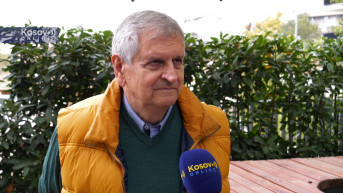
The biggest obstacle to establishing an airline in Kosovo may not be a lack of funding, aircraft or qualified personnel, but rather the political and international status of such a carrier, which could affect its ability to operate in international air transport, Predrag Vujovic, former JAT director and founder of Centavia, told Kosovo Online.
Establishing a national airline no longer carries the significance it once did, when such carriers also served as symbols of statehood, Vujovic said.
“In the past, for example in the first half of the last century, when African countries were gaining independence, the key things were to create a flag, an anthem and an airline. Everyone had their own airline, and that was how a country demonstrated its existence as a state. That principle and that mentality disappeared a long time ago. It turned out to be extremely expensive, irrational and to bring no real benefit,” Vujovic explained.
His experience in establishing Centavia, which he launched in the mid-2000s, showed him that even a well-prepared business and operational project did not guarantee an airline’s survival if political obstacles existed.
“We did everything, as they say, by the book, exactly as the profession requires. However, we failed to anticipate the political factors that were present at the time,” Vujovic said.
Centavia, he explained, found itself caught in a conflict of interests involving the two national carriers at the time, JAT and Montenegro Airlines.
“In practice, the airline we created was like the rooster that crows too early and ends up in the pot, because we were caught between the national airline—my former company, JAT—on one side and Montenegro Airlines on the other. Those two airlines were then part of what was still a common state, while we were like a third, completely unwanted child,” Vujovic said.
Although Centavia obtained permits to operate flights to Western Europe and the relevant European Community certificates, that was not enough to ensure that it could operate without obstacles.
“The fact that we obtained permission to fly to Western Europe and received all the European Community certificates did not help us maintain the Belgrade–Tivat service, for example,” he stressed.
Speaking about the possibility of establishing an airline in Kosovo, Vujovic did not rule out the possibility of securing the necessary financial, technical and human resources, but said that the political and international circumstances under which such a carrier would operate first needed to be clarified.
“Who is establishing the airline? What certificates will it operate under? What happens with an airline bearing Kosovo’s name and holding a Kosovo-issued AOC when it comes to countries that do not recognize Kosovo? What does that mean? What repercussions would there be? How would it operate, and what would happen when it needs to lease certain equipment or even an aircraft from a third party, which is something that will inevitably happen in the course of operations? How would that affect the airline’s operations? That is one of the first questions that needs to be addressed,” Vujovic explained.
An AOC, or Air Operator Certificate, certifies that an airline meets the requirements for conducting commercial air transport operations. Vujovic pointed out that the status of such a certificate and whether it would be recognized by countries that do not recognize Kosovo could affect the carrier’s operations, including its ability to use aircraft and other equipment leased from foreign companies.
In addition to the political issues, the economic circumstances would also need to be carefully considered. Vujovic warned that establishing an airline required substantial investment, regardless of whether the capital came from public or private sources.
“It is a very expensive business. Whoever decides to invest in it has to put in a lot of money, whether it is a government or private capital. A private investor will think three times before rushing into such an attractive-looking business. It sounds appealing, it is nice to pose for pictures and fly to various destinations, but it is extremely expensive,” he said.
According to Vujovic, recruiting pilots, engineers, cabin crew and commercial staff is an important part of the preparations, but it is not the greatest challenge.
“Finding engineers, commercial staff, flight attendants and pilots is the easier part. It is not simple, but it can be done. What needs to be resolved before anyone even considers establishing an airline is the political framework and whether you will be treated on an equal footing with any other airline in Europe,” Vujovic concluded.


0 comments