
Petrov: Kosovo could launch an airline with the help of an existing carrier
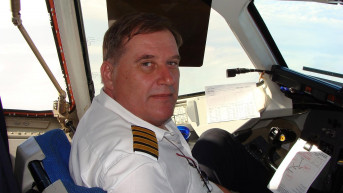
Launching an airline in Kosovo would require a sustainable business plan, regulatory approvals, qualified personnel and substantial investment, while one possible model would be cooperation with an existing carrier that would initially operate the flights as the local airline developed its own capabilities, according to retired captain Slobodan Petrov, who has been involved in launching several airlines.
Pristina Airport handled more than 4.6 million passengers in 2025, which, according to retired captain Slobodan Petrov, indicates the significance of the market. However, before launching a local airline, its business model and the financial viability of the project would first have to be established.
“I believe there is significant market potential that warrants a detailed assessment of a project to establish a local airline. The specific business model, scale of operations and financial viability should be confirmed through an appropriate business plan,” Petrov said.
The initial steps would include selecting investors, defining the financing model, establishing a management team and determining the applicable regulatory requirements. This would be followed by the selection of aircraft and destinations, recruitment of personnel, training, and preparation of the documentation required to obtain the necessary operating approvals.
One of the key decisions would concern how the aircraft are acquired. In addition to purchasing aircraft, options include leasing them without crew, leasing them with crew and associated services, or entering into lease arrangements with an option to purchase at a later stage.
Petrov particularly highlighted cooperation with an existing airline as one possible option, whereby that carrier would initially operate the flights while the local airline developed its business and prepared to conduct operations independently.
“I would particularly consider initial cooperation with an existing airline through a wet-lease arrangement, including aircraft, crew and associated services, or an appropriate charter arrangement, preferably using the type of aircraft planned for the airline’s future in-house fleet,” Petrov said.
Under such a model, flights would initially be operated by a licensed partner under its own Air Operator Certificate (AOC), subject to the necessary approvals, while the local airline developed its brand, sales network and customer base. At the same time, local personnel would be trained and gain the experience necessary to gradually assume an increasing share of the operations.
“An even more important element of such cooperation would be knowledge transfer and the practical training of local personnel through approved programs, the necessary supervision and appropriate authorizations. This would include flight crews, cabin crews, technical, operational, commercial and ground personnel,” Petrov stressed.
Independent operations would also require arrangements for aircraft maintenance, technical support, insurance, fuel supply and airport services, as well as reservation, sales and operational management systems. Before launching its own commercial operations, the local carrier would have to meet the relevant regulatory requirements and obtain its own Air Operator Certificate (AOC) and operating license.
Petrov believes that the transition to independent operations should be gradual and aligned with the development of personnel and the airline’s financial capacity.
“Once the requirements for independent operations have been met, aircraft would gradually be introduced through leasing or lease-to-purchase arrangements, while the local airline would assume an increasing share of the activities and ultimately take over the entire operation,” he said.
As an example of such development, Petrov cited his experience with Nigeria’s Sosoliso Airlines, whose launch he helped facilitate.
“We started with JAT’s DC-9 and its resources, and the airline subsequently developed a fleet of five aircraft, including the MD-83. I cite that example as an illustration of the gradual development of an airline’s own organization, personnel and operational capabilities,” Petrov said.
Slobodan Petrov is a retired captain, instructor and type-rating examiner with approximately 22,000 flight hours. During his career, he worked for JAT and later participated in the launch and development of airlines in Europe, Africa and Asia. At Centavia, he held a key position in the AOC certification process and crew training, and retired from active flying in 2021.

0 comments