
The Kosovo government refused to implement item 7 of the European proposal: Is there a chance for further dialogue?
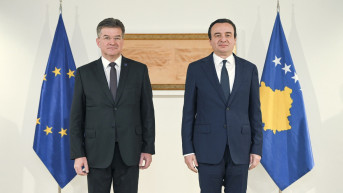
The refusal of the Kosovo government to accept the offer of EU Envoy Miroslav Lajcak on the methodology for implementing item 7 of the European proposal, which refers to the formation of the Community of Serb-majority Municipalities, clearly shows how far apart Belgrade and Pristina are on key issues and that the chances of continuing negotiations have been reduced to a minimum, and the possibility of tensions and instability is increasing, Kosovo Online interlocutors warn.
While Pristina demands that all items of the agreement be implemented in parallel, Belgrade's positions are clear - the CSM is the first and most important issue and without it any further negotiations are meaningless.
Our interlocutors indicate that international mediators have adequate mechanisms to persuade Pristina to comply with its obligations; the only question is whether they will activate those mechanisms.
Last week, the Government of Kosovo announced that it had rejected the possibility of developing a methodology for the implementation of Article 7 of the Brussels Agreement, dated February 27, proposed by Lajcak. In Kurti's cabinet, they stated that it was not possible to build a methodology for the implementation of the items that talks about "self-governance of the Serbs", and that there was no agreed plan for the full implementation of the agreement from Brussels.
Former diplomat Zoran Milivojevic tells Kosovo Online that the essence of everything, including another blockage of dialogue, is that they cannot break Serbia and force it to recognize Kosovo. He adds that by refusing to implement item 7 of the agreement from Brussels, which refers to the formation of the Community of Serb-majority Municipalities, Pristina once again confirmed its position that it will not have a CSM, while Belgrade does not give up its position that the formation of the Community is the primary issue.
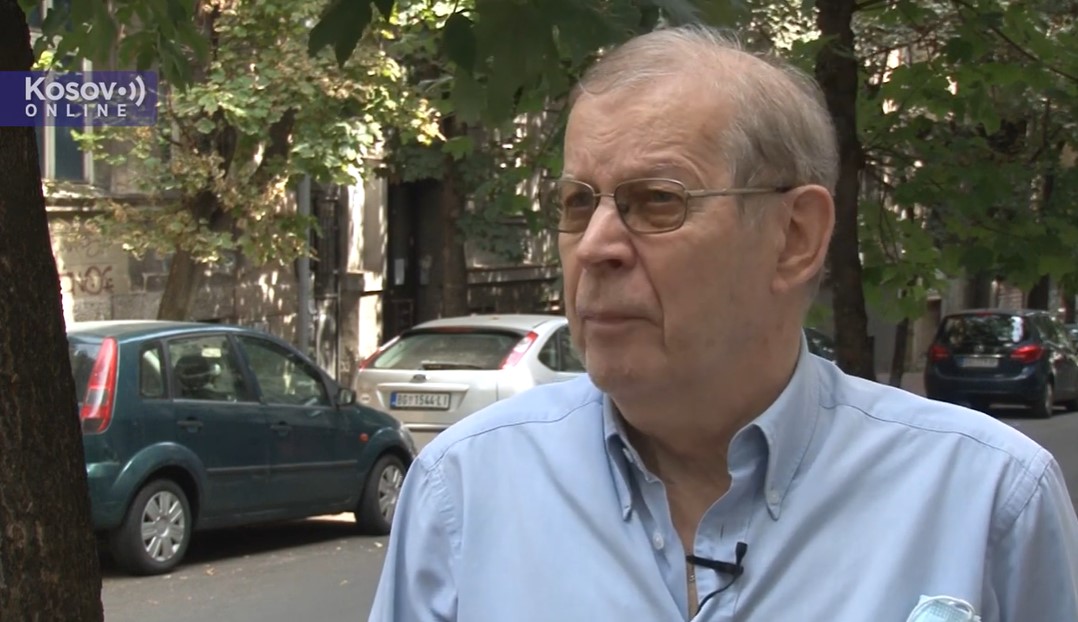
"When it comes to Serbia, there will be no substantive negotiations and dialogue unless the position is respected that the Brussels Agreement must be fully implemented and that the CSM is the first step. Moreover, Serbia is not ready to renegotiate the CSM, because it believes that that was agreed upon and resolved, a Statute was presented by the Management Team, which is legal and legitimate. And the fact that Pristina is obstructing it is not Serbia's problem. Therefore, I do not expect a continuation of the essential dialogue, regardless of what Lajcak says and how he does it interprets," Milivojevic believes.
He points out that there is pressure from Western mediators to continue the pace and dynamics, while, he emphasizes, they put the Ohrid Agreement and the demand that it be respected in the first place.
"It is known that Serbia has reservations in this regard and does not consider that any agreement was reached in Ohrid, but that there is a basis for further dialogue and talks. Whether there will be further dialogue or not does not depend on Serbia, we are ready for dialogue, and we will go to meetings, but in the essential sense, there will be nothing until the CSM is implemented," Milivojevic says.
He says that Pristina has been holding back the formation of the Community for ten years, with the fact that, he adds, Serbia will no longer tolerate it or make any concessions.
To the fact that the ambassadors of certain Western countries in Kosovo are saying that Pristina should propose its own version of the Statute of the CSM, Milivojevic says the following.
"They are trying to treat the matter as if it were a dialogue between two sovereign states, two equal subjects, and they view the CSM in that light while ignoring the Brussels Agreement and everything that was agreed upon at the time. We believe that the implementation of the Brussels Agreement must be a prior issue and Serbia will not deviate from that," Milivojevic points out.
When asked what the senior advisor at the State Department, Derek Chollet, meant when he said that the EU and the US would intensify diplomatic efforts so that both sides fulfilled their obligations, our interlocutor points out that, when it comes to Serbia, pressure can be expected to accept the position of the West to talk under the Ohrid Agreement based on its acceptance as a whole and in a way that would imply that Serbia "de facto" recognizes Kosovo.
"When it comes to the Pristina side, I don't think that these messages from Chollet mean anything. Until now, there have been verbal pledges for Pristina to fulfill its obligations without any serious actions. Kurti does not change his position, and he is not really under any substantial pressure to change it, except for the verbal advocacy of Western representatives. From this, the conclusion follows that they are, in essence, on the same lines, they just differ in their tactical approach," Milivojevic says.
According to him, this means that Kurti has the support of key political factors from the West for his policy.
"The strategy that is being implemented and we are seeing it now with this NATO exercise in Kosovo, aims to get Serbia to recognize the so-called reality. In other words, it is all part of the pressure on Serbia to recognize Kosovo as an independent state. On the other hand, there is no serious reaction to everything that Kurti does. They recognized the illegitimate elections in the north, they are silent when he implements the decisions of such elections, and they tolerate the repression and the Special Forces of Pristina in the north. From all this, the conclusion emerges that it is in fact a unique strategy that is practically unfolding before our eyes, with the fact that Washington and Brussels are pretending to be mediators for tactical reasons, while in essence, they are on the side with Pristina," he believes.
All this, he adds, leads to new instabilities, although Western emissaries claim that everything they are doing is aimed at preventing this.
"The Western emissaries are, in fact, tolerating a new round of violence, an escalation that is here, before our eyes. The Serbs in Kosovo will no longer suffer violence. The absence of a reaction to Pristina's refusal to implement the CSM is tolerating a new wave of violence. We have practically been brought into the lobby of imposition solutions, even with the use of force, against the rights and Resolution 1244 of the United Nations Security Council, solutions that would mean confirmation of the recognition of Kosovo's statehood," Milivojevic warns.
Institute for European Studies analyst Rajko Petrovic tells Kosovo Online that the Pristina side apparently wants to end the dialogue.
"From Belgrade's point of view, it is necessary and therefore, in my opinion, it will be continued, because it is a process initiated by the EU and the US, which have adequate mechanisms at their disposal to persuade the Albanian side to continue the process. The biggest problem in all of this is the fact that the "heart" of the entire format of those negotiations, i.e. their expected results, should not only be but must be, the CSM, with all its competencies and institutional capacities defined by the Brussels Agreement. 2013. The Albanian side, led by Albin Kurti, by refusing to implement this 7th item, is actually shooting at the very 'heart' of the entire dialogue process. And that is precisely why it is focused on slowing it down because it is clear that without it, the Serbian side would get some kind of shell without content. However, if we take into account the fact that the American side and the EU, as mediators in the dialogue, have shown a willingness that things must be resolved in a way that would respect, to a certain extent, Serbian state and national interests, and the CSM is one of them, all this gives hope that this dialogue could be colored by some concrete steps forward", Petrovic says.
He reminds that Kurti came to power with his incendiary nationalist, Greater Albanian rhetoric, before which he was fiercely opposed to the governments of Ramush Haradinaj and Hashim Thaci as president because they conducted any negotiations with Belgrade.
"Well, we see that he still agreed to participate in the dialogue. According to Kurti from a few years ago, there is nothing to negotiate with Belgrade because the so-called independence of Kosovo in its full extent and form is a fait accompli. Kurti is in an obviously different position today; I think that he will have to accept many things that he does not want. If necessary, I think that this mediating factor, which made a large, immeasurable contribution to the process of creating the so-called independent Kosovo, has shown that if a government in Pristina does not show a sufficient willingness to be cooperative can destabilize it and influence some new Albanian leaders to take their place," our interlocutor points out.
He believes that Kurti’s obstructions are short-lived, and his increasingly frequent use of force, violence, and intimidation in order to achieve his political goals, actually speaks in favor of the fact that he no longer has any legal, political, or any other non-violent arguments at his disposal.
"That is why he is trying to continue this spiral of violence because he is a man who came to power on the wave of discontent, which was quite radical and nationalist in color. And he obviously does not know how to function in any other conditions than those that are full of tensions and threats of force and coercion. On the other hand, we have a kind of patience, and even calmness, of official Belgrade, in all these events related to Kosovo and Metohija, especially in the past few months. This speaks in favor of the fact that Serbia is aware of this that, if there are possible conflicts of greater intensity in Kosovo and Metohija, it can stand in the protection of its citizens there who are loyal to it. We should not forget the recent statement of the Minister of Defense of Bosnia and Herzegovina, Zukan Helez, who was visiting Kosovo and Metohija, and who said that it was evident, given the situation on the ground, that the Serbian army could easily deal with the Albanian armed forces," Petrovic says.
He adds that Serbia is aware of the fact that it has raised its reputation at the international level, specifically when it comes to solving the Kosovo crisis, to a higher level.
"We are witnessing that now even the centers of power in the West, which are traditionally unfriendly to us, such as Washington, publicly appreciate Serbia's readiness for dialogue and to avoid any form of violence. All this sends the right image to the world, which should have been sent back in the 90s, and that is that the irresponsible Albanian politicians in Kosovo are actually a factor that disturbs peace and stability in the Balkans. And that Serbia, with its size and economic strength and the geographical spread of the Serbsss, is actually the only real, real, objective factor in stabilizing the situation in the region," our interlocutor concludes.
An analyst from Pristina, Dardan Sejdiu, points out for Kosovo Online that for both Serbia and Kosovo, for the Serbs and Albanians, the continuation of the dialogue in this state, without any results, in constant tensions, does not lead to a good end, in terms of establishing some mutual normal cooperation and overcoming what has been a topic for decades.
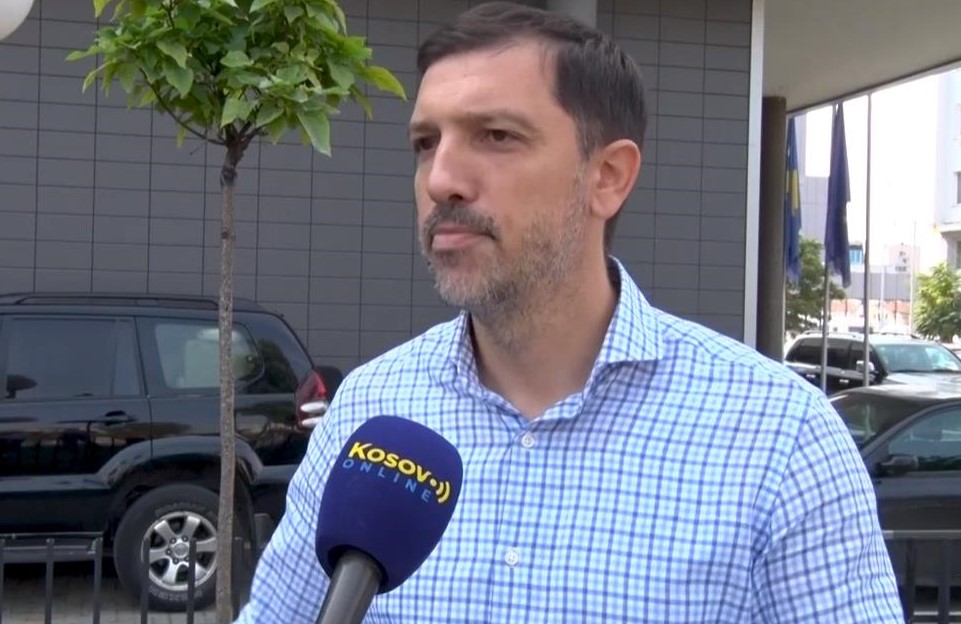
"The deadlock in the dialogue is about the sequence of steps, not because of what needs to be implemented. The Government of Serbia insists that the Community be implemented immediately, while the Government of Kosovo asks for a different order. Both governments look at it from the point of view of internal political events - The Government of Serbia and Aleksandar Vucic from their patriotic positions, and the Government of Kosovo and Albin Kurti from the positions as he once spoke about the dialogue. I am sure that Vucic is not interested in the CSM, which is not in accordance with what was foreseen in 2013 and 2015, and on the other hand, Kurti is not at all interested in creating a third level of government. All this leads to the dialogue being in a kind of 'spasm,'" Sejdiu says.
He believes that, as always in these areas, "until the 'Yankees' come in and the pressure starts, there will be no progress".
"We are still standing in those waters of misunderstanding when it comes to the sequence of steps, and not the real motive for the agreements. Vucic wants the dialogue to be a strong enough reason to convince the international community that he is ready for some agreements. For him, being in the dialogue is the goal; that is enough. On the other hand, Kurti, as the Prime Minister of Kosovo, has that 'baggage' when it comes to dialogue, and from those positions, he cannot go in the direction that Vucic wishes, for Serbia to concede nothing and get everything. The CSM is not a problem to Kurti, but the order of things and what can be expected from Serbia as the end of the dialogue," Sejdiu says.
He reminds that the two sides have practically been in constant dialogue since 2011 without concrete developments because neither is willing to leave the positions they are in.
"We must have some end to this dialogue on issues that Serbia and Kosovo see differently. Kosovo is an independent country, but Serbia does not recognize it. But the dialogue should also not be a formal recognition to solve some important life issues. Especially for citizens in the north of Kosovo, be it Serbs or Albanians, who are hostages of the dialogue that has been going on since 2011. The Americans are the only ones who have the power to force both Serbia and Kosovo to advance in this process and bring it to some kind of outcome, either by the end of this year or in a few years," Sejdiu concludes.


0 comments