
Kurti relies on Croatia's policy towards the Serbs; the CSM would guarantee the survival of the Serbs in Kosovo
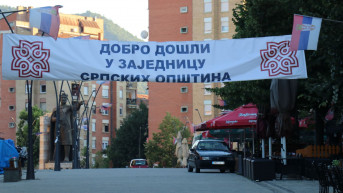
Kosovo Prime Minister Albin Kurti says that his vision of the CSM Statute is based on the Croatian model for national minorities, and the formation of the Community of Serb-majority Municipalities is often rejected by Pristina with the message that they will not allow powers that will make the CSM another Republika Srpska. What is certain, according to the interlocutors of Kosovo Online, is that Kurti is relying on Croatia's behavior towards the Serbs during the war from 1991 to 1995 and beyond, which, as they emphasize, ended with the ethnic cleansing of the Serbs.
Former diplomat Zoran Milivojevic told Kosovo Online that it was absolutely certain that, since Kurti had come to power, in the last two years, the level of cooperation between Pristina and Zagreb had been raised, while Kurti often referred to the models that had been applied in Croatia.
He points out that those models, including "Operation Storm", were practically ethnic cleansing and the use of force and the imposition of political solutions by force, including ethnic cleansing itself.
"It is obvious that Kurti relies on those models and wants to apply them, just as he is now trying to qualify the Community of Serb-majority Municipalities and apply the agreements that were once valid for Croatia. However, it should be borne in mind that Croatia was an independent state and that it was about the status of the Serbs as a minority and the position of the people as a minority. Kosovo is not an independent state, Kosovo is a part of Serbia and it is not about the position of the Serbs as a minority in a sovereign state, but about the position of the Serbs in their own state in one area that is under the mandate of the UN, and there is a big difference," Milivojevic emphasizes.

As he adds, when Kurti talks about Croatian models, he wants to have a basis in the fact that Croatia is an independent country and that it is about the status of the Serb minority in the same way as in Croatia.
He reminds that there were 12 percent of the Serbs in Croatia in 1991 and that now there are only three percent.
In this sense, he states that Kurti's goal is to reduce the number of Serbs to a small percentage when their issue of protecting the national minority is not subject to the highest standards, when they do not have the status of a minority, but of an ethnic group, which cannot be institutionalized.
"The main difference is that Croatia was an independent state and the Serbs should have had the status of a national minority - institutionalized, in that sense they are talking about the Z-4 plan and other arrangements. Kosovo is not an independent state and models cannot be applied," Milivojevic says.
He adds that when Kurti uses Croatian experiences, he has in mind the use of force for the sake of a political solution, including ethnic cleansing.
As he emphasizes, there is an understanding of the Western centers of power in that, because the Croats also had understanding, support, and help for it at that time, and since they recognize Kosovo as an independent state - Kurti has understanding and support and help for those models and for that type of solution to the Serbian issues in Kosovo.
"Doing nothing produces the same effect as doing, therefore, and by doing nothing they support something that is against the law, norms, and standards. Kurti carries out illegal operations, from forced arrests, convictions, and use of force, attempts to implement solutions beyond the law and standards such as elections, mayors, and the police, and violates norms and standards starting with Resolution 1244. Those who do not react to it also do the same; not only does he have the support, but he has consent for such a thing. The biggest problem when we talk about it is that firstly, KFOR does not respect its mandate, non-compliance with Resolution 1244 is the basis of Kurti's actions, as well as those who support him," Milivojevic points out.
He reminds and emphasizes that the CSM is clearly defined by the Brussels Agreement and that it is the subject of international agreements and guarantees that the EU has related to that agreement.
"It's a matter of implementation, not what it contains. The most important thing is to respect the international agreement, guarantees, and implementation; when it comes to the CSM, it is clearly defined and if it were applied properly, it would protect the Serbs to the extent that is necessary at this stage. It guarantees the survival, normal life, and normal political and other activities of the Serbs in 10 municipalities of Kosovo and Metohija, and on that basis, we can discuss normalization afterwards," Milivojevic says.
When it comes to plan Z-4, which was not accepted for the Republika Srpska Krajina, and which guaranteed a community of 11 municipalities with a Serb majority that would enjoy a high degree of autonomy, with most of the responsibilities transferred from the Government in Zagreb to Knin, and the rejection of which was followed by operations "Flash" " and "Storm", Milivojevic says that at one time the Z-4 plan was also a matter of guarantees, but that it is hard to believe from experience that it would have been implemented.
"In the case of the CSM, there is no need to compare it with anything, the only question is whether there is a guarantee that a contract backed by the EU as a guarantor will be respected, that it will be implemented as foreseen in 2013 and 2015, nothing else. The way it is provided by the agreement totally changes the picture and what we have now in Kosovo we would not have if we had the CSM and the Serbs would be protected so they could live normally in those areas. That would be the only real basis to discuss a further political solution," he emphasizes.
He also points out that it has become clear when we look at it now that the intention of the Western power centers and Pristina was to not implement the agreement that would have given guarantees to the Serbs.
He reminds and emphasizes that de-escalation for the Serbian side means the withdrawal of all police forces from the north, without exception, putting KFOR into office, disempowering the mayors, and releasing the Serbs who were illegally arrested.
"And at the end the CSM on the table - it is de-escalation, returning to the original state, and then there can be talks about elections, talks about dialogue and normalization, so whatever this withdrawal of the police means, it doesn't mean much, it's not de-escalation, and Kurti's arrangements with Lajcak and others is a different matter, but it is not de-escalation," Milivojevic concludes.
The former Minister of Foreign Affairs of the FR Yugoslavia Zivadin Jovanovic points out that there is no doubt that the main goal of Pristina is to completely clean and expel the remaining Serbs from Kosovo.
He says that this has been evident during the last three decades.
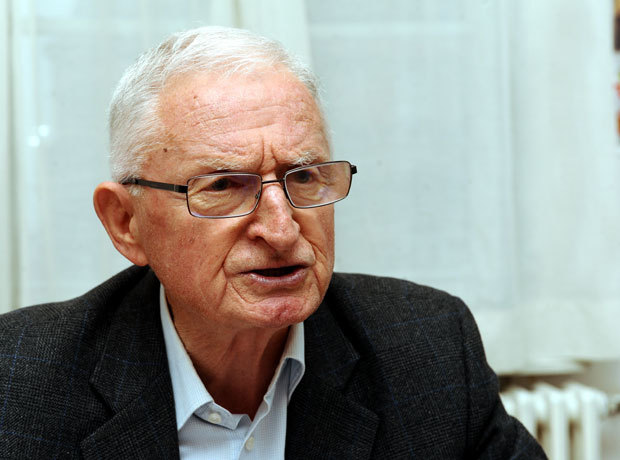
"Albanian terrorists did everything to introduce insecurity and uncertainty to the Serbs, both on that basis and in the former SFRY and later during the existence of the FRY, that strategy which is long-term and which is an integral part of the creation of another Albanian state in the Balkans, as a phase of the creation of a 'Greater Albania', continues to this day. There is no doubt that Pristina not only copies Croatia's experiences from the period of the civil war from 1991 to 1995 and later, but also receives direct advice from Croatia that is a part of a joint anti-Serb strategy, a joint strategy of weakening the Serbian factor in the Balkans," Jovanovic said.
He emphasizes that it would be simplistic if it were seen only as a game of local factors, a game of extreme nationalism or disobedience in Croatia or Albanian extremists.
As he says, behind both of them, as well as above the forces that strive to revise the Dayton Agreement, are the Western power centers whose official strategy is an expansion to the East.
"Everything that has been happening for decades in Kosovo and Metohija, that has been happening in Croatia, Bosnia and Herzegovina, is a part of the strategies of the Western power centers of expansion to the east and management, i.e. complete control in the Balkans. In this sense, there are also documents in Washington that explicitly say - 'Prevent the Serbs from ever being a political factor in the Balkans'. This is an integral part of the strategy called the expansion of NATO to the east," Jovanovic says.
As he states, there is no difference in the behavior of Western power centers when it comes to Pristina now or in the past in Croatia, because "Kurti's employers" consider Kosovo an independent state like any other independent state.
He points out that the ethnic cleansing of the Serbs did not start in Croatia with the civil war, nor in Kosovo during the aggression of the NATO pact.
"The process of ethnic cleansing of the Serbs from Kosovo and Metohija has been going on for at least several decades; it oscillates from time to time, sometimes it is more intense, sometimes it is slower, but it continues uninterruptedly. Even before the April elections, the silent ethnic cleansing of the Serbs was going on, it was not interrupted, only that the strategy became more pronounced with the transfer of ROSU units to the north," Jovanovic says.
According to him, the fact that Pristina withdrew 25 percent of its forces in the north of Kosovo is a game to consolidate the militarization of Kosovo.
"The percentage is not important, but what is important is that they appropriated the possibility to be militarily present, to have military bases, whether it will be 100 percent or 75 percent, it is not important, but it is important that in this way, the question of how they can violate Resolution 1244 was skipped; how can they violate the promise to NATO that there will be no long guns. That question is almost not on the agenda anymore, now we should all be happy that Kurti has become more flexible and withdraws 25 percent. It is a typical Anglo-Saxon tactic of getting used to new conditions and creating a new reality. Now there is a new reality in the north of Kosovo that can be characterized as militarization and it is a part of the strategy of ethnic cleansing of the Serbs from its territory,” Jovanovic concludes.

0 comments