
The meeting in the USA stirred up Pristina: Is the meeting between Hamza and Kasanoff a warning to Kurti?
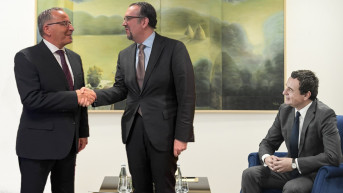
The candidate for Prime Minister from the ranks of the Democratic Party of Kosovo (DPK), Bedri Hamza, recently became the first politician from Kosovo, and also from the Balkans, to officially meet with Alexander Kasanoff, the new Deputy Assistant Secretary of State for the Western Balkans. This meeting has sparked numerous speculations about potential consequences for the political scene in Pristina, but analysts agree on one thing—the United States has sent a clear message to Albin Kurti with this move.
After the meeting, Hamza expressed hope that "the mistakes and confusion of the government in Pristina will be reviewed." This has led many to question whether this meeting was a message to the current Prime Minister of Kosovo, Albin Kurti, and what its true meaning might be.
Hints came just a day earlier from the State Department. Spokesperson Matthew Miller stated that Kosovo, with its unilateral actions, has endangered U.S. support.
Marko Milenkovic from the NGO "New Social Initiative" has no doubt that if there is no change in Pristina's political approach, U.S. authorities could seek other partners or even intervene in the elections.
“The meeting that Mr. Hamza had with the U.S. envoy for Europe and the Western Balkans, I interpret as a message sent to the authorities in Pristina, primarily considering the previous disagreements that the government has had with the U.S. administration, which are more than evident through the statements we have received from the State Department. So, at this moment, there is no constructive dialogue and cooperation, and I believe this meeting is primarily a message to the authorities in Pristina that if there is no change in the political approach, the United States will try to find other partners,” Milenkovic told Kosovo Online.
He recalls that in the previous period, former U.S. envoy Gabriel Escobar also sent messages that if the U.S. currently does not have a partner in Pristina, they would try to find an adequate one.
"And I truly believe that this is a message. Now, how much it will be understood by the authorities in Pristina and how much their approach will change, I am not sure, but I certainly interpret it as a clear message. I expect that in the coming period, if there are no changes from Pristina, these messages will be further strengthened, and that, in some way, the United States might get involved in the pre-election process and possibly support a candidate," our interlocutor says.
According to him, there is visible political tension between Hamza and the Self-Determination party, which is also reflected in recent events, such as the issue of opening the bridge on the Ibar River.
"Hamza is trying to be a partner to the international community, while Self-Determination is pushing its own agenda through political actions and unilateral moves, trying to score additional points in certain voting circles, but also, in some way, to undermine opposing candidates," says Milenkovic.
Regarding the upcoming elections, Milenkovic emphasizes that the elections in Kosovo are crucial for relations with the United States. He believes that if Self-Determination comes to power again, it could lead to a further deterioration of relations with the U.S., especially after the American elections.
"It seems to me that, at this moment, the citizens in Kosovo do not recognize this danger, but it exists, especially if there are changes in the American administration. We simply haven't had a constructive approach so far, and that's why I see the importance the U.S. places on potential candidates for the upcoming elections in Kosovo," he concludes.
Pristina-based analyst Arbnor Sadiku believes that the U.S. will cooperate with whoever wins the next elections in Kosovo and views the Hamza-Kasanoff meeting as part of DPK's election campaign rather than U.S. support.
"I think the meeting between Mr. Hamza and Mr. Kasanoff is the result of DPK's lobbying to organize a meeting between the two for internal electoral purposes, not at the request of the U.S. I don't think the U.S. intended to send a message to Albin Kurti through this meeting because history has shown that the U.S. has supported whichever party wins the elections," Sadiku told Kosovo Online.
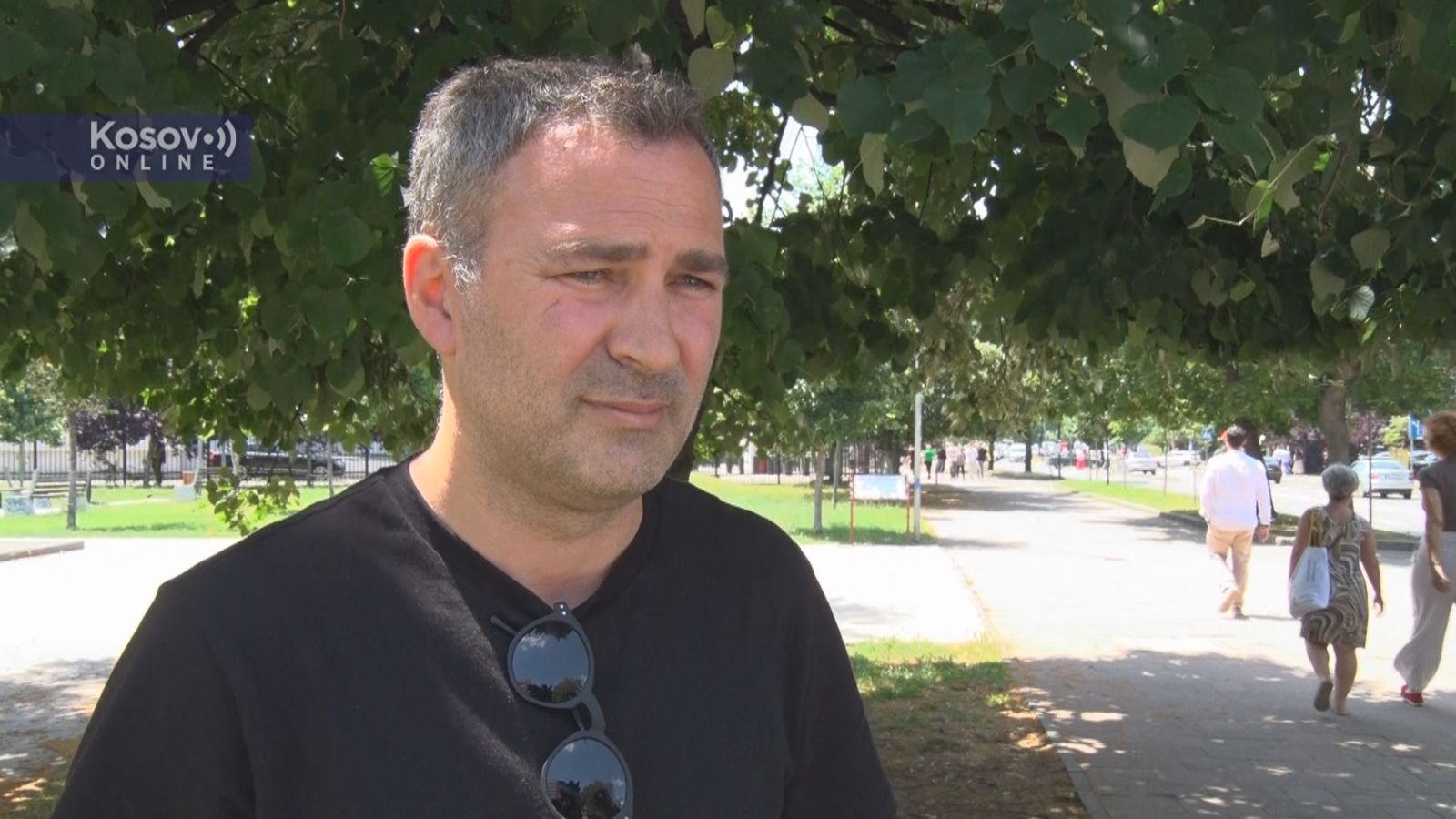
He assesses that, given the current circumstances, Kurti's Self-Determination party is likely to form a coalition with the Democratic Party of Kosovo (DPK).
"Self-Determination probably won't be able to win the elections on its own, and it seems that the U.S. will cooperate with whoever wins the elections," our interlocutor says.
However, political scientist Ognjen Gogic disagrees, reminding that the U.S. has already intervened in Kosovo's elections once before.
He notes that it is not unusual for U.S. officials to maintain contacts with various political leaders in Kosovo because they have generally cultivated the local political elite, except for the Self-Determination movement. However, he tells Kosovo Online, it is unusual that Hamza has met with officials that Kurti has not.
"So, this visit to the U.S. is on a higher level than what Kurti had when he went to the U.S. And that is indeed unusual because it bypasses the person who speaks on behalf of Kosovo, and instead, they are talking with opposition leaders," Gogic says.
He believes this could be a message to Kurti that they will find someone who wants to be cooperative and recalls that the Americans have done this before, precisely in Kosovo.
"U.S. envoy Richard Grenell, in a way, played a role in the change of power in Kosovo in 2020, also with the support of the DPK, when Kurti's first government fell. So, this could actually be a message to Kurti, and it could be more than just a message. It could be the making of some operational agreements and plans for further action," the political scientist assesses.
He emphasizes that Hamza opposed Kurti on the issue of the Ibar River bridge and expressed views that the Americans "want to hear."
"Hamza may even be more qualified than Kurti to speak about the Ibar bridge, given that he is the mayor of South Mitrovica, and he actually said what Kurti does not, which is that this way, bridges with allies, especially the Americans, are being destroyed. So, in a way, Hamza is saying things that the Americans want to hear," Gogic notes.
He assesses that it is indicative that Kasanoff's first meeting, out of all the leaders in the Balkans and heads of state governments, was with an opposition leader.
"This is actually a very strong message. Especially because in Kosovo, the departure of Escobar and the arrival of Kasanoff is viewed as an opportunity for Kosovo. The initial reaction was that Kasanoff would be more favorable as a mediator in the dialogue for Kosovo itself, and yet, he did not meet with Kurti but with Hamza. This, I say, could be much more than just a message, considering that elections are upcoming in Kosovo, and it is, in a way, involvement in the election campaign, as the opposition will use this to its advantage. There may also have been concrete agreements on how to support the DPK in the upcoming electoral processes," our interlocutor says.
When asked how this could affect Serbia, he replies that Kurti's policy is ambivalent for Belgrade. On the one hand, diplomatically, it suits Belgrade for Kurti to be recognized as an extremist, but on the other hand, it does not suit them because it directly threatens the position of Serbs in Kosovo.
"On one hand, Kurti is isolating himself from the West, and then the West, in turn, also bypasses and marginalizes him. However, whether this is good for Belgrade or not is the question. On the one hand, it's good that Belgrade is not recognized as the cause of crises, and Kurti is clearly seen as such. The bridge issue shows again that no one is talking about both sides or calling on both sides to exercise restraint; instead, the focus is solely on Kurti. On the other hand, the more Kurti becomes isolated and extreme, the more negatively it affects the position of Serbs in Kosovo, especially in the north. So, it’s a big question now whether it’s in Belgrade’s interest for Kurti to be more extreme or less extreme," Gogic concludes.


0 comments