
Gogic: The US has already interfered in Kosovo elections, Hamza and Kasanof meeting is a message to Kurti
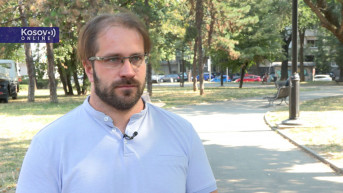
If Albin Kurti isn't cooperative, the Americans will find someone who is, political scientist Ognjen Gogic says, commenting for Kosovo Online on the recent meeting between PDK candidate Bedri Hamza and the US Special Envoy for the Western Balkans, Alexander Kasanof. He believes that this meeting is “more than just a message” to Kurti, as the US has previously interfered in elections in Kosovo.
Gogic notes that it is not unusual for US officials to maintain contacts with various political leaders in Kosovo since they have generally nurtured the local political elite, excluding the Self-Determination movement but primarily including the PDK. However, he finds it unusual that Hamza met with officials that Kurti did not.
"Generally, the Americans consistently maintain contacts at various levels with political leaders, whether they are in power or in opposition. Regarding Hamza, he has had high-level meetings in recent months, both abroad and in Kosovo, which is unusual because he met with officials that the Prime Minister of Kosovo did not. So, his visit to America was on a higher level than Kurti's when he visited. This is unusual because they are bypassing the person who speaks on behalf of Kosovo and instead talking to opposition leaders," Gogic says.
He believes this could be a message to Kurti that they will find someone who wants to be cooperative, reminding that the Americans have done this once before, precisely in Kosovo.
"US Envoy Richard Grenell was involved in the change of government in Kosovo in 2020, also with the support of the PDK, when Kurti's first government fell. So this could indeed be a message to Kurti, or even more than just a message. It could be the formation of some operational agreements and plans for future actions," the political scientist assesses.
He highlights that Hamza opposed Kurti on the issue of the Ibar Bridge and expressed views that the Americans “want to hear.”
"Hamza might be more qualified than Kurti to speak about the Ibar Bridge, given that he is the mayor of South Mitrovica. He actually said what Kurti did not, which is that in this way, bridges with allies, primarily the Americans, are being destroyed. So, in a way, Hamza is saying things the Americans want to hear," Gogic notes.
He finds it significant that Kasanof's first meeting with any leader in the Balkans, including heads of state and government, was with an opposition leader.
"This is indeed a very strong message. Especially since in Kosovo, the departure of Escobar and the arrival of Kasanof is seen as an opportunity for Kosovo. The initial reaction was that Kasanof would be more favorable as a mediator in the dialogue for Kosovo itself, but then again, he did not meet with Kurti but with Hamza. This, as I said, could be much more than just a message, considering the upcoming elections in Kosovo. It could be seen as a form of involvement in the electoral campaign, given that the opposition will use this for their purposes, and perhaps there were even concrete agreements on how the PDK can be supported in the upcoming election processes," our interlocutor says.
When asked how this might affect Serbia, he replies that Kurti's policy is ambivalent for Belgrade. On the one hand, it is diplomatically advantageous for Belgrade that Kurti is recognized as an extremist, but on the other hand, it is unfavorable because it directly threatens the position of Serbs in Kosovo.
"On the one hand, Kurti is isolating himself from the West, and in return, the West is also bypassing and marginalizing him. However, whether this is good for Belgrade or not is another question. On the one hand, it is good that Belgrade is not recognized as the cause of crises, and Kurti is clearly seen as such. No one talks about both sides, no one calls for restraint on both sides, only to Kurti. On the other hand, the more isolated and extreme Kurti becomes, the more negatively it affects the position of Serbs in Kosovo, especially in the north. So, it's a big question whether it’s generally better for Belgrade if Kurti is more or less extreme," Gogic concludes.


0 comments