
Migrant Acceptance Agreements: Is the Western Balkans just a transit stop?
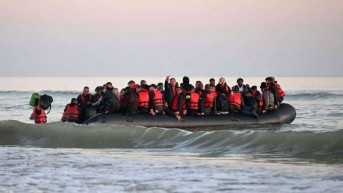
This year, Kosovo began accepting migrants deported by the United States; in Albania there are migrant camps run by Italy; and in recent days North Macedonia’s political scene has been shaken by informal reports that the country has begun negotiations with the United Kingdom on opening centers for migrants deported from London. If a society is to accept migrants whom others do not want, interlocutors for Kosovo Online assess that the public must be well prepared and fully informed about the national interest underpinning such agreements. They also stress that it is crucial to determine whether Western Balkan countries are merely a transit stop or part of a more lasting solution.
Written by: Dusica Radeka Djordjevic
More than 41,000 people crossed the English Channel in small boats this year, illegally entering the United Kingdom, according to the latest data reported by British media.
Citizens of the United Kingdom consider the problem of uncontrolled migration even more important than economic growth, and the issue has stirred political passions as far away as Skopje—some 2,500 kilometers away—after The Times reported that illegal migrants from the UK could be deported to North Macedonia.
According to the newspaper, North Macedonia formally began negotiations with Britain earlier this autumn on opening migrant centers. Under the alleged arrangement, the United Kingdom would pay North Macedonia for each migrant it accepts, while deportees would be offered the option of applying for asylum in North Macedonia. They would not be detained nor face restrictions on movement, which would allow them to leave the country freely if they wished.
This very element of the potential agreement—the possibility of freely leaving North Macedonia—further complicates the issue, raising the question: what is the point of transferring migrants to a country from which they could simply return to their starting point?
Officials in Skopje, however, categorically deny that there are any agreements or plans to build camps for illegal migrants.
North Macedonia’s Prime Minister Hristijan Mickoski stated that while he is prime minister “not a single tent for illegal migrants will be erected,” while the opposition SDSM speaks of a “betrayal of Macedonia and money for migrants.”
After facing serious accusations, the authorities last Wednesday adopted a parliamentary resolution condemning opposition manipulation and reaffirming policies against illegal migration.
Commenting on reports that North Macedonia could accept migrants from the United Kingdom under an agreement with London, professor Atanas Kozarev, President of the Association for Corporate and Digital Security in Skopje, told Kosovo Online that there is effectively a clash of two narratives on the issue. One suggests that migrants are on the verge of arriving—this, he notes, is the opposition’s thesis—while the other is the government’s position, which seeks through concrete actions to show that the issue is far removed from North Macedonia.
In his assessment, North Macedonia has a serious migration policy, and he says the adopted resolution on state policies in the field of migration is a sufficient guarantee that migration-related processes are under control. At this moment, he believes calming tones are needed, as security issues intersect with migration policy and migration challenges.
“Certain voices in the media, primarily from the United Kingdom, have reached even this region, suggesting that there is some plan to establish migrant centers outside UK territory. Macedonia is not immune to these processes, but Macedonia is a respectable state and we have a government that takes all these issues seriously. Our prime minister has called on all mayors to adopt an act that clearly reassures local communities that there is no danger from migrants,” Kozarev said.
A transit route?
According to information circulating in the media, he adds, migrants—if they were to arrive—would be granted asylum status, meaning they could move freely, engage in work, and also have the option to leave North Macedonia.
“In that context, this information is quite significant to me, because our country is primarily a transit route. Migrants do not want to stay in our country, and I truly believe that if they did arrive, they would seek to move on to European countries where they see a better future,” the interlocutor said.
All migration-related processes, Kozarev notes, nevertheless have security and financial implications.
“In Kosovo, it is even being mentioned that if migrants from the United States were to arrive, this would be linked to certain financial compensation. For now, we have information that only two migrants have arrived there. On the other hand, there is an agreement between Kosovo and Denmark for the reception of prisoners from Danish prisons, and, for example, Kosovo will, as stated, receive millions of euros over the next five years as compensation for this service,” Kozarev said.
All migrants who enter a country uncontrollably via smuggling routes, he stresses, constitute a security threat.
“That security threat is incorporated into our national strategies and into the laws regulating the activities of the Intelligence Agency and the National Security Agency. I believe that the personnel in these security agencies are well prepared, as they have been so far, to respond to any challenge, with the aim of ensuring that the security situation is not undermined,” the President of the Association for Corporate and Digital Security concluded.
Preparing the public
Marko Savkovic of the ISAC Fund in Belgrade assesses that various arrangements under which Western Balkan countries agree to accept migrants from other states will have security and social impacts on the region to the extent that those people remain in the countries to which they are transferred and to the extent that attempts are made to integrate them—efforts that may also fail.
“Much also depends on the numbers—whether they are large or remain limited. At this moment they are not particularly large, and we will see how this develops further,” Savkovic told Kosovo Online.
One part of the problem in such situations, he points out, is the lack of public preparation—there is no strong campaign or continuous explanation to citizens as to why this is being done, leaving the impression that the reason is simply to gain something in return.
“It is difficult to explain exactly what national interest you can serve by accepting individuals who ‘did not pass’ somewhere else—migrants who were not accepted and are considered irregular migrants. This is a creeping problem that will certainly burden the society into which they arrive,” Savkovic emphasized.
He recalls Kosovo’s experience with accepting people who left Afghanistan after the end of Western intervention in 2021, who stayed in Kosovo temporarily and were mostly housed in camps.
“There was no deeper integration into Kosovar society, and they were later found another place to settle. All of these are processes that make it seem to me that the Western Balkans are merely a transit stop, but time will tell,” he said.
In addition to the caretaker Prime Minister of Kosovo, Albin Kurti, confirming that Kosovo has begun accepting migrants designated for deportation from the United States, in line with an agreement reached with the administration of President Donald Trump—and that “one or two” migrants have already arrived—Kurti said at the Berlin Process summit in London at the end of October that Pristina is ready to help and serve as a reception center for migrants from the United Kingdom as well.
Kurti stated that Kosovo believes it has a friendly and political duty to help, but that in return it would like to receive support in the field of security—either through strategic agreements or through equipment and projects.
At the same summit, Albanian Prime Minister Edi Rama was unequivocal that Albania would no longer sign migrant reception agreements like the one it has with Italy, reportedly because the project has so far not proven effective.



0 comments