
NATO's new budget strategy: Can Western Balkan countries afford increased military spending?
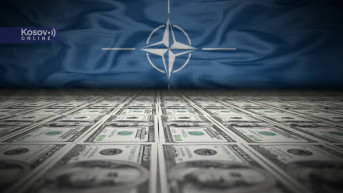
NATO member states could be in for an unpleasant surprise at the upcoming summit in the Netherlands in June, where they may be asked to raise defense spending to 3.5% of their gross domestic product (GDP). In a context where many Western European countries are still not meeting the current 2% target, the pressing question is how much poorer countries—especially those in the Western Balkans—will be able to meet this new quota.
Written by: Đorđe Barovic
According to Reuters, NATO Secretary General Mark Rutte has already proposed that member states raise their defense spending to 3.5% of GDP and commit an additional 1.5% for broader security-related expenditures.
Combined, this would total the "magical" 5% GDP allocation first floated by former U.S. President Donald Trump.
In mid-February, U.S. Defense Secretary Pete Hegseth stated that Trump had not abandoned this idea and that America's European allies within NATO should “take responsibility for the defense of their continent” and face “strategic realities.”
“This entails increasing defense budgets. Two percent was just a starting point—it’s not enough, not even three or four percent. Five percent is the real investment needed for defense,” Hegseth said.
NATO plans to collect approximately €4.6 billion in direct and indirect member contributions this year.
“These funds (around €4.6 billion for 2025) enable NATO to deliver capabilities and manage the entire organization and its military commands,” the alliance noted.
More than 100 Countries Have Increased Military Spending
According to an April report by the Stockholm International Peace Research Institute (SIPRI), global military spending reached $2.718 trillion last year—a 9.4% increase, the largest year-on-year jump since 1988.
“More than 100 countries worldwide increased their military expenditures in 2024. As governments increasingly prioritize military security—often at the expense of other budgetary areas—economic and social trade-offs could have significant consequences for societies in the years to come,” said Xiao Liang, a researcher in SIPRI’s Military Expenditure and Arms Production Program.
According to the same report, the United States and China together accounted for nearly half of global military expenditures last year.
“The two largest year-on-year increases in this group were in Israel (+65%) and Russia (+38%), highlighting the impact of major conflicts on spending trends in 2024. With $997 billion in 2024, U.S. military spending was 5.7% higher than in 2023 and 19% higher than in 2015. The U.S. remained by far the world’s largest military spender, spending 3.2 times more than the second-largest spender, China. The U.S. accounted for 37% of global military expenditure in 2024 and 66% of NATO member spending,” the report stated.
In Europe, Germany’s military spending increased by 28% to $88.5 billion, making it the largest military spender in Central and Western Europe and the fourth-largest globally. Poland’s military spending rose by 31% to $38 billion in 2024, representing 4.2% of the country’s GDP.
However, not all EU countries are meeting the current target.
Italy allocates 1.49% of GDP to defense, Portugal 1.55%, Slovenia 1.29%, and Spain 1.28%.
Western Balkan countries, at least on paper, are close to the previously established spending levels set in 2006.
According to NATO’s 2024 data, Albania allocates 2.02%, Croatia 1.81%, Montenegro 2.2%, and North Macedonia 2.22% of GDP to defense.
Misleading Figures
However, military analyst Aleksandar Radic questions whether these countries are actually spending that much. He attributes the discrepancy to what he calls “elegant statistics.”
“Western Balkan armies are small, and of course, when you have a smaller system, it’s easier to manipulate statistical figures than with larger systems that are burdened from the start with high personnel costs and extensive training expenses. Montenegro’s army, for instance, has two infantry companies, and everything revolves around them. If you move to the format of larger armies—battalions or brigades—the costs rise significantly. Now, the governments of the Western Balkan countries will really have to sweat and find ways to go beyond the 2% level, to solidify that statistic, and begin working toward 3%. That’s a lot of money. It’s easy to talk in percentages. Two to three percent may sound modest, but even a 0.1% increase is a major challenge for each of these countries,” Radic told Kosovo Online.
He added that Western Balkan countries spend what they can on defense while still aiming to modernize their armed forces.
“Of course, everyone is trying to reach that promised 2%. The real challenge now is how to raise it to 3.5%, and the model of financing varies from country to country. Currently, what’s below 2% is used by Croatia, Montenegro, and North Macedonia to finance personnel and operational needs,” Radic explained.
He emphasized that the key differences in defense spending come from capital acquisitions.
He noted that Montenegro began this process by taking out a long-term loan, Croatia entered a major modernization process, and North Macedonia is also working to spend its military budget.
“NATO member states in our region are trying to show they can hit 2%, but they’re hovering around that number. They count pensions, additional costs, so the annual statistics show around 2%. But raising that to 3.5% under current circumstances looks like a very serious challenge for the Western Balkan countries,” Radic noted.
He warned that the push for increased military spending will be a very serious challenge for NATO members in the region.
“There will be problems. It won’t be easy to do, especially given that it has taken years to even approach 2%. The 3.5% mark is still a long way off from where things stand now,” Radic concluded.
Asked how this may impact NATO member states in the Western Balkans, this analyst explained that these are small armed forces.
Despite clear recommendations and intentions, the military analyst said NATO has no mechanisms to penalize member states for failing to reach the desired level of military expenditure.
“Of course, this does not align with partnership commitments, but one-third of NATO members still haven’t managed to reach even two percent. So, Balkan countries can justify themselves, especially if some of the larger Mediterranean states are still not in a position to proudly say in Brussels that they’ve fulfilled their commitments,” said Radic.
Wrong Direction
“The small pay the price not only for their own mistakes but also for the mistakes of the bigger players,” said political analyst Nexhmedin Spahiu.
He made this comment when discussing the potential for increased military spending within NATO, warning that it will inevitably have a negative impact on Kosovo.
“Since all the countries in the region—except for Serbia, Bosnia, and Kosovo—are in NATO, this would mean high military spending for all our neighbors, which would worsen their economies. Accordingly, there will be a spillover effect on Kosovo. We will suffer. The small pay the price not only for their own mistakes, but also for the mistakes of the bigger ones,” Spahiu told Kosovo Online.
He explained that the announcement of higher NATO contributions signals that the global economy is in decline, and that the poorest regions will suffer the most.
“When NATO increases its spending, others follow suit, and all of this affects the global economy. That’s why poor regions like ours suffer the most. When we look at the conflicts in Ukraine, Israel, Palestine, and now even between India and Pakistan, we get the impression that the world has gone mad, heading in a completely wrong direction. Instead of peace and calm, technological development, and greater understanding and dialogue among people, we are seeing more and more conflicts that are pushing the planet into great danger,” warned Spahiu.
Military Parity
Analyst and Suri TV editor-in-chief Bledian Koka believes the request for increased military contributions from NATO member states should be interpreted as a form of “insurance” against potential threats—threats indicated not only by the war in Ukraine but also by conflicts around the world.
“This request for increased military spending is dictated by that context. It’s not just about what one official or country, like the U.S., might suddenly ask for. This reveals the potential threat posed by those I call adversaries, not enemies. In any case, we must maintain at least minimal parity with others in any potential conflict—which, I hope, never occurs. That’s what compels the alliance to demand this from its members. It’s about military parity and a response to what our adversaries are doing. If others grow stronger, we cannot afford to become weaker,” Koka told Kosovo Online.
However, he believes Albania will find it extremely difficult to meet the 3.5% GDP defense spending target.
“I think the 3.5% defense budget requirement is extremely difficult to meet under Albanian conditions, almost impossible. This is due to many economic challenges Albania is facing and the many goals the current government has set regarding infrastructure investments or concessions, which significantly impact the national budget,” he said.
He reminded that this was also a topic in the recently concluded parliamentary elections in Albania.
“We have to keep in mind that pre-election promises were made about this issue by both the current majority and the opposition. The opposition promised higher salaries and pensions, which would create an economic burden that would make it impossible for Albania to invest 3.5% of its budget in the military,” Koka recalled.
He believes the new pressure to increase military spending is ultimately about ensuring compliance with NATO’s base investment threshold of 2% of GDP.
“I believe this pressure to reach 3.5% is a way of forcing NATO countries to at least meet the basic 2% defense investment quota. Based on my information, since Albania joined NATO in 2008, that level has rarely been met in the annual budgets of Albanian governments—whether during Berisha’s term or the three terms of Rama’s government,” Koka emphasized.
Asked how new military investments could impact the Western Balkans, the analyst said Belgrade has no reason to worry about Albania strengthening its military.
“During the 45 years of dictator Enver Hoxha’s rule, Albania’s defense spending reached up to 10% of the annual budget. Although the country was poor, we saw—especially after the fall of that regime—the military potential Albania had built in terms of ammunition and weaponry. Regardless of what we think about Tito’s, Hoxha’s, or Milosevic’s regimes, I don’t believe Albania ever aimed to undermine peace and stability in the region,” said Koka.
He concluded that NATO’s strengthening should not be seen as a threat, but rather as a guarantee—also for countries like Serbia.
“NATO is not a threat to others, but a guarantee for all—and especially for Serbia. As far as I know, there have been many calls for Serbia to join the alliance, and I believe there will be more in the future,” the analyst said confidently.
Financial Consequences
President of the Euro-Atlantic Council of North Macedonia, Ismet Ramadani, told Kosovo Online that NATO’s demand for increased defense spending by its member states was expected, but that Western Balkan countries will suffer financially as a result.
“I think this was expected after the statement by U.S. President Donald Trump. It’s not new—because even during his previous term, the U.S. demanded that NATO members increase their budgets to create a NATO capable of truly addressing the challenges imposed by geopolitical and strategic realities,” Ramadani said.
He explained that the increase won’t happen overnight, and that the U.S. is right to ask other member states to contribute more.
“Today, the U.S. participates in NATO with around $900 billion, while the entire European continent contributes about $420 billion. The American burden relative to NATO’s total budget is truly enormous. Therefore, their expectations are primarily directed at France and Germany, which still have the capacity to participate in NATO’s budget at that level,” said Ramadani.
He pointed out that Poland, which allocates between 3.5 and 4% of GDP, also has that capacity, whereas Spain is an exception that doesn’t even meet the basic 2% requirement.
“Unfortunately, I would say that Putin, his policies, and the events in Ukraine have forced European NATO members—and even the United States—into a kind of arms race. The ultimate goal is probably similar to what President Reagan once tried—to drag Russia into an arms race. If Russia continues at this military capacity, it will impact its economy and citizens’ standard of living. So, this is not just about armament but also about a geopolitical strategy of dominance by Euro-Atlantic countries and NATO members,” Ramadani asserted.
He believes it is nevertheless not good that such large amounts of money are being directed toward military purposes.
“It’s not good that we’re in a situation where such enormous financial resources are being allocated for weaponry. The question is: what is the ultimate goal? What is all this armament for? It implies conflicts, wars—and we’re losing sight of what it means to invest in the economy, in human welfare, in the standard of living and prosperity of citizens, whether in European countries or elsewhere,” Ramadani explained.
He noted that in such a situation, the defense industry is gaining prominence and there’s growing pressure to buy and produce more weapons.
“At the end of the day, I believe this negatively impacts normal life—life in peace and for the well-being of humanity. This particularly affects people in Balkan countries, or Western Balkan countries, who will now have to bear the burden of what it means to fund arms and reach that percentage, which still remains too high for these countries,” Ramadani stressed.
He believes it will be difficult to convince countries in the region to accept increased military budgets.
“I think it will be hard to convince them because this directly affects public sentiment in NATO member countries. But when you compare that with citizens’ security concerns—especially now when people are thinking about Russia and China and all those countries that in some way are competing militarily with NATO states—it becomes more understandable,” the expert noted.
He concluded that increased NATO spending is still a better solution than forming a separate European armed force, which would require new resources, funding, organization, and procurement of military systems and technologies.
“In an organization that already has a 75-year tradition, I believe all of that would go much more smoothly—even if the target is 3.5% for countries. Naturally, that’s not something that needs to be achieved in a single year. As far as I know, 3.5% is expected to be reached within the next five years, plus an additional 1.5% within ten years,” Ramadani concluded.




0 comments