
Ramadani: NATO members in the region will bear financial burden of increased defense spending
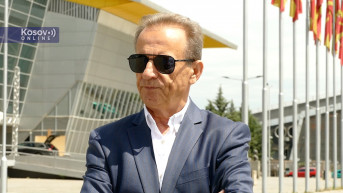
Ismet Ramadani, President of the Euro-Atlantic Council of North Macedonia, stated that the announcements of increased military spending within NATO were expected, but that Western Balkan countries will face financial consequences, as the previous standard of allocating two percent of GDP was already too high for them.
“I believe this was expected following the statement by U.S. President Donald Trump. It’s not new, as even during his previous term, the United States had demanded that NATO members increase their budgets in order to build a NATO that can genuinely respond to the challenges posed by geopolitics and geostrategy,” Ramadani told Kosovo Online.
NATO Secretary General Mark Rutte has proposed that alliance members raise their defense spending to 3.5% of GDP and commit an additional 1.5% for broader security-related expenditures, in order to meet President Trump’s goal of reaching a total of 5%.
Ramadani explained that this increase will not occur immediately, and acknowledged that the U.S. is justified in asking other NATO members to contribute more than they currently do.
“Today, the U.S. contributes about $900 billion to NATO, while all European member states together contribute around $420 billion. The American share of NATO’s budget is simply too large. That’s why their expectations are primarily directed at France and Germany, which still have the economic capacity to contribute at that level,” Ramadani said.
He noted that Poland also has such capacity, allocating between 3.5 and 4 percent of its GDP to defense, whereas Spain remains an exception, failing to meet even the basic 2% threshold.
“Unfortunately, I would say that Putin, his policies, and the events in Ukraine have forced European NATO members—and even the United States—into a sort of arms race. The ultimate goal may be similar to what President Reagan pursued at one point: drawing Russia into an arms race. If Russia continues its current level of armament, it will affect its economy and the standard of living of its citizens. So, this is not just about armament, but a geopolitical strategy of dominance by Euro-Atlantic countries—that is, NATO members,” Ramadani asserted.
He believes it is unfortunate that NATO members have been put in a position where they must significantly increase their military budgets.
“It’s not good that we are in a situation where such vast financial resources are allocated for armament, because it raises the question of the ultimate intent—what will be done with the weapons? It implies conflict, war, and detracts from what it means to invest in the economy, in human progress, in standards of living, and the well-being of citizens, whether in Europe or elsewhere,” Ramadani emphasized.
Negative impact
He explained that in such circumstances, the defense industry is brought to the forefront, along with pressure to purchase and produce more weapons.
“In the end, I believe this negatively affects normal life, life in peace, and the well-being of humanity. This applies especially to citizens of the Western Balkan countries, who will now have to endure the consequences of funding weapons and meeting a percentage target that remains very high for these countries,” Ramadani stressed.
He believes it will be difficult to persuade countries in the region to accept additional military spending.
“I think it will be hard to convince them, because it directly affects public sentiment in NATO member states. However, when weighed against citizens’ security—particularly given fears of potential aggression or war—people are increasingly thinking of Russia, China, and other nations that are in some way competing with NATO in terms of military power,” the expert explained.
He concluded that the proposed increases within NATO remain a better solution than establishing a separate European military force, which would require new resources, financing, organizational structures, and procurement of new military systems and technologies.
“With an organization that already has more than 75 years of tradition, I believe such goals can be reached more easily—even if it means 3.5% for member states. Of course, this does not need to be achieved within a single year. As far as I know, the 3.5% should be reached within the next five years, with the additional 1.5% to be allocated over a ten-year period,” Ramadani concluded.



0 comments