
Naturalization of Balkan citizens in Germany: tripled applications, demand for low-skilled jobs increases
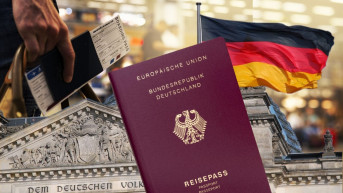
The processing time for German citizenship applications has begun to increase due to the growing demand among foreigners to obtain a German passport, German authorities announced last week. The number of applications has tripled since the introduction of a new law that significantly simplifies the process of obtaining "German papers," experts say. But how can one most easily obtain citizenship, which professions are most in demand, which Balkan country shows the highest interest, and how quickly do Balkan citizens assimilate? We sought answers from experts across the region.
By Petar Rosic
"Germany has a historic opportunity to be successful in attracting immigrants," said Chancellor Olaf Scholz during a naturalization ceremony for new citizens in the port city of Bremen in mid-August.
The new immigration regulation, which shortens the time frame for obtaining a passport and allows for dual citizenship, offers significant opportunities for Germany, Scholz added, as reported by the German news agency dpa.
The reform of immigration rules, in particular, is expected to help Germany attract the much-needed workforce, he explained.
To find out which professions are in the highest demand in Germany, reporters from Kosovo Online investigated the "front line" — agencies specializing in foreign employment.
Elena Ilievska, director of the agency Futurum in Skopje, says the most common professions are low-skilled roles in gastronomy, transportation, hygiene, and construction.
"I can't provide an exact number, but I can say the number of interested citizens leaving and applying is really large. Regarding neighboring countries, I believe Kosovo has already reached its quota of candidates, which means the interest there is even higher," she told Kosovo Online.
She explains that as an employment agency, they always advise candidates not to leave their current jobs until they receive their visa, as the process can sometimes become complicated, and in some cases, applicants can be rejected.
Once they secure a job, they go to Germany, where they need another week to complete their "paperwork."
"If we have organized appropriate accommodation, candidates go to Germany immediately, and it takes about a week to sort out the documents, open bank accounts, register their address, arrange health insurance, and then they can start working right away," says Ilievska.
She notes that candidates adapt to the new environment very quickly.
"I can say they adapt relatively quickly, and within a few months, they manage to begin the process of bringing their families to join them," she adds.
Zoran Kocoski, the director of the Kouzon agency in Skopje, explains that German law significantly simplifies the process of applying for and obtaining a visa.
"The settlement permit is issued by the local employment office in the German region where the employer is registered, and once the approval is granted, the employee, who has gained the right by signing a preliminary employment contract, applies at the German embassy and receives a visa for residence in Germany," he explains.
The initial visa is issued for one year and must be renewed afterward.
He points out that those most interested in these opportunities are individuals working in service industries and skilled trades.
"It's rare to find people in this region who have formal proof of qualifications. These are workers involved in specialized professions, such as tradespeople and those in service industries. The most common jobs offered include package delivery, driving category B vehicles, and working at airports in Germany in service roles such as baggage handling, package delivery, and so on. Other sectors include construction and similar fields. Recently, there has been a demand for people who know how to install optical cables, perform underground installations, and similar tasks. Unfortunately, other jobs are either currently unavailable or the demand for them is at the level it was 10 years ago," our interviewee explains.
He says that Macedonians are the least interested in migrating compared to other countries in the region.
"The greatest interest in employment in Germany still comes from citizens of Serbia, followed by Kosovo, Bosnia, Macedonia, and finally Montenegro. Our people continue to abuse the visa-free regime by working for three or more months, and if they manage to find an employer, they try to regularize their status in Germany through forms offered by the German government," says Kocoski.
He emphasizes that the right to relocate does not automatically extend to the entire family and notes that assimilation depends on individual character, acknowledging the possibility that many of these migrants may return to their home countries.
"What I predict is that within three to five years, there will be a process of people returning from Germany, bringing back their knowledge to our region, particularly to Macedonia. They will return with all their skills and possibly some capital to start their own businesses in Macedonia. Settling in Germany is becoming increasingly difficult due to rising property prices and the challenges of establishing a normal family life," explains the director of the Kouzon agency.
As another factor in assimilation, Kocoski points to the environment in which people from the Balkans find themselves in Germany.
"The assimilation of Macedonians or people from the Balkans largely depends on whether they live in areas populated exclusively by Balkan nationals or in environments with Germans. Balkan people still tend to cluster in certain areas and rarely choose to live in communities where only Germans reside. I'm talking about people who have been in Germany for a short time or are recent arrivals. Those who have lived there for ten or fifteen years are a completely different category of individuals," Kocoski explains.
Macedonian analyst Sinisa Pekevski believes that Germany is the most attractive destination for people from the Balkans for several reasons, including the favorable conditions offered by the German government for obtaining citizenship and the demand for skilled workers.
"European companies are preparing to enter the markets of Ukraine and Gaza after the war, for which they will need a large number of qualified people. And, of course, it's easiest to recruit them from the Balkans," Pekevski told Kosovo Online.
He adds that many of these workers initially operate in the grey zone, trying to avoid detection.
"They work in the grey market, trying to avoid being caught by the German government or police, so their stay doesn't become complicated. By legalizing their status or obtaining documents, it will be much easier for them to find better and better-paid jobs and fully regularize their stay," Pekevski explains.
When asked how quickly people assimilate, Pekevski responds that the process is very slow.
"My opinion is that the process is very slow, with people holding onto their own ways and building barriers between themselves and the rest of the population. I think this process is very slow and, in some cases, nonexistent," Pekevski evaluates.
Ljuljzim Rafuna, President of the Kosovo Chamber of Commerce, says that all categories of the workforce are equally interested in working abroad.
"We have both categories, qualified and unqualified workers. The qualified workforce, particularly medical professionals, are the most interested in working in Germany. We also have unqualified workers who go abroad for physical labor," he told Kosovo Online.
He adds that the Chamber is doing everything it can to prevent the departure of qualified workers.
"We are doing everything to keep them from leaving. If they have already left, we are trying to bring them back as investors here in Kosovo," he says. Rafuna further explains that the majority of Kosovars abroad are in Germany, Switzerland, and Austria.
"We already have the infrastructure there because the largest number of Kosovars working in the EU is in Germany, and that's been the case for a long time. Now, they all have parents or someone who helps them find housing and work, which is why people are more motivated to go to Germany rather than elsewhere. Switzerland and Austria also have significant numbers of Kosovars living and working there," Rafuna adds.
Analyst from Tirana and professor at the Faculty of Foreign Languages, Armand Pljaka, believes that the German citizenship law has brought significant changes and has facilitated the integration of all immigrants, including those from the Balkans, into German society.
"Not only has the time for obtaining documents been shortened, but priority is also given to those who set an example as proper citizens in German society," he told Kosovo Online.
However, for immigrants who show exceptional willingness and ability to integrate, the period can be shortened even further—down to just three years.
"The greatest benefits are given to those who manage to integrate into three or four aspects of life in Germany, such as learning the German language well, contributing to volunteer work, and respecting laws and regulations. So, we're talking about immigrants who have the will and capacity to integrate," our source concludes.
According to Pljaka, another important change relates to dual citizenship.
"This may not be significant for some immigrants who intended to obtain German citizenship without keeping their Albanian citizenship," our source explains.
Although the law has only recently come into effect, Pljaka highlights that data from Germany shows a 10% increase in the number of foreign nationals applying for naturalization compared to the previous year. However, he notes that the number of applications could be higher, as not all applicants receive citizenship. He warns that the current political climate in Germany is putting pressure on authorities to reconsider this law.
"Let’s not forget that Germany has general parliamentary elections next year. We’ve seen what happened in the elections in states like Thuringia and Saxony. Don’t forget that there are also elections at the end of this month in the small state of Brandenburg. These are clear signals of what could happen in 2025. It wouldn’t be surprising if a future right-wing coalition, as polls predict, leads to a complete or partial reversal of the law that came into force on June 27 this year," says Pljaka.
Foreign affairs commentator and correspondent from Germany Nenad Radicevic also notes that the procedures for obtaining citizenship have been significantly simplified, especially for those who have integrated well.
"To qualify, applicants need to pass the B1 German language exam, have lived in Germany for more than five years, and provide proof that they have not relied on social welfare or unemployment benefits in the last 20 months, meaning they can support themselves. There is even an expedited process for those who have integrated well, for example, by participating in important events in German society or working at German universities," he explains for Kosovo Online.
Radicevic mentions that due to the large number of applications, there have been delays in immigration offices across Germany, with the biggest delays in major cities such as Munich, Cologne, and Berlin.
"In Cologne, they even stopped accepting applications in May because the volume was so high, and they realized they couldn’t process them all. They plan to resume accepting applications this September. Simply put, the number of citizenship applications in the first six months of this year has tripled compared to 2023," Radicevic adds.
After the terrorist attack in Solingen, many in Germany called for a review of immigration laws, but Radicevic points out that this shouldn't affect Serbian citizens.
"To receive citizenship, there is a clause that applicants must sign a statement agreeing to the basic principles of the German constitution, including gender equality and rejecting antisemitic views. These conditions will be monitored to ensure that applications are not automatically approved but subject to some control," he explains.
He adds that the same applies to citizens from Albania, Kosovo, and North Macedonia, and that scrutiny of ties to Islamist movements or certain groups, monitored by state security, could be a filter preventing some individuals from obtaining German citizenship.
"Of course, bureaucracy and security checks are not always perfect, so this is a topic of debate. But for now, this shouldn’t greatly affect the approval of citizenship for people from the Western Balkans, though the process will be slowed. The estimated waiting time is at least one to two years due to the large number of applications, which is expected to grow even further in the coming months," Radicevic concludes.
0 comments