
Overvoting instead of veto: How would the change in decision-making in the EU impact the resolution of the Kosovo issue?
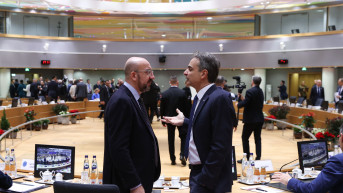
The question of revising the voting method in the European Union, which would imply that decisions on key issues are made by qualified majority voting instead of the consensus of all 27 member states, has been brought to the forefront again in European forums following Hungary's blockade for additional aid to Ukraine. Stakeholders interviewed by Kosovo Online believe that such a change in the functioning of the EU concerning foreign, security, and defense policy, as well as in the area of enlargement, could be advantageous for Pristina. In the case of such reforms, national veto power would practically be abolished, thus removing the blockage of the five member states that do not recognize Kosovo. However, they add that the path to such a radical amendment to the EU founding treaties is long and arduous, requiring unanimity.
Specifically, to remove the veto, none of the members must exercise the right to veto against it, and it is unlikely that EU countries will easily give up the opportunity to influence the creation of Union policies and decision-making in Brussels in this way. Furthermore, a change in the voting method would have to be incorporated into the EU founding treaties, and the procedure for amending them is complex. All countries must ratify changes to the fundamental treaties at home, in their parliaments, and in some cases, through a referendum.
Under the current rules, decisions on key issues that member states consider sensitive and crucial are made exclusively unanimously. This applies to foreign and security policy, taxes, finances, some areas of justice and internal affairs, social security and protection, as well as enlargement policy in the part related to significant steps, such as granting candidate status, opening accession negotiations, or admitting a new member.
To adopt decisions that are voted on by a qualified majority, it is important for 55% of countries to agree, which is generally around 15 out of 27, provided that it represents 65% of the total population of the European Union. In this decision-making method, there is a mechanism called a 'blocking minority'. This means that at least four member states, representing more than 25% of the EU population, can block decision-making.
Nine EU member countries have already requested a change to the fundamental treaty regarding voting. On the other hand, the European Parliament has narrowly adopted a resolution that would, as the authors state, finally put an end to the national veto.
According to our interlocutors, these initiatives are likely to remain at the debate level, at least in the coming election year, as new elections for the European Parliament are scheduled for June.
This means that there is little chance that the question of granting candidate status for Kosovo's EU membership will be on the agenda of European institutions in the near future, especially after the last European Council summit in mid-December gave 'green light' to Ukraine and Moldova to start accession negotiations. Moreover, the status of a candidate for Kosovo is unlikely to be discussed until the obstacle in the form of five EU countries that do not recognize it is resolved, as Brussels is not willing to demonstrate disunity in their ranks on another issue, which would almost certainly be the case in this situation.
The same opinion is held by the researcher at the Center for European Policy, Milos Pavkovic, who emphasizes to Kosovo Online that, in the enlargement policy, decisions have so far been made unanimously.
"That is why Kosovo's candidacy for EU membership, submitted in December last year, has not yet made it to the agenda of the European Council. It has not come to a vote precisely because of the opposition of the five member states that do not recognize Kosovo. Moreover, Spain, which does not recognize Kosovo, chaired the Council in the past period, and in the next period, it will be Belgium, which will be fully occupied with organizing elections for the European Parliament and discussions about changing the decision-making process within the EU. So, the prospect of deciding on Kosovo in the short term is not realistic", Pavkovic believes.
He points out that the proposals to introduce qualified majority voting in EU foreign and security policy, as well as in enlargement policy, are certainly something that benefits the government in Pristina, primarily because in that case, there would no longer be a right of veto for the five member states that do not recognize Kosovo, allowing for overruling both on the issue of candidacy and Kosovo's future membership in the EU.
He emphasizes that, even under the current procedure in areas where qualified majority voting is applied, there is a so-called blocking minority. In other words, a minimum of four states representing at least 35 percent of the EU population can block decisions made by a qualified majority.
"In the case of voting on Kosovo, if the decision-making system were to change, the five member states that do not recognize it could not block such a decision with a so-called blocking minority. Therefore, more states would have to oppose it", explains our interlocutor.
Regarding Pristina's call for Kosovo to be granted candidate status for the EU, Pavkovic says that things will not go smoothly there either.
"The candidacy of Kosovo for EU membership is very specific because it has an undefined status, and the EU has a so-called policy of neutrality towards Kosovo. The EU as an organization does not recognize Kosovo as a state. And the EU Treaty says that a 'European state can become a member'. Following that article, the EU should not approve Kosovo's candidacy, but considering the normalization talks and especially the Ohrid Agreement, which unlocks the doors to Kosovo's membership in all international organizations, Kosovo's candidacy should be viewed in that context", he notes.
He emphasizes that from this perspective, one should not expect a quick decision from the EU regarding Kosovo's European future.
"There is little chance that Kosovo will receive candidate status for EU membership in the short term. I think the EU's strategy will be to postpone the vote and the decision on candidacy until the agreements from the dialogue are implemented, and only then, as a reward for implementation, potential voting could take place. But that's in the medium or long term; in the short term, I don't expect Kosovo to get the green light for candidate status", Pavkovic says.
When asked how realistic it is for there to be any reform of EU voting procedures, given that consensus is required, meaning that all 27 member states must vote for it, Pavkovic says that countries would find it very difficult to agree to such a thing, to give up the right of veto in EU policies where they currently have it.
"Negotiations on changing the decision-making process and founding treaties, if they happen at all, will be very lengthy and arduous, and it certainly should not be expected that this process will happen overnight. It will be the subject of heated debates among member states, and for now, it seems very difficult for countries to simply give up the veto right they have", Pavkovic emphasizes.
Changes in decision-making in Brussels to enable decisions by qualified majority instead of consensus in the future are crucial for the functioning of the European Union, especially for the enlargement process and decision-making regarding the relations between Serbia and Kosovo, Jelica Minic, the President of the European Movement in Serbia, says for Kosovo Online. However, she points out that such a reform will inevitably take time, and the current Brussels administration will likely leave this issue to the new terms of the European Parliament, the European Commission, and the European Council, considering that the elections for EU institutions are scheduled for next June.
"This is a method related to the EU's foreign and security policy, and it has been circulating in the Union for some time; it's not a new thing. In the Franco-German paper on EU reforms and the enlargement process, it appears as one of the key issues. However, this inevitably takes time because it will only be implemented by the new composition of the European Commission, the European Parliament, and the European Council. Institutions that are practically on their way out will most likely not do this, or at least the probability is minimal. Given that elections are scheduled for June, I don't believe that anyone would now rush to implement substantial reforms in the EU", Minic says.
She emphasizes that we have already seen that when a problem arises, pragmatic solutions have started to be applied.
"As with the famous Orban coffee when deciding on opening accession negotiations with Ukraine and Moldova. We can expect these creative solutions in the meantime, but it certainly won't be a definitive solution until the most important EU documents change. It's not the only reform; there is a whole list, but it is very important for decision-making regarding the relations between Serbia and Kosovo and deciding on the future of Kosovo", Minic says.
A change in the EU decision-making process that would eliminate the right of national veto theoretically would be in favor of Kosovo and would remove the blockade of five EU member states that do not recognize it, she believes.
"It would be good to find some modus vivendi between Serbia and Kosovo by that time, and it will surely take at least a year. Otherwise, the Serbs will massively leave Kosovo because they are exposed to a kind of terror and pressure from the authorities in Pristina. Unfortunately, there is no readiness to integrate the Serbs fundamentally. It is more pressure on them through a series of incidents. On the other hand, Belgrade decides how they will live in Kosovo. Belgrade cannot know better than them. The Serbs in Kosovo are not given space to create the best way for their survival, the best way for relations with Pristina, above all. If it continues like this, the result will be very unfavorable because we must be aware that in 2010 there were 120,000 Serbs in Kosovo, and today there are 80,000", Minic emphasizes.
When it comes to the possibility of Kosovo obtaining candidate status for EU membership in 2024, which is again advocated by representatives of Pristina after the "green light" was given to Ukraine and Moldova for the start of accession negotiations, Minic assumes that it will be closely related to how the dialogue will proceed, i.e., the implementation of agreements.
"There is not much more talk about the dialogue than about implementation now. I think a lot will depend on that because why would, figuratively speaking, Kosovo be favored, why would concessions be made to it if what has been accepted is completely ignored? And that is the new Brussels Agreement from February and the implementation plan from Ohrid. I think the attitude towards the implementation of these documents will greatly influence the EU's attitude towards both Kosovo and Serbia", our interlocutor says.
The President of the European Movement adds that after Banjska, Serbia was forced to take several steps.
"Above all, the issue regarding the power system was resolved, there were no comments on the introduction of Kosovo license plates for motor vehicles, and it was accepted to organize elections. Now the Kosovo side is delaying, but these are all steps that show some progress. However, it is a kind of coercion because the incident in Banjska showed how sensitive, vulnerable, and dangerous everything is", Minic emphasizes.
On the other hand, Professor at the Faculty of Political Sciences, Slobodan Samardzic, says that it is almost impossible for there to be a reform of the European Union that would involve a change in the decision-making system, where decisions on key issues in foreign policy and enlargement would be made by qualified majority voting instead of the consensus of all 27 member states. He points out that Kosovo is unlikely to obtain candidate status for EU membership due to the five Union countries that do not recognize its independence.
Samardzic states for Kosovo Online that the EU has had many problems with its functioning in the last 15 years, and the discussion about reforms to the decision-making system, which has been brought up again, goes back a long way. He emphasizes that the Founding Treaty of the EU, which is still in effect today, was adopted in 2009, and it is outdated, especially during the crisis and the way it was resolved.
"They are now considering changing the treaty in the area of decision-making, primarily for joint foreign, security, and defense policy. They have a significant problem with the decision-making process, where unanimity is required for key decisions and a qualified majority for the so-called actions carried out based on a consensus decision. The Union is genuinely complicated, and it hinders its efficiency in foreign, security, and defense policies. Since this has become the most important EU policy, to its great detriment, they are simply looking for a way to make decisions more efficiently", Samardzic says, who believes that the EU does not have independence in this matter but depends on the policies of the United States and NATO.
The process of changing the decision-making procedure, he notes, is very complicated and requires amending the Founding Treaty of the EU. He recalls that such changes were made at least five times between 1987 and 2009. At that time, he adds, there was a basic consensus for changes, and they were relatively easy to implement, although this procedure involves an intergovernmental conference that lasts at least a year. The European Council convenes it, and it is conducted by the Council of General Affairs, with the involvement of all organs, organizations, institutes, and public opinion, and only then is a decision made about the change.
"This treaty adopted in 2009 seems petrified. They are afraid to initiate the change process because they lack consensus on many issues, especially regarding foreign, security, and defense policy. This is a longstanding issue, intensified recently, but it has no effect. They won't reach a consensus for a very long time; they have more important matters, and this was imposed by the US and NATO as an important topic due to the conflict between Russia and Ukraine. The EU has problems functioning in vital areas such as the economy, and energy... It's a system in deep crisis, difficult to overcome because they are slow to decide on changes since changes require the consensus of 27 member states. That's almost impossible", Samardzic believes.
When it comes to decisions related to Kosovo, Samardzic points out that the consensus of all 27 member states is required.
"Five member states are in a non-recognition status regarding Kosovo. Only one of them, especially five, can retain some important decisions. They don't do it to avoid internal conflicts over these issues. However, when deciding on crucial matters, such as opening accession negotiations between the so-called Kosovo and the EU, there must be a consensus. The agreement leading to that must be signed not only by Brussels and the aspiring country but also by all 27 member states. They would never reach consensus in that regard, and it would block things", Samardzic says.
According to him, the EU's policy towards Kosovo is one that doesn't pay much attention to legal rules, especially international law. He points out that EULEX, representing the EU in Kosovo, was responsible for the rule of law, but they did nothing, and now they are present there only as observers.
"The EU's policy in Kosovo has completely failed, primarily in the economic field because, according to Resolution 1244, the EU had the task of rebuilding Kosovo. However, Kosovo is not only not economically rebuilt, but it is the poorest region in Europe, with the population moving away, living solely on foreign aid, and the result of misguided trade policies and processes such as human trafficking, drug smuggling, and weapons smuggling. So, the Union is not doing well there, and it lacks the strength to reform from within", he says.
In response to the question of the likelihood of Kosovo obtaining EU candidate status, considering that five member states do not recognize it, and what a potential change in the Union's decision-making process would mean in this context, Samardzic points out:
"In the case of Kosovo, candidate status cannot be granted due to these states that do not recognize Kosovo because the Stabilization and Association Agreement would have to be signed with all of them. Admittedly, it exists; it was signed with Kosovo by the EU five or six years ago, but it is not identical to the documents the EU has with Serbia, North Macedonia, or Montenegro, previously with Poland, the Czech Republic, and others. In the case of Kosovo, it has special chapters related to a special case and do not apply, for example, to political cooperation. Only under those conditions have these five countries allowed that signature. It's a quasi-accession agreement, so it would likely be for candidacy, with some heavy reservations from these countries".
According to Samardzic, all of this may distract public attention, which "eagerly anticipates happiness and a good life in a free and prosperous Europe, but practically, it doesn't move things an inch forward".
"If America orders it, Kosovo could get candidate status, that's the EU's position. If NATO says we need it for our global goals, it could happen. But then it's no longer the European Union", Samardzic concludes.
Professor at the Department of International Law at the University of Pristina, Besfort Rrecaj, states that changes to the founding treaties of the European Union, which would involve introducing qualified majority voting instead of the current consensus of all 27 members or eliminating the right of veto, could take until 2030. He hopes that the normalization of relations between Serbia and Kosovo will occur long before new reforms are established in the EU.
Rrecaj, speaking to Kosovo Online, explains that the basic arrangements for decision-making processes in the EU are prescribed by the Lisbon Treaty, which is binding for the member states. The only way to change the voting system within the EU is a formal amendment of the provisions of the current Lisbon Treaty.
"The European Parliament, in accordance with Article 48 of the Treaty on European Union, has already asked the European Council to convene a convention that would formally initiate the process of amending the basic treaties. I expect this to start in 2024. The European Parliament already recommends important institutional and legal changes, including the expansion of areas where decisions are made by a qualified majority, including the common foreign and security policy of the EU, as well as intermediate steps in the enlargement process. This is a very positive sign if approved", Rrecaj says.
He points out that these are profound changes to EU treaties, which is a lengthy process that will likely take years before completion, once ratified by each contracting state individually.
When asked if such changes could affect Kosovo's candidate status for EU membership, given that five member states currently do not recognize it, Rrecaj suggests that he "hopes that the normalization of relations between Kosovo and Serbia will be completed by then, as our people do not have time to wait for the completion of this revision process".
"I hope that the normalization of relations between Kosovo and Serbia will happen long before new EU reforms are established, which could take until 2030, depending on the revision agenda and sensitive issues that need to be addressed. The European Parliament has requested a very broad and ambitious agenda, which means that compromises could take longer. In any case, the revision of EU treaties is expected to play a positive role in the enlargement process", Rrecaj states.

0 comments