
Pavkovic: Failure to form a government used as a convenient excuse for Pristina to avoid dialogue obligations
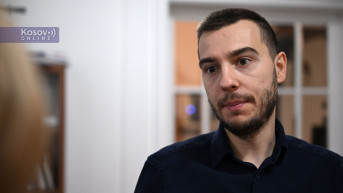
The Director of Strategy at the Center for European Policy in Belgrade, Milos Pavkovic, told Kosovo Online that the February elections in Kosovo largely contributed to the lack of progress in the Belgrade–Pristina dialogue this year, and that the failure to form a government was used as a convenient excuse for Pristina to avoid its obligations arising from the dialogue.
Pavkovic, however, emphasized that it remains questionable whether the results of the dialogue would have been any better even if a government had been formed.
“It seems to me that for Self-Determination, in previous years as well, neither dialogue nor normalization with Belgrade – and especially not the Community of Serb Municipalities – were priorities on its agenda. So, even if the government had been formed, it is highly questionable whether the results would have been any better. The political crisis that has lasted the entire year in Kosovo, along with uncertainty over whether and by whom the government would be formed, combined with political instability in Serbia, has effectively resulted in no progress this year in the normalization process,” Pavkovic said.
He recalled that there were several meetings within the dialogue framework, based on bilateral visits by EU Special Representative Peter Sorensen to Pristina and Belgrade, without any concrete results.
According to Pavkovic, the vacuum in the dialogue benefited Pristina, as it was not under pressure to establish the CSM.
“The entire focus was on Pristina’s obligation to start the process of forming the Community of Serb Municipalities, and they somehow managed to avoid responsibility for their inactivity – that is, for failing to fulfill the obligations stemming from the Agreement on the Path to Normalization. Had the government been formed, there would have been much more criticism and pressure from Brussels and EU member states. This way, they conveniently avoided it by the mere fact that the government was not formed,” he explained.
Although, as he noted, the government in its technical mandate made a number of decisions it normally should not have made given the nature of its status, it did so while consistently avoiding any constructive engagement with the Serbian community and the Community of Serb Municipalities.



0 comments