
Muleskovic: Montenegro import-dependent, most inflation imported
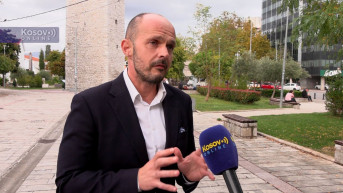
Montenegro’s inflation rate is influenced by both international and domestic factors, but one of the main reasons for the significant rise in prices is the country’s dependence on imports, economic analyst Mirza Muleskovic said, adding that EU membership opens up major opportunities for economic growth and development.
“Montenegro’s inflation rate is influenced by international factors, but also by domestic factors, namely policies that have led to price increases. Over the past few years, Montenegro has twice introduced administrative wage increases, which boosted demand and increased costs for businesses, resulting in a general rise in prices. Other national policies that increased costs for businesses have also contributed to higher prices,” Muleskovic told Kosovo Online.
He noted that Montenegro was an import-dependent country, which was one of the main reasons for such a significant increase in prices.
“Most of the inflation is imported, meaning that almost everything we consume, virtually everything we have on store shelves in Montenegro, comes from abroad. The fact is that inflation is a problem in all countries, both in the region and in the EU. Consequently, part of the inflation, which stood at 5.2 percent this September, is imported, while another part has been generated by domestic policies,” Muleskovic said.
He noted that a major problem for Montenegro was the insufficient diversification of its economy, meaning that developments at the international level ultimately spilled over into the country, sometimes with an even greater impact.
The International Monetary Fund forecasts inflation of 3.5 percent for Montenegro, while Muleskovic noted that citizens would probably say that the actual increase in prices was even higher.
“Looking at the first nine months of this year, average inflation stands at 3.7 percent, so we will see whether the estimate might be revised slightly upward. But what we hear from citizens is that they believe prices have risen much more. We can see price increases in supermarkets and services. There are now announcements in Montenegro of another wage increase, and businesses have automatically responded by announcing price increases,” he said.
He explained that any uncertainty in the economy led to higher prices because businesses did not know what to expect several months down the line.
“I hope we will manage to address the problem because inflation is not a problem only for citizens. At one point, it ‘suits’ the state because it boosts budget revenues, but after a certain period—and in our case this has already been going on for almost four years—it becomes a major enemy of the state,” Muleskovic warned.
He pointed out that if inflation was not brought under control and persisted for a prolonged period, it became an economic and social problem, as well as a problem for the state, because all costs increased, leading to greater demands from all sides.
“That is precisely what inflation creates—much greater demands, while our economies have not grown enough to be able to finance all of them,” he noted.
Asked how the problem could be addressed, he said that the key—and the remedy for inflation—was strengthening domestic production in Montenegro, without which price stability could not be expected.
“If we had had well-developed domestic production over these past four years, we could have used subsidies to control prices. As things stand, we are predominantly dependent on imports and therefore cannot control prices to any significant extent,” Muleskovic added.
Regarding what he described as domestic production, he pointed to the problem of an undiversified economy, in which more than 30 percent of revenues came from tourism, while agriculture remained insufficiently developed and there was virtually no other significant production.
“That is precisely where the problem lies. If we had domestic production, policies could be used to influence prices,” Muleskovic said.
He added that Montenegro’s largest economic partners were the countries of the region, meaning that any slowdown or acceleration in regional economies also spilled over into Montenegro.
“Any price disruptions, particularly if we are talking about Serbia, from which we import the most, ultimately spill over into Montenegro as well. The country has excellent economic cooperation with all countries in the region, and that cooperation should be much stronger. However, in the context of all countries aspiring to join the EU, as a single market we could benefit much more from the European market. Montenegro is far ahead of the other countries in the region; it will become an EU member in 2028, and that is positive for the country because EU membership opens up major opportunities for economic growth and development,” Muleskovic concluded.



0 comments