
Maliqi: I don't believe in election reruns; Kurti will try to prolong the crisis as long as possible
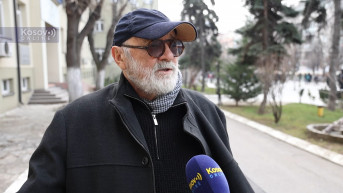
Pristina analyst Shkelzen Maliqi assessed for Kosovo Online that he doubts the possibility of repeating elections and believes it is most realistic for a new government to be formed by opposition parties together with minority communities. However, he expects that the current Prime Minister, Albin Kurti, will do everything to prolong the crisis as long as possible.
"I don't believe we will see a 'Bulgarian' or 'Israeli' scenario where elections are continuously repeated. The votes are divided, but the opposition holds the majority. If they agree among themselves, Kurti can only maneuver to prolong the crisis around forming a government. In this, Kurti and Self-Determination are at an advantage because they will be the first to receive the mandate," Maliqi stated.
He reminds that Self-Determination will first get the opportunity to form a new government, but currently, they lack partners.
"Even during the campaign, and even before, they have declared against everyone. In his victory speech, Kurti called the opposition animals, yet he did not win. He neither achieved his goal of winning 500,000 votes nor does he have the majority to form a government with the minorities. He could potentially do so if he includes the Serb List or the Serbian minority, but this would cause him to lose trust among his electorate," the political analyst said.
He also finds it hard to expect that Kurti could form a coalition with any of the parties that received the most votes, like LDK or PDK.
"They are all in very poor relations. He might possibly make a deal with Ramush (Haradinaj, ABK), but I believe even he would not enter into that combination," Maliqi specifies.
From there, the most realistic expectation is for the opposition to come to an agreement.
"They have the ability to form a majority among Albanian voters and to make a government with some of the minority parties. If everything goes this way, when Kurti gives up on forming a new government, or is unable to do so, then the opposition will try," Maliqi is convinced.
He also explains that the international community in Kosovo insists that the next government be formed from a larger coalition, but he doubts that Kurti will accept such an option.
"The ambassadors and the Quint insist on forming a grand coalition. They will offer to make a government of all political forces. However, Kurti will probably not join this government regardless of the fact that he has made both the Brussels and Ohrid Agreements and agreed to the Franco-German plan. But, he does not want to be the implementer of these as he has also been blocking them," Maliqi emphasizes.
On the other hand, he is convinced that a government formed by the opposition could fulfill the international obligations taken and then organize new elections.
This is possible either in the autumn when regular local elections are scheduled or at the beginning of next year when presidential elections are due.
"For a new president, a two-thirds majority is required and in that case, the government would then call elections. There is also the possibility of forming a technical government, but this is less certain at this moment," Maliqi concludes.


0 comments