
Radicalism in the Western Balkans – why are young people easy prey for violent extremists?
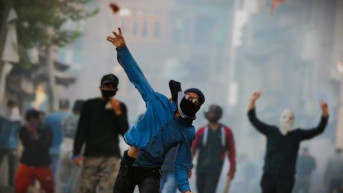
Inadequate education and poverty create fertile ground for the emergence of radicalism and violent extremism, experts from various parts of the region told Kosovo Online. They warn that the greatest risk of joining such groups is among young people who, dissatisfied with the opportunities society offers and driven by the desire for a better life, become easy prey for recruitment.
Written by Petar Rosic
According to the 2024 Progress Report, the number of young people from Kosovo who are neither in education nor employment has slightly increased to 33.4%, which remains the highest in the Western Balkans region.
Former director of the Social Employment Center, Vebi Mujku, warned that many of these young people have a tendency toward negative behavior. As he emphasized, these young people feel discriminated against because they cannot find jobs in public institutions, and the private sector also fails to provide them with adequate opportunities.
“As a result, they remain passive and often turn to radicalism and other negative phenomena that are frequently reported,” Mujku said.
Analyst from Pristina, Artan Muhaxhiri, agrees that young people who do not invest sufficiently in education are more prone to adopting dogmas, including radicalism.
"The level of education and overall emancipation is directly linked to the level of critical thinking, which is why young people who do not invest enough in education are more inclined to accept dogmas, including radicalism. However, I believe it is more dangerous that they accept populism without critical thinking, as it influences elections, the political spectrum, and thus allows politicians to more easily succeed with baseless promises, fake news, and promises that are impossible to fulfill in practice. This affects their lives, but also the lives of others," Muhaxhiri says for Kosovo Online.
He notes that the problem of radicalism existed several years ago, when ISIS was growing stronger, and there were connections between radical groups in Kosovo and Syria.
“However, this is no longer the case, as even the state has made efforts to curb it. They monitored and prosecuted people connected to ISIS, who were recruiting youth to join ISIS. This is no longer the case to that extent, of course,” the analyst from Pristina says.
Marko Savkovic, senior advisor at the ISAC Fund, states that young people without employment or prospects are more susceptible to extremist ideologies, and this trend applies not only to Kosovo but to all societies across the Western Balkans.
"As we have seen in recent years, it is not only radical Islamist ideologies, there are also others. These include violent fan groups and criminal organizations. Young people, especially young men, though there are also women who become radicalized, are certainly at high risk of such influences," Savkovic tells Kosovo Online.
He notes that at one point, Kosovo led in terms of radical Islam.
"If you look at the number of young people per capita, to put it that way, who ended up in Syria and other countries fighting for the Islamic State, Kosovo was, at one time, leading. Since then, penalties have been significantly strengthened, and great efforts have been made to bring those individuals to justice. Some of them are now serving prison sentences," our interlocutor explains.
He emphasizes that radicalism has been suppressed, but certain consequences remain.
"I would say that this type of radicalization is now less prominent. This is also evidenced by the fact that, in recent years, apart from incidents in Sarajevo and a situation we had in Belgrade, there haven't been larger incidents, which is fortunate. But radicalization, manifesting through attacks on people of different nationalities or religions, remains a persistent danger, unfortunately undermining our society from within even today," Savkovic assesses.
Entela Binjaku, professor of sociology at the Faculty of Social Sciences at the University of Tirana, warns that a disturbingly large number of young people in Albania do not attend school or are not employed. As she said for Kosovo Online, this makes them easy targets for criminal groups and radical religious networks.
Binjaku explains that, with adequate education and stable employment, these young people could be an active and valuable workforce for Albania. Unfortunately, she says, criminal groups easily lure them in by exploiting their poverty, low educational levels, and lack of job skills.
"Statistics show that most prisoners are young people. These young individuals are involved in drug distribution, possession, trade, and the use of firearms or knives. Many have also engaged in theft," she explains.
She emphasizes that many young people who have left compulsory nine-year education have also been drawn into radical religious networks.
"In this case, it’s the spiritual allure these networks exert over them. They find themselves in these networks because they don’t feel a sense of belonging in society. They identify with the extremist ideas of these religious groups. Let’s not forget that young people have ambitions and dreams. They want proper education, employment, and they hold high expectations for themselves, but they lack the opportunity to fulfill these aspirations. This makes them increasingly prone to violent behavior," the sociologist from Tirana explains.
She believes that such a low level of education prevents young people from changing their lives, leading them to turn to crime, believing it offers greater benefits.
"This issue affects all parts of Albania. The lack of education and employment results in a loss of strong family ties that once shaped Albanian values, leading them increasingly toward criminal behavior. This is reflected in the high number of young people imprisoned and in the almost daily criminal incidents involving young protagonists," she warns.
University professor from Skopje, Cane Mojanoski, also believes that the education system in North Macedonia, as well as in other countries in the region, is affected by a decline in values, which, along with poverty, contributes to the easier acceptance of extremist ideologies among young people.
"In Macedonia, around 42% of the population falls into the category of social risk due to poverty. About 22% barely meet basic survival needs, while the same proportion lacks resources for heating... When you consider that the educational system, especially higher education, is subject to a particular form of participation and that a population this impoverished struggles to send their children to study in Skopje or other university centers, we can conclude that poverty is one of the factors pushing youth toward extremist behavior, ideology, or practices," Mojanoski tells Kosovo Online.
He explains that young people are more easily manipulated because of widespread feelings of discontent and injustice, which are further intensified by various other factors.
He also emphasizes that publicly available analyses show that in the past decade, nearly 900 people from the region have been identified as supporting or belonging to groups of radical extremists. Of these, around 200 were under 18 years old.
"This is one indicator that radical concepts and worldviews are appealing to young people, who are often left to fend for themselves due to poor economic conditions, broken families unable to dedicate themselves to the educational process, and a schooling system that, by and large, is focused on meeting mandatory education requirements without much concern for the quality of knowledge. The entire educational system, including higher education, is deeply affected by an erosion of values due to corruption and corrupt practices," Mojanoski explains.
He adds that this phenomenon is not unique to Macedonia but is also present in Western Balkan countries that have largely failed to tackle corruption and poverty, neglecting the educational system and the values it should foster.
The solution, according to the professor, lies in establishing the rule of law and a functioning legal system. Without this principle, he adds, the sense of disenfranchisement and lack of equal opportunities in society fuels discontent.
"One of the fundamental problems in Macedonian society, and, more broadly, in the Balkans, is that citizens do not trust institutions, they do not trust the system. And without fulfilled individuals, no society can hope for its future, nor can it expect citizens who will be ready to sacrifice and contribute to building a community where they feel free and fulfilled," Mojanoski concludes.



0 comments