
Regional cooperation at a crossroads: Tensions in Kosovo and the perspectives of the Berlin process
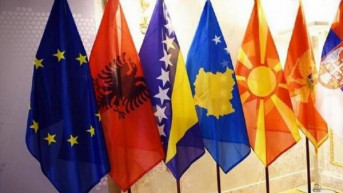
Leaders of the Western Balkans will gather on October 14 at a summit within the framework of the Berlin Process. After the warning to Kosovo's Prime Minister Albin Kurti for violating CEFTA rules, the upcoming summit is, for many, one of the more uncertain ones. Leading analysts from across the region commented for Kosovo Online on what the atmosphere might be like at the upcoming meeting, how realistic the expectations are regarding future outcomes, and the possibility of excluding Pristina from this process.
Written by: Petar Rosic
As Germany prepares for October 14, when it will host a summit marking the 10th anniversary of the EU-linked platform for high-level cooperation between Western Balkan countries, the German envoy Manuel Sarrazin has visited Kosovo twice.
During his visit, Sarrazin conducted a detailed analysis of the current situation and the challenges Kosovo faces in the context of the Berlin summit and the future of the Berlin Process. He warned that if Kosovo continues with the ban on imports of goods from Serbia, it could face exclusion from CEFTA.
“Kosovo could face calls for exclusion from the Central European Free Trade Agreement (CEFTA) and other sanctions if it continues to ban imports from Serbia,” Sarrazin said.
He expressed concern that if the Berlin summit on October 14 fails to secure a common regional market, the idea of the 'Open Balkans' could be revived.
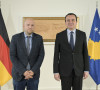
The German Ambassador to Pristina, Jorn Rohde, previously stated that Sarrazin urged Kosovo’s Prime Minister Albin Kurti to lift the ban imposed in June 2023 on the import of Serbian-origin products, which Sarrazin says is blocking free trade in the region and obstructing CEFTA.
In exchange for lifting the ban, Kosovo would no longer be officially represented within CEFTA by the UN mission, UNMIK, but would represent itself.
Despite warnings from Germany, the head of the parliamentary group of Vetëvendosje, Mimoza Kusari-Lila, stated that the Government of Kosovo made the decision to ban Serbian goods 'for security reasons' and that it will be lifted when conditions allow.
Assistant Professor at the Faculty of Political Sciences in Belgrade, Marko Dasic, told Kosovo Online that the Berlin Process could be a good diplomatic event for easing tensions in the region but does not believe it will bring any significant diplomatic outcomes.
Dasic notes that everyone is aware of the problems in economic regional multilateral organizations and recalls that there are 'even smart sanctions against Albin Kurti, which are currently at the diplomatic level in the form of stronger language in statements.
“The Berlin Process is a platform around which there is consensus among all regional countries, unlike some others, which are deemed competitive, like the Open Balkans, so the Berlin Process can indeed be a good diplomatic event for easing tensions, but it is far from bringing significant diplomatic outcomes,” concludes our interlocutor.
Economist from Pristina, Safet Grxhaliu, explains to Kosovo Online that the goal of all regional initiatives is to use economic cooperation as a bridge to connect people and citizens after the war.
“The biggest problem is that some people still do not understand what European integration means and the significance of economic cooperation in that direction. After the Stability Pact in 1999, in 2006, we had CEFTA, which was an open window for regional cooperation, economically, politically, and socially integrated. After CEFTA, there is also the Regional Cooperation Council (RCC), which is of great importance for certain parameters of economic cooperation in the Western Balkans. And it is precisely because of this cooperation within CEFTA and RCC that we have the Berlin Process, where Kosovo is represented as an equal partner in the entire domain of the Western Balkans,” Grxhaliu states.
He adds that the significance of the Berlin Process lies in the fact that, in addition to various initiatives, it also has the financial power to support or finance all these projects in the Western Balkans.
“Therefore, there is no alternative but dialogue and cooperation, there is no alternative but eliminating all these barriers,” our interlocutor states.
He adds that CEFTA is closely connected with the Berlin Process.
“There are three important rules that are being implemented as a result of these initiatives, and they are the Green Agenda, freedom of movement for people, capital, goods, and services, and the most important thing, which will be the top priority, is the Common Regional Market. Then the question arises, if we have these barriers, how will that be implemented?” he says.
The fact is that these barriers are not being discussed by Serbia, Kosovo, and Macedonia, but by economically developed European countries such as Germany, and that is a new development.
“There will surely be a solution. If not during this Berlin Process, where the 10th anniversary will be celebrated, then certainly soon this must become a thing of the past,” he is convinced.
When asked whether it is possible for Kosovo to be excluded from this initiative, Grxhaliu says that there are several alternatives.
“First, Kosovo does not have the power to play a rejecting policy, to refuse any proposal from the United States or the European Union, and second, Kosovo cannot slow down the functioning of CEFTA and the Berlin Process. There are several alternatives. The first is that CEFTA will move forward without Kosovo, the second is a new formula of 6 minus 1, and the third is that the idea of the Open Balkans will gain strength,” our interlocutor explains.
He notes that there are not only barriers between Kosovo and Serbia, but also between Serbia and Montenegro, as well as Albania and Macedonia.
“Therefore, we cannot talk about a regional common market when we already have such barriers, and when you add to that the other issues, such as the fact that Kosovo citizens cannot travel to Bosnia or from Bosnia to Kosovo, then the question arises: what is the purpose of everything that is happening? I think that any regional integration process should be depoliticized, that the economy should be the key to bringing people closer, and that economic experts should contribute more,” concludes Grxhaliu.
Director of the Institute for European Policy in Skopje, Simonida Kacarska, stated for Kosovo Online that the trade barriers imposed by Pristina are certainly not seen in a positive light and that it would not be surprising to see a scenario where five countries will participate or agreements will focus on them during the summit.
“The big narrative of this initiative is that through the economic integration of these countries, through the creation of a common economic market, which has been signed as a document and project, we will create conditions for everyone to progress economically, and this will contribute to the reconciliation of the region, which we all know is necessary. Of course, the greatest benefit will be for the largest economy in the EU, if that is the question. But the goal is actually for all of us to benefit, because the foundation and motivation of this process is very similar to that of the European Union, that is, through the economic unification of former enemies or countries that had no connections or broke them off, to contribute to further rapprochement,” she said for Kosovo Online.
Political analyst from Tirana, Skerdjan Duli, says that Kosovo is suffering great economic consequences due to Albin Kurti's poor policies.
“Kosovo's Prime Minister, Albin Kurti, is in a permanent conflict with all members of the international community. I consider his approach completely wrong, because that’s what it is. This conflict, whether with the Americans or European diplomacy, reflects a great irresponsibility on Kurti's part, and this is a very high price for Kosovo. In almost four years of his government, there has been a drastic decrease in foreign investments in Kosovo, which means that the international factor not only affects the political side but that conflict with it also has economic consequences,” says the interlocutor from Tirana.
0 comments