
Gerxhaliu: Kosovo cannot slow down CEFTA and the Berlin Process
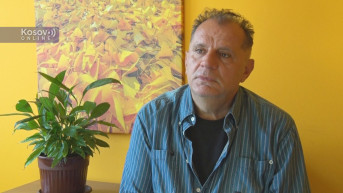
Economist Safet Gerxhaliu told Kosovo Online that all regional initiatives need to be depoliticized, with the economy being the key to bringing the region closer together. He emphasizes that Kosovo cannot slow down CEFTA's work and believes that the Berlin Process will contribute to solving regional problems.
Gerxhaliu explains that the goal of all regional initiatives is to use economic cooperation as a bridge to connect people and citizens after the war.
“The biggest problem is that some people still do not understand what European integration means and the importance of economic cooperation in that direction. After the Stability Pact of 1999, we had CEFTA in 2006, which opened a window for regional cooperation and economic, political, and social integration. Following CEFTA, there is the Regional Cooperation Council (RCC), which is crucial for certain parameters of economic cooperation in the Western Balkans. And precisely because of this cooperation in CEFTA and RCC, we have the Berlin Process, where Kosovo is represented as an equal partner within the Western Balkans,” Gerxhaliu noted.
He adds that the significance of the Berlin Process lies in its financial power to support or fund all these projects in the Western Balkans.
“Therefore, there is no alternative except for dialogue and cooperation, no alternative but to eliminate all these barriers,” he said.
Gerxhaliu notes that CEFTA is closely linked to the Berlin Process.
“There are three important rules to be implemented as a result of these initiatives: the green agenda, the freedom of movement for people, capital, goods, and services, and, most importantly, the priority of all priorities – the common regional market. And then the question arises, if we have these barriers, how will this be implemented?” he asked.
He points out that it is not just Serbia, Kosovo, and North Macedonia discussing these barriers, but economically developed European countries like Germany, which marks a new moment.
“There will certainly be a solution. If not during this Berlin Process, where we will celebrate its 10th anniversary, it must become a thing of the past soon,” Gerxhaliu said confidently.
When asked if it is possible for Kosovo to be excluded from this initiative, Gerxhaliu explained that there are several alternatives.
“First, Kosovo does not have the power to play such a defiant role, to reject any proposal from the United States or the European Union. Second, Kosovo cannot slow down the functioning of CEFTA and the Berlin Process. There are a few alternatives. The first is that CEFTA will continue without Kosovo. The second is a new formula, 6 minus 1, and the third is that the idea of the Open Balkan initiative will be strengthened,” he explained.
He also notes that there are not only barriers between Kosovo and Serbia but also between Serbia and Montenegro, as well as between Albania and North Macedonia.
“Therefore, we cannot talk about a regional common market when we already have such barriers. And when you add to that other problems, like the fact that citizens of Kosovo cannot travel to Bosnia or vice versa, the question arises: What is the goal of everything that is happening? I think that any regional integration process must be depoliticized, with the economy being the key to bringing people together, and that economic experts should play a greater role,” Gerxhaliu concluded.


0 comments