
Resolution on the Kosovo war – Pursuit of truth or restriction of speech on KLA crimes?
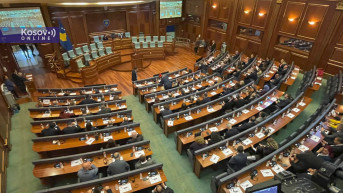
The Assembly of Kosovo last week adopted a resolution “on truth and the dignity of war victims,” which, inter alia, calls for the punishment of the denial or minimization of crimes committed by the Serbian side. Interlocutors of Kosovo Online warn that this resolution, together with potential criminal prosecution, effectively prevents the questioning of the official narrative promoted by Pristina, emphasizing that it also jeopardizes Serbian and other victims of the Kosovo Liberation Army (KLA), as well as the freedom of expression of all citizens in Kosovo.
Written by: Jelena Novakov
The resolution, proposed by the Democratic Party of Kosovo, was adopted on Friday. It states, among other things, that it is the responsibility of Kosovo’s institutions, including the judiciary, to investigate and document crimes allegedly committed by Serbia during the Kosovo war.
In addition, the resolution calls for amendments to Kosovo’s Criminal Code to introduce penalties for individuals who “deny or minimize crimes committed by Serbia during the 1998–1999 war,” as well as for those who “commit acts that violate the dignity of victims, approve, glorify or justify the tyranny and arbitrary rule of Serbia and the crimes committed in Kosovo, or disseminate Serbian propaganda.”
Interlocutors further assert that Prime Minister Albin Kurti is attempting to construct a “third republic” on a national basis, which, they argue, is reflected in this resolution that pays tribute to the “sublime sacrifice of the Albanian people, all martyrs of the nation, the fallen, and all those who contributed or sacrificed in any way for freedom and independence.”
Citizens, media, and institutions are called upon to participate in the collection of evidence with a view to initiating indictments against Serbia.
Following controversy surrounding an exhibition by Shkëlzen Gashi, which also referenced Albanian victims of the KLA, the resolution obliges all institutions, prior to providing financial or any other form of support to activities addressing the wartime period, to ensure the “content, accuracy of data, and historical truth” of such materials.
Safeguarding the Dominant Narrative
Historian Aleksandar Gudzic stated for Kosovo Online that the purpose of the resolution is to prevent the dominant narrative of the Kosovo war from being questioned, adding that Albin Kurti perceives himself as the “father of the third Kosovo republic,” which he describes as exclusively national and built upon Albanian victimhood.
“In my view, Kosovo is abandoning the concept of a civic state and entering a phase of a national state,” Gudzic stated.
He further assesses that Kurti regards the Serbian community as an obstacle to this objective, given that the international community, within its mandate, is tasked with safeguarding the rights of the Serbian population in Kosovo.
Regarding the resolution, Gudzic warned that it will deepen distrust among Serbs toward Kosovo institutions and that freedom of expression is also at risk.
“It will undoubtedly limit the possibility of examining the responsibility of the KLA in the wars of the 1990s for potential war crimes. It will also undermine the ability to express alternative views about those conflicts. In my opinion, the essence of such measures is to prevent any questioning of the dominant narrative in Kosovo’s academic, political, and broader public discourse,” he stated.
He added that while the international community should respond, he remains skeptical that such a reaction would lead to any meaningful change in the positions of Kosovo’s political elites.
Threat to Freedom of Expression
Historian Petar Ristanovic shares the assessment that the resolution is intended to prevent scrutiny of the official and widely accepted narrative of the war.
“I believe that some historians, especially over time, will feel freer to research and speak about the war, its causes, and its immediate aftermath,” he said, noting that the resolution represents an attempt to restrict such inquiry.
According to him, the resolution may serve as a form of pressure and could jeopardize freedom of expression for all citizens, including Albanians, while also increasing the risk of interethnic tensions.
“It may have negative consequences not only for interethnic relations but also in generating long-term tensions. For Serbs living in Kosovo or those who return to visit their homes, the sense of insecurity remains—they may constantly face the possibility of investigation. We have seen cases where individuals are arrested and charged with war crimes more than two decades after the conflict,” Ristanovic stated.
He also questioned the feasibility of objective historical research under such conditions.
“Under the guise of protecting the dignity of victims, this resolution effectively seeks to enshrine a single ‘truth’ about the war. Any attempt to question it could potentially entail criminal liability. Does this mean that a historian who challenges the accepted narrative could face prosecution?” he asked.
Ristanovic further warned that Serbian victims may be particularly vulnerable, given that the official narrative in Pristina generally does not acknowledge KLA crimes.
“If a Serbian victim—or a family member of a victim of KLA crimes—speaks about their experience, could they be subject to prosecution, given that one of the accepted narratives in Kosovo is that the KLA did not commit war crimes? This raises numerous concerns and potential issues,” he added.
Criminalization of Alternative Interpretations of the Past
Historian Milan Gulic stated that the primary aim of the resolution is the criminalization of alternative interpretations of the past. He emphasized that this would not only affect Serbs living in Kosovo but also others of Serbian nationality visiting the territory, while expressing skepticism regarding any response from the international community.
“This resolution, like many measures adopted by Pristina’s institutions, does not contribute to improving interethnic relations in Kosovo and Metohija, but rather reinforces the dominance of the Albanian factor and the marginalization of the Serbian community. However, in the broader context, this resolution may not be the most pressing issue—there are more immediate concerns affecting everyday life,” Gulic stated.
He noted that post-conflict societies across the Western Balkans maintain differing interpretations of the wars of the 1990s.
“The conflict in Kosovo is viewed differently by Albanians and Serbs, and that is not new. The key issue would arise if alternative interpretations begin to be sanctioned—this is where the real impact lies, not in the resolution itself,” he explained.
According to Gulic, the principal concern is the potential criminalization of differing perspectives on the war.
“The core problem would emerge if what the resolution envisages is implemented—that any alternative view or denial of certain aspects of crimes attributed to Serbs could be treated as a criminal offense,” he said, drawing a parallel with the so-called Inzko law in Bosnia and Herzegovina.
He concluded that while freedom of expression is indeed at risk, such developments are not unprecedented.
“We live in a time where the struggle for freedom has paradoxically led to the restriction of various freedoms, including the freedom to hold alternative views. This could pose a challenge not only for Serbs in Kosovo but for anyone who enters the territory and expresses a different interpretation of the 1998–1999 conflict,” Gulic concluded.

0 comments