
Gulic: The goal of the resolution on the war is the criminalization of different views of the past
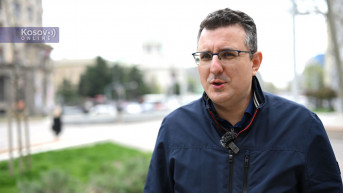
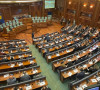
Historian Milan Gulic told Kosovo Online that the goal of the resolution on the war adopted by the Assembly of Kosovo on Friday is the criminalization of different views of the past. He points out that this would not only be a problem for Serbs living in Kosovo, but also for other people of Serbian nationality who visit Kosovo, adding that he does not expect a reaction from the international community.
“This resolution, like a series of moves by the Pristina institutions since they were established, does not lead to improving the interethnic situation in Kosovo and Metohija, but rather mostly toward the majorization and complete dominance of the Albanian factor, along with the elimination of almost all rights that the Serbian community has. However, in the context of everything that has been happening in recent years and what we witness almost daily, it seems to me that this resolution is the least of the problems for people who actually live in Kosovo and Metohija. The closure of a clinic in a village near Srbica, which represents the only way for Serbs from that area to receive medical care, is far more significant than the resolution adopted in parliament, even with the level of consensus achieved around this document,” he said.
According to him, this resolution serves to further deepen interethnic divisions.
“There is no doubt that this is not a contribution to dealing with a traumatic past, but rather to further deepening divisions, and that is something that has been happening almost every day, so it should not be expected to significantly change anything at this moment,” he said.
Speaking about the concrete consequences of adopting this resolution for Serbs, Gulic points out that every post-conflict society in the Western Balkans has its own perspective on the wars of the 1990s.
“The war in Kosovo and Metohija is viewed in one way by Albanians and in another by Serbs. We have become accustomed to that. What could make a difference here is if a different attitude toward that war begins to be sanctioned – that is what could cause certain changes, whereas the resolution itself will not. It emphasizes the collection of documents and testimonies about crimes committed by Serbs in Kosovo and Metohija and announces the possibility of lawsuits before international courts – all of these are things we have already heard,” he explains.
As he notes, the main issue would be the criminalization of a different view of the war in Kosovo.
“What is indeed a problem is the potential criminalization of a different view of the past. However, even that would not be something new. The only essential problem with this declaration would arise if what it envisages is implemented, namely that any different interpretation or denial of any segment of crimes committed by Serbs against Albanians in Kosovo and Metohija is treated as a criminal offense,” he said, recalling the Inzko law in Bosnia and Herzegovina.
He notes that the Criminal Code of the Republic of Serbia also defines the denial of genocide as a criminal offense, but according to the criteria of Serbian courts or the International Criminal Court. Courts in Serbia, Gulic emphasizes, have not ruled on genocide, but he adds that he believes Kosovo courts will do so.
According to him, the resolution also threatens freedom of speech, but he notes that this is not a new phenomenon.
“We live in a time when the struggle for freedom has led to the abolition of many freedoms, including the freedom to see certain things differently. This is something that could potentially be a problem not only for Serbs in Kosovo and Metohija, but also for all Serbs who at any moment, for any reason, set foot on the territory of the province and have a different view of the war of 1998–1999. By that I do not mean attitudes toward a specific crime in a particular place, but rather a general view of the war that took place there, which undoubtedly had the character of a civil conflict,” he added.
Gulic notes that he does not expect a reaction from international institutions, which, as he says, have previously sided with Pristina.
“Reactions were absent even when more serious events occurred – from direct attacks on Serbs to attacks on the few remaining institutions of the Republic of Serbia in the province, which today have more of a social than an institutional role. They were mostly absent or moved in the direction of full understanding for Pristina’s positions. I have no grounds to believe that it will be any different now,” Gulic concluded.


0 comments