
Is Serbia's withdrawal a response to Kosovo's entry into international organizations?
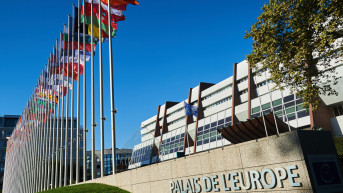
The announcement that Serbia could withdraw from them if Kosovo gains membership in the Council of Europe and other international organizations has sparked debate among experts and the general public. However, much as we weigh the pros and cons of such a move, politics is not mathematics, and it is hard to come to a conclusion. Perhaps the most accurate assessment is that this situation is similar to the dilemma in the famous Dark Ville, which in this case would be: If it leaves – it will regret it, if it does not leave – it will regret it again.
The possibility of withdrawing from the Council of Europe was also discussed by the President of Serbia himself, and Vladimir Djukanovic conveyed a similar message regarding the NATO Parliamentary Assembly.
Surely, no one wants to leave international forums where Serbia’s voice is still heard – regardless of actions taken against its interests – hoping that some parts of international law have survived gross violations and will, eventually, begin to be respected again.
What official Belgrade is trying to warn, and with which our interlocutors agree, is the fact that such actions endanger not only Serbia's position but also the international community is undermining its own foundation.
By opening the door for a precedent of this magnitude, Pandora's box is opened for all other exceptions to the rules, which, like rust, begin to erode established principles until they are completely incapacitated.
Serbia should not leave international organizations even if Kosovo gains membership because participation in them is an opportunity to present views and arguments, which is better than being removed from decision-making, says foreign policy commentator Miroslav Stojanovic for Kosovo Online, assessing the situation as a kind of dark dilemma - "you may regret it if you do one thing, and you may regret it if you don’t."
"My stance is that we should not leave these organizations, regardless of the fact that I said it is an extremely delicate situation to be in an organization like the Council of Europe together with a part of your territory, which is an absurd situation," emphasizes Stojanovic.
He emphasizes that such a situation has never existed before in the history of that European organization.
"And for the reasons that have often been used here as a metaphor, that it's better to be at the table than on the table, to be a subject rather than an object, participating in an organization where you can present some of your arguments and positions is better than being completely removed because every new entry into these organizations is a little more complicated and dramatic," explains our interlocutor, reminding us that there was a break after the former Yugoslavia, and Serbia only entered this organization in 2003.
Stojanovic reminds us that the Council of Europe is a kind of legitimization of democratic relations, the rule of law, and especially the treatment of minorities in a country.
"That's why it is extremely odd, for example, that Kosovo is being favored, which does not meet – independent of the list mentioned by Bakoyannis – the basic conditions for entry: it is neither a state, nor does it protect minority rights to the standards that are European. For all these reasons, it is absurd to sit at the same table with a part of your province. It will be weighed what is good and what is not, if one move or another is made. It somewhat resembles a kind of dark dilemma. You may regret it if you do one thing, and you may regret it if you don’t," he states.
He adds that the same situation applies to the NATO Parliamentary Assembly, but the first step now is the Council of Europe.
He points out that such a situation has never existed before in the history of this European organization.
"And for those reasons that have often been used here metaphorically, that it's better to be at the table rather than on the menu, to be somewhat of a subject, not an object, participating in an organization where you can present some of your arguments and positions is better than being completely excluded, because every new entry into these organizations is slightly more complicated and dramatic," our interlocutor explains, reminding us that a break was made after the former Yugoslavia and Serbia only entered this organization in 2003.
Stojanovic reminds us that the Council of Europe is a kind of legitimization of democratic relations, rule of law, and especially relations towards minorities in a country.
"Therefore, it's extremely strange, for example, the favoring of Kosovo, which does not fulfill – regardless of the list Bakoyannis mentioned – the basic conditions for entry: it is neither a state nor does it protect minority rights to European standards. For all these reasons, it's absurd to sit at the same table with a part of your province. It will be weighed what is good and what is not if one move or another is made. It somewhat resembles a kind of dark dilemma. You may regret it if you do one thing, and you may regret it if you don’t," he states.
He adds that the same situation applies to the NATO Parliamentary Assembly, but the first step now is the Council of Europe.
The most important thing in diplomacy is to have open doors to place your views and perspectives on certain issues in the right place, so withdrawing Serbia from the Council of Europe, even if Kosovo gains membership in that organization, is not a solution, says former Serbian Ambassador to the UN Branko Brankovic for Kosovo Online.
"I am convinced that it is urgently needed to send all our embassies and ambassadors in the member countries of the Council of Europe to start action at the highest possible level, which means seeking meetings with ministers to explain, and it doesn’t take much to explain, the main thing - Kosovo is not a state. According to the rules that have been respected so far, only UN member states have been admitted to the Council of Europe," emphasizes Brankovic.
He reminds us that Kosovo's membership is still not a settled matter, as it needs to pass through the Parliamentary Assembly of the Council of Europe and the Committee of Ministers, adding that "politics is a strange thing and in politics, yes today can be no tomorrow."
He also points out that the existing international order is "finished," including NATO, which he assesses as becoming a semi-serious organization.
"At this moment, all those countries pushing for Kosovo, which I call the Triumvirate – the USA, Germany, and Great Britain – are desperately trying to extract something to say 'Look, this is the justification for why we bombed Yugoslavia.' But they cannot find it," Brankovic states.
According to him, even if Kosovo enters the Council of Europe and Serbia remains in that organization, it does not mean that Serbia accepts that membership.
"We are in the UN, but it does not mean we must have diplomatic relations with everyone. In the UN, there are countries from the USA to European countries that have recognized Kosovo, but that does not mean we have left the UN. The most important thing in diplomacy, in politics, is to have open doors to approach to place your views and perspectives on certain issues in the right place. Therefore, withdrawing somewhere is not a solution, on the contrary, we need to remain in the Council of Europe," our interlocutor believes.
Moreover, he adds, we should be everywhere because that way, Serbia's doors are open to state what it thinks.
"But if we are not, where will we say it? What our newspapers talk about or television, that's nice, but in the Council of Europe, what we have to say must be heard by everyone and it will go into all possible means of public information, and it will go to the top of the member states," Brankovic concludes.
It would not be good for Serbia to leave the Council of Europe if Pristina becomes a member of that international organization, emphasizes Strahinja Subotic from the Center for European Policies for Kosovo Online, noting that staying in the Council of Europe does not legally or politically characterize Serbia as a country that recognizes Kosovo.
Subotic reminds us that Serbia became a member of the Council of Europe in 2003, which was a civilizational leap that placed the country after October 5, 2000, in the ranks of modern European democracies.
However, he warns that there are numerous accusations that Serbia is democratically stagnating or regressing, so these fears would be further increased by a potential exit from the Council of Europe.
"The Council of Europe is an organization at the European level that brings together countries wanting to advocate for the development of democracy and human rights, and by exiting, our citizens would be prevented from having access to the Human Rights Court in Strasbourg, as has been the case so far. Finally, membership in the Council of Europe is a step towards full membership in the EU. I cannot imagine EU membership if there is no membership in the CoE, and I think our leaders are aware of that," says Subotic.
He assesses that this is why they focus on "raising the stakes" and, as he says, "engage in the politics of strategic ambiguity, spreading fears that Serbia could react in such a way."
However, he believes it's more realistic that Serbia will start boycotting certain meetings and configurations in this way to send a message that it will not tolerate Kosovo's membership in the Council of Europe.
According to him, Serbia's stay in the Council of Europe in the case of Kosovo's membership does not mean that Serbia is reconciling with it, as it has repeatedly stated that it does not recognize the "de jure" independence of Kosovo in any way.
"We already sit with them at numerous meetings at the regional level, at the EU level, we are all called together at the highest level, we participate in a large number of organizations and beyond. Therefore, previous membership in organizations has not been a signal that Serbia recognizes Kosovo. With the Council of Europe, it would mean that Kosovo at least strives to send a message to countries in Europe that do not recognize Kosovo that they are a state that is modern, democratic, and respects human rights. That’s how they will want to convince them. But, from Serbia's perspective, this legally, politically, in no way characterizes us as a country that recognizes Kosovo," concludes Subotic.

comments