
Special envoys for the Western Balkans in governments across Europe: Why are all eyes open toward the Region?
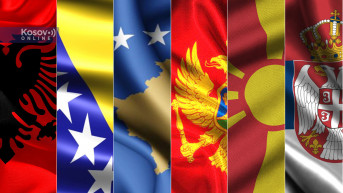
Whether they are in the immediate neighborhood or separated by 2,000 kilometers, more and more European governments are appointing special envoys for the Western Balkans. Behind the decision to keep this region on the radar may lie assessments of its potential destabilization, the goal of countering Russian influence, and strategies to more firmly connect countries that have been promised EU membership for decades with the Union, at a time when the global order is taking on new contours, say interlocutors for Kosovo Online.
Written by: Dusica Radeka Djordjevic
Although each Western Balkan country has its own embassy, European countries are also appointing special envoys for the region as a whole. In other words, four eyes are now open. The role of these envoys, diplomats point out, is to send messages from their governments to the countries in the region and to deliver field assessments to their capitals. However, according to analysts, the practice so far has shown that they were not the ones pulling the strings in key situations.
Miroslav Lajcak, a diplomat well known in the region, who served as the EU mediator in the Belgrade-Pristina dialogue for the last five years, began serving as an advisor for strategic foreign and security policy issues for Slovak Prime Minister Robert Fico on April 1. According to Slovak President Peter Pellegrini, this position also involves a consultative role on security matters in the Western Balkans.
Almost simultaneously, the Czech government appointed former EU ambassador Edita Hrda as its special envoy for the Western Balkans, and in February, London announced that the outgoing British Ambassador to the U.S., Karen Pierce, would succeed Stuart Peach as the special envoy for the Western Balkans. Peach, in fact, had been a frequent visitor to the countries in the region over the past three years.
Since 2022, Manuel Sarrazin has been handling the Western Balkans as the German envoy, while René Trocaz was appointed the French envoy in 2023. Norway, Slovenia, Romania, and other countries also have special representatives for the region.
Dusan Prorokovic, senior research associate at the Institute for International Politics and Economics in Belgrade, assesses for Kosovo Online that there are several reasons why more European countries are appointing special envoys for the Western Balkans. One of the main reasons is the expectation of a crisis or destabilization in the region, which is why everyone is starting to pay more attention to it, especially in light of negotiations between Trump and Putin and the possible resolution of the Ukrainian crisis, which he says will have an impact not only on the West but the entire Balkans.
Another possibility, he suggests, is that the European Union or some influential Western countries like the United Kingdom will become more active in dealing with the Balkans in the near future.
“The third possibility is that there will be additional funding from the EU budget, and where there is money, there are also special envoys. Various structures in EU member states will adapt to that,” says Prorokovic.
According to his assessment, Serbia's experiences with special envoys have not been the best, as, despite several special envoys for Kosovo-related issues in recent years, there has been no significant result.
"What they managed to achieve in Belgrade—granting oral consent to the French-German plan—could have been done without special envoys. In the end, it was the result of coordinated pressure from Scholz and Macron, and the special envoys did not play a significant role. They are usually tasked with strengthening communication on a specific issue," notes Prorokovic.
At this moment, as he observes, appointing special envoys for the Western Balkans involves a broader range of issues they can address, as the Kosovo issue is not the only one on the table.
"The issue of destabilization in Bosnia and Herzegovina, the rise of Russian influence, the situation in North Macedonia, Albania, Montenegro, and even the recent developments in Bulgaria and Romania, which are not part of the Western Balkans but are part of the Balkans, are all open. I don't know how the special envoys will deal with all these topics. There is a need for someone who is an expert on Southeast Europe or Balkan issues to cover all these topics. So, aside from the fact that we have poor experiences with special envoys, we now have a new situation where they are given a broad set of issues to address, to actually coordinate the work of their embassies on the ground, which is another aspect that suggests this work is more likely to end in failure than success," Prorokovic assesses.
Aleksandra Joksimovic, director of the Center for Foreign Policy and former Serbian ambassador to the UK, tells Kosovo Online that everything that typically involves diplomatic work also pertains to the function and role of a special envoy, who observes a particular region through the common lens of their country's policies.
She emphasizes that for the European Union, it is very important to continue the enlargement process, and since the Western Balkans is at the center of ideas for future enlargement, it is not surprising that an increasing number of European countries are appointing envoys for this region.
"It is very important to push the Western Balkans forward through the further integration process, and of course, this is also linked to the Russian aggression on Ukraine and attempts to deter Russian influence in the Western Balkans. Special envoys are sent precisely by EU countries," says Joksimovic.
She further explains that for countries dealing with global problems, or for diplomacies engaged worldwide where foreign ministers cannot address every issue the way they would like, it is crucial to have an intermediary—i.e., a special advisor who coordinates the work of ambassadors in the region.
"We have a dual approach here—on one hand, the government has someone who sends clear messages to different countries in the region, and on the other hand, someone who collects various opinions on individual issues from the region and returns them to their capital for further reflection and decision-making regarding the stance toward the region," says our interlocutor.
Regarding the appointment of special envoys for the Western Balkans in European countries, Stefan Surlic, a professor at the Faculty of Political Science in Belgrade, says that it has become a kind of trend, as this region is treated both as the EU's backyard and as a geopolitical bargaining chip due to the influences of Russia, China, and the U.S., and the need for constant political and diplomatic vigilance over the region.
Envoys, as he points out to Kosovo Online, do not have a real political function but rather a more technocratic and diplomatic role. He also mentions that these positions are often filled by people at the end of their careers who are given a consolation prize or are in a transitional period until a better role is found.
"We are more talking about personal diplomatic ambitions and the desire for attention and significance rather than about real change in this complete lull in the normalization of Belgrade-Pristina relations and the lack of any movement in resolving all bilateral open disputes. If there have been any shifts, they happened primarily through active involvement at the top. This means the European leaders, the American leader, and their closest advisors were the ones who created the processes. Let us remember the 'quartet' that came to Belgrade—those were the closest advisors to European leaders. That is how solutions are offered today, while envoys have more of a technocratic and diplomatic role. This combination does not bring about any real change," concludes Surlic.


comments