
Radojkovic: Suspension of Strategic Dialogue hints at an “Afghanistan Scenario,” Pristina is aware
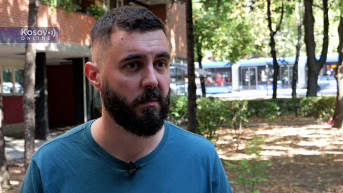
Historian Stefan Radojkovic assessed that the suspension of the planned U.S.–Kosovo Strategic Dialogue is an “interesting consequence” that “hints at an Afghanistan scenario,” something that the authorities in Pristina are well aware of. At the same time, he is convinced this measure will further affect economic and diplomatic relations with Washington.
Radojkovic said that the U.S. decision followed a series of warnings from the American administration to Pristina.
“This is an interesting consequence because, politically, in terms of security and diplomacy, Pristina depends on the U.S. The suspension of their Strategic Dialogue suggests an ‘Afghanistan scenario.’ Pristina’s administration has understood this quite shrewdly, which is why they are working hard to tie themselves to the narrative surrounding the war in Ukraine and the potential Taiwan crisis—hoping Washington will remain sufficiently engaged with Pristina,” Radojkovic told Kosovo Online.
Still, he emphasized that the suspension shows the U.S. can shift its focus or devote less attention to Kosovo.
“And that then brings the very existence of the Pristina administration into question,” he said.
Commenting on the numerous statements criticizing the ruling Self-Determination Movement, Radojkovic believes the party has run into “slippery ground” in Washington.
“It seems Self-Determination’s current policy has hit ‘slippery ground,’” he said.
Direct consequences for the authorities in Pristina could take several forms, with the “most radical” being a reduction or complete withdrawal of U.S. presence within the KFOR mission. Another measure could be the suspension of “diplomatic assistance.”
Radojkovic said Pristina is aware of this, pointing to the recent military agreement between Albania, Croatia, and Kosovo, as well as Vjosa Osmani’s “Islamic tour,” as evidence.
“All this shows they know there is no unconditional U.S. support,” he stressed.
He underlined that the suspension of the Strategic Dialogue will primarily affect U.S.–Kosovo military and diplomatic relations.
As for the economy, he said, the decisive role lies with the EU.
“The economic consequences are already being felt, mainly from the EU. The U.S. is not crucial for Pristina’s economic indicators; its importance lies in military and diplomatic relations. But the EU has already taken measures that, according to some analysts, are ‘costing’ the Pristina administration around 600 million euros—a significant blow to its finances in the context of Kosovo and Metohija,” the analyst explained.
He specified that the worsening economic situation in Kosovo has had the “direct and logical consequence” of new pressures on the Serbian community there.
However, he is convinced the U.S. decision could impact the October 12 local elections, as well as potential snap parliamentary elections and the upcoming presidential election early next year.
“The timing of this decision is specific. The statement came in the middle of the local election campaign. The Albanian community, which has lobbied heavily in Washington since the 1980s, is sensitive to U.S. positions and opinions,” Radojkovic noted.
“This was a way to signal that external actors—primarily the U.S.—are the key factor in the survival of the Pristina administration. Hence, this will affect Self-Determination’s ratings,” he said.
On the other hand, this development may contribute to Self-Determination’s isolation by Albanian opposition parties.
“They will likely be encouraged by the U.S. to form some coalition agreement, with the expectation that Vjosa Osmani, if she plans another mandate, will be far more cooperative with the U.S. administration,” the analyst said.
In the new circumstances, Radojkovic finds it surprising that there was no reaction from the German Embassy in Pristina.
“Previously, Germany was considered the EU member most supportive of Albin Kurti. Now they are silent. Whether that is tacit support or a sign that no support for the Pristina administration can be expected from the EU side either can be interpreted in various ways. But one thing is certain—it will have consequences for the upcoming elections,” Radojkovic concluded.


0 comments