
Thirteenth Salary for the public sector – an economic measure or Kurti’s discriminatory political instrument?
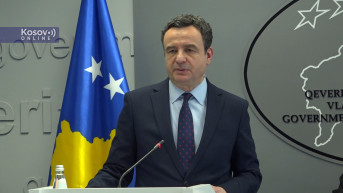
The thirteenth salary, paid on the last day of March together with the regular salary, helped public sector employees in Kosovo address financial problems on a one-off basis, but it lacks an economic foundation—particularly in conditions of rising prices of basic goods and inflation, according to interlocutors of Kosovo Online. They view the government’s decision as a political instrument through which Prime Minister Albin Kurti seeks to win the support of a “secure group of voters,” while the exclusion of the private sector from this measure is assessed as discriminatory.
Written by: Milena Miladinovic
Kosovo Prime Minister Albin Kurti announced that the 13th salary would be paid to employees in public institutions on the last day of the previous year during a visit to the Post of Kosovo, just two days after the elections, while his government—then in a technical mandate—adopted the measure during the pre-election campaign.
As Kurti stated at the time, it would be paid as soon as institutions were formed.
Three months later, in March, the government adopted the decision and paid the 13th salary to nearly 85,000 public sector employees. The condition for receiving the full 13th salary was having more than 12 months of service, while, according to Finance Minister Hekuran Murati, those who had not yet completed one year of service received a proportional amount calculated based on the months spent in public institutions. The 13th salary also covered employees on maternity leave.
However, nearly 200,000 workers in the private sector were left without the same benefit.
Although the decision was welcomed by the opposition in Kosovo, criticisms were also voiced regarding the exclusion of the private sector, as well as Kurti’s intention—according to critics—to use this measure to win the votes of public servants in elections.
Economists and representatives of the private sector also reacted strongly, stressing that those who contribute the most to filling Kosovo’s budget have been discriminated against.
Representatives of private sector unions called for amendments to the decision.
The President of the Private Sector Workers’ Union, Jusuf Azemi, stated that it is the private sector that generates production, adding that such a decision could only occur in Kosovo.
“First of all, we are pleased that the Government of Kosovo is granting a 13th salary to public sector workers, but on the other hand, this decision discriminates against workers. There are more than 200,000 of us who contribute funds to Kosovo’s budget, and we are the ones who produce and cover the largest share of the budget with our money. On the other hand, if funds are allocated significantly more to the public sector, that is a form of discrimination that, I would say, only one government—here in Kosovo—could carry out, because this does not happen elsewhere, especially when private sector workers currently have much lower salaries and a more difficult social situation,” he said.
The President of the Kosovo Business Alliance, Agim Shahini, also believes that the Government’s decision creates a dangerous division in society by favoring one category, even though all citizens and businesses contribute to the Kosovo budget. Meanwhile, the Independent Trade Union of Trepca South miners stated that miners did not receive the 13th salary like other public sector employees, noting that this constitutes a “systematic injustice.”
Members of opposition parties share these views. The head of the parliamentary group of the Alliance for the Future of Kosovo, Besnik Tahiri, stated that the 13th salary for the public sector is not aimed at alleviating poverty, but rather represents a pre-election promise and an attempt by the current government to influence voters ahead of potential elections.
Tahiri described the decision as merely a consolation and called on the authorities in Pristina to urgently adopt measures to support private sector workers.
According to him, the decision to reward only the public sector is a political calculation.
“The 13th salary for 80,000 people in the public sector introduced by this government is not aimed at reducing poverty and inequality. It is exclusively an action stemming from a pre-election promise. Given that we may head into elections, this is seen as an attempt to influence the votes of public sector employees,” Tahiri said.
He sharply criticized the selective distribution of budget funds, emphasizing that workers in construction and other private industries have been completely neglected.
Tahiri believes it is unfair to favor administration employees while the private sector struggles with crisis.
Interlocutors of Kosovo Online conclude that the decision on the 13th salary is Kurti’s political instrument without an economic basis, and that economic problems should be addressed in a different, more systemic way, rather than through one-off assistance at politically convenient moments.
Impact on the Electorate
Political scientist Ivan Tomic assessed that the Government of Kosovo’s decision has no economic grounding in gross domestic product or fiscal policy, but instead represents a direct political instrument of Prime Minister Albin Kurti aimed at attracting voters.
Tomic told Kosovo Online that the timing of the decision clearly indicates the authorities’ intention to influence the electorate.
“The decision to grant a 13th salary to public sector employees this year certainly has no clear economic basis, especially considering Kosovo’s GDP and public fiscal policy. Rather, this move by Albin Kurti can be interpreted solely as a political instrument through which he sought to win over voters. When you look at the timing, the decision was made immediately before elections, indicating a clear intent to influence the electorate,” Tomic said.
According to him, the measure is discriminatory because it applies only to the public sector, thereby deepening the gap between employees in institutions and those in the private sector.
“The decision can be viewed as discriminatory, particularly considering that the 13th salary is granted only to public servants and not to those in the private sector. In this way, Kurti sought to directly influence public sector voters, who are known to be the most organized and the easiest to influence,” Tomic added.
He noted that this is not an isolated case but part of a broader pattern of pre-election actions in Kosovo.
“Many other actions that took place just before the elections—from public calls for distributing construction materials, to various projects, to employment competitions—were all timed politically in order for Kurti to win votes,” Tomic said.
Although the authorities present this decision as a measure to improve living standards, Tomic emphasized that it is a one-off payment that does not address the fundamental problems faced by citizens.
“This is short-term. It may help people repay some debts or settle obligations, but in the long run, the problem of inflation remains. Prices continue to rise, while wages in both the private and public sectors remain the same. These are issues that require systemic solutions, not ad hoc measures introduced when politically convenient,” Tomic concluded.
An Unproductive Decision
Economics professor Shkumbin Misini emphasized that the 13th salary for public sector employees does not reduce living costs throughout the year and is not productive.
As Misini told Kosovo Online, the Government of Kosovo’s decision to exclude the private sector from the measure is discriminatory, and the 13th salary does not solve employees’ financial problems over the entire year, but only in the short term.
“The 13th salary is discriminatory toward the private sector and does not bring productivity. Of the total number of employees in Kosovo, nearly 80 percent are employed in the private sector. It would have been better if the government had provided health insurance for employees in both sectors. The 13th salary is necessary, but it does not reduce living costs throughout the year, only for one month,” Misini said.
According to him, the decision would have been better if the 13th salary had been proportional.


0 comments