
Three states, one labor market: What has the Open Balkan initiative brought to citizens and the region?
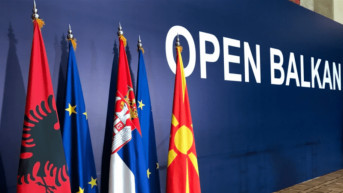
One month after the unified labor market between the three signatories of the Open Balkan initiative began to function, experts in economic and business affairs from Serbia, Albania, and North Macedonia report an increasing number of citizens interested in seeking future employment opportunities in neighboring countries. As they emphasize, the benefits of removing barriers in the labor market are numerous and will bring positive effects for workers, as well as create a better business environment for domestic and foreign companies.
The unified labor market within the Open Balkan initiative officially started operating in the first week of March in all three countries. This is one of the significant outcomes of the initiative that provides Serbia, Albania, and North Macedonia with the opportunity to address the issue of labor shortages and become more attractive to foreign investors.
Access to the labor market within the Open Balkans initiative is mainly achieved in two steps. First, an individual needs to register on the e-services portal in the country of their citizenship and request the Open Balkan ID number. After obtaining the number, they need to register on the e-services portal in the country where they are seeking employment. They will then receive a certificate that allows them to search for and secure employment in that specific country.
Bojan Stanic, Assistant Director of the Sector for Strategic Analysis, Services, and Internationalization at the Chamber of Commerce and Industry of Serbia, explains that the essence of this decision to establish a unified labor market is that now there is an opportunity to more easily find employment, and individuals applying for jobs in Serbia are treated as Serbian citizens in terms of job seeking and access to the labor market.
He says for Kosovo Online that interest among people who are informed through the E-government portal is significantly increasing, but expectations are that the true impact of this agreement will be visible by the beginning of the summer season.
"What is a fact is that there is a certain interest from workers from North Macedonia and Albania to come and work in Serbia. However, a very short time has passed. What we have as information is that the interest of people gathering information through the E-government portal is significantly increasing, but the number of people directly submitting applications to obtain an identification number is still not significant enough for us to draw conclusions. However, on the other hand, we know that there has been a relatively short time, considering that this started functioning about a month ago," our interlocutor explains.
When it comes to the interest of Serbian citizens in jobs in Albania and North Macedonia, the expectations are lower, as he says.
"That is for a simple reason: the competition for jobs in Serbia is higher, and on the other hand, the possibility of higher earnings exists here," Stanic notes.
Even greater interest from workers from Open Balkan member countries in jobs in Serbia is expected by the beginning of the summer season, when the agricultural season begins and construction continues to intensify regarding all infrastructure projects. Our interviewee believes that the hospitality sector will also be under pressure at that time.
"When the summer months come, many of our workers from the hospitality sector go abroad to work, hence the demand for these workers is much higher during the season. In that sense, it is expected that people in that area will be more sought after and that a certain number of people will decide to try to find a job in Serbia precisely because of this increased demand, which then reflects in higher wages," Stanic says.
The free movement of the workforce from one country to another without bureaucratic obstacles reduces business costs and increases the opportunity to gain work experience from multiple countries in the region. All these components contribute to unifying the way of work, which will further facilitate cooperation among countries in the region, and thus, it contributes to Albania in many aspects, Erion Muca, a professor at the Faculty of Economics and an expert in labor and employment from Tirana, says for Kosovo Online.
“If it weren't for Open Balkan, this would have negatively affected the lack of a workforce in our countries and reduced the productivity of many companies. Workers would settle for minimum wages in their countries or would be left without a job. Second, the possibility of finding a job in other countries increases the independence of employees and reduces business costs. Today, the time needed for employees to find a job or for companies to find employees has been shortened. Third, a very important element is the opportunity for employees to gain experience from multiple countries in our region,“ Muca said.
As he notes, many sectors in Albania lack a workforce, but three are key.
"The sectors of our economy that are in dire need of employees are various manufacturing and processing industries. The demand for employees from these companies has significantly increased. Agriculture also needs a workforce, especially in agro-agriculture and fruit growing. The third sector of the Albanian economy in need of a workforce is the intellectual work sector; qualified, educated workers are needed. We need to create shared experiences for this category of professionals as well," Muca evaluates.
He mentions that Albanians mostly used to seek employment in Western European countries, but today, the potential of the regional market through the Open Balkan is growing and opening up new opportunities for them.
"Albanians want to move to countries in the region to secure new job opportunities, at different levels and with interesting differences in salaries for the same type of work. Certain jobs can be financially better evaluated in regional countries than in Albania. Our employees want to benefit from new work experience, new work cultures, or with greater intensity, which will be useful for them when they return to Albania. This would help progress a specific sector of the economy in the country. Another interest that our employees have in going to regional countries is combining work with tourism, to see another country, society, to get acquainted with another culture. All of this expands the horizons for work and the lives of employees," Muca concludes.
Frosina Velkovska Petkovska from Skopje, a member of the working group of the Employment Agency for the smooth implementation of the free labor market within the "Open Balkan" initiative, stated in an interview for Kosovo Online that this initiative would bring positive effects for both workers and employers, as well as in terms of increasing competition, positive effects on the economy, and conditions in the labor market in Serbia, Albania, and North Macedonia.
She says it is still early to speak about analyses, numbers, or assessing interest in applying for such a labor market, but at this point, a total of 2,000 Open Balkan ID numbers have been issued across the three countries.
"These are just people who have applied and requested that this identification number be issued to them in this initial period of implementing the measure. As for how many people will seek a certificate or employment in any of the three countries, we will have to see in the coming period. Employment and access for citizens from three states have also been conducted in three countries but within the framework of regular employment procedures that involve additional steps and checks. The main novelty that comes with the Open Balkan is the simplification of the procedures themselves, and based on that, we expect greater interest," she said.
Petkovska adds that based on sectors and the expressed needs of employers from the private sector, the highest number of expressed needs or expectations for new employment is in the sectors of manufacturing industry, wholesale and retail trade, as well as construction.
As she points out, one of the main motives for seeking employment abroad or in another country is primarily the living and working conditions, as well as the salary level.
"In that direction, measures should be created that will be as attractive as possible for job seekers. But what is also important is that in the future, when we analyze the numbers or the effects of the implementation of free access to the labor market, we take into account the characteristics of each of these three countries. Primarily, the size of each country, the population, of course, the economy, as well as the characteristics of the labor market, by which characteristics these three countries actually differ from each other. In any case, we expect that the free access to the labor market within the Open Balkan initiative will bring positive effects for both workers and employers, as well as in terms of increasing competition, positive effects on the economy, and conditions in the labor market in all three of these states," she said.
comments