
Markovic: It is logical for Africa to have a seat on the UN Security Council, but the question is who would represent it
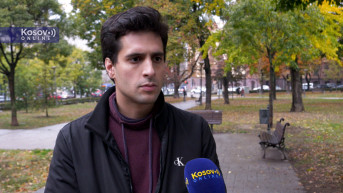
Historian Vukan Markovic says that the longer reform of the United Nations Security Council is delayed, the less the UN will reflect the demographic, economic and military-technological development of the world. He told Kosovo Online that it was logical for Africa to be given a seat on the Security Council, but that the problem was that no single country on the continent could represent the interests of Africa as a whole.
Markovic said that no reform decision could be implemented at the expense of the five existing Security Council members that hold veto power.
“Any decision that would deprive them of their veto power or in some way redistribute the veto within the existing Security Council will not be feasible. However, the longer reform is delayed, the less the United Nations reflects the demographic, economic and military-technological developments currently taking place in the world. The Security Council currently has five countries from the Global North and ten members elected according to a formula that essentially favors Europe and, to some extent, Latin America, while a vast proportion of humanity has only three, or at most four, seats on the Security Council,” he said.
Given that many proposals for reforming the Security Council suggest that the African continent should have a permanent seat on the body, Markovic said it was logical for Africa to be represented, particularly since Nigeria and Ethiopia are currently projected to be among the world’s most populous countries within the next 50 years.
Africa’s population growth, he added, is exponential, while the Global North is experiencing population decline and a fall in natural population growth on a scale greater than ever before.
“It is logical for Africa to be given that seat, but the problem with Africa is that there is no single country capable of representing the interests of the entire continent in the way that, for example, the United States and the Soviet Union could in 1945, when the UN was established—one capitalist and one socialist country representing two models of development. If, for example, Nigeria were given a permanent seat on the Security Council with veto power, it is unclear how it would carry the weight of such a status, because it is an extremely heterogeneous country with inherent instability both domestically and in the region. Ethiopia, traditionally the most diplomatically influential sub-Saharan state, is also in a state approaching war, both internally and in relation to Somalia. As far as Mediterranean Africa and the Arab world are concerned, Egypt has always held the status of the dominant geopolitical power. We are talking about nearly a billion people gravitating toward that part of the world. The problem with Africa, therefore, is that it is not easy to determine which country should occupy that seat on the UN Security Council,” Markovic said.
He noted that there was also discussion in the literature about whether such a seat could rotate among countries.
“However, that formula has never been tested, particularly for a position of such importance, and it would require selecting individual countries that would share the veto. The fundamental problem is what happens if there is disagreement among the members between which the seat rotates. Africa is a natural candidate and absolutely deserves such a seat, and this is necessary for the future of the UN. On the other hand, there are problems that do not appear likely to be resolved in the near future,” Markovic said.
Relocating the UN headquarters
Given that Turkish President Recep Tayyip Erdogan recently called both for Security Council reform and for the United Nations headquarters to be relocated to Istanbul, Markovic said the problem with the proposal was that relocating an organization of such size would be extremely expensive, while Turkey had too many internal and unresolved issues to be able to shoulder such a responsibility.
“Secondly, the UN has numerous centers and is already struggling with serious financial problems, particularly in its relations with major powers—above all the United States—which refuses to provide funding when the UN does something Trump does not like. So I think the proposal is unrealistic in the sense that it would be extremely difficult to implement, although it is interesting to consider the possibility of moving the headquarters somewhere more central, in the sense of being closer to all the other actors. Istanbul was the center of the Byzantine, Eastern Roman and Ottoman worlds, but I think that option is less feasible. Relocation to India might be more realistic, given that India is the country closest to actually obtaining a permanent seat on the Security Council,” the historian said.
Markovic noted that the United Nations was currently facing an objective crisis of both authority and legitimacy, as well as a crisis caused by the conduct of major powers, particularly the United States, which, he said, uses funding as leverage and often acts unilaterally with regard to numerous resolutions, including resolutions it had itself supported. He added, however, that the other major powers were not blameless in this regard either.
He said the question was whether the structure of the United Nations, based on a formula devised in San Francisco 80 years ago, remained appropriate for the world today.
“The United Nations has a General Assembly in which one sovereign state means one vote, but it also has a Security Council that is a residual effect of what used to be regarded as the great powers. Five powers still hold veto rights, even though not all of them particularly deserved such a position even in 1945, with the exception of China as the world’s most populous country and the United States and the Soviet Union as the two superpowers. When UN reform is discussed, the focus is generally on reform of the Security Council, whereas smaller states would essentially benefit more from reconsidering the entire formula—the relationship between the advisory body, the UN General Assembly, and the body with the greatest decision-making power, the Security Council,” Markovic concluded.

0 comments