
Vucic: UN Security Council reform cannot be expected in the short term
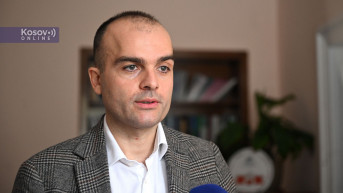
Mihajlo Vucic, Research Fellow at the Institute of International Politics and Economics, told Kosovo Online that there was agreement among United Nations Member States that the Security Council should be reformed and expanded, but that it remained highly uncertain whether a consensus could be reached on which countries should ultimately become new permanent members of the body.
Vucic said that France’s proposal for Security Council reform, which envisages increasing the number of permanent members and restricting the use of the veto in certain circumstances, enjoyed the support of an overwhelming majority of UN Member States, as well as that of another permanent Security Council member—the United Kingdom. Nevertheless, he pointed out that reform of the body could not be expected in the short term, because the reasons Russia, China and even the United States have for opposing certain changes are enduring and relate to their national security interests.
“The French have secured the support of the United Kingdom, another permanent member, for their initiative, so we can say that two of the five permanent members currently support the position that reform is necessary and that their proposals now coincide. Given the procedure for amending the UN Charter, which requires the consent of all five permanent members, that is not enough. Russia and China essentially remain opposed. They hold practically identical positions in that, as permanent members, they would not want to relinquish their veto power, nor would they want any potential new permanent Security Council members to be granted that right. They support enlargement, but at the same time favor a form of differentiation between the existing permanent members and any potential new ones,” Vucic said.
He explained that the French proposal did not call for abolishing the veto rights of permanent members, but rather for restricting their use in cases involving crimes such as genocide, mass war crimes and crimes against humanity, where Security Council action would be necessary. According to the French position, there would be neither a moral nor a legal basis for a permanent member to veto resolutions through which the Security Council sought to address such a conflict.
“The United States generally supports the proposal in terms of which countries should join an expanded Security Council, but it does not believe that those countries should be given veto power, nor does it believe that the United States itself should relinquish its veto as a permanent member, even in this limited form concerning mass atrocities around the world. Russia simply considers its Security Council veto to be, alongside its nuclear arsenal, the only strategic counterbalance to the collective West, which is currently effectively engaged in an indirect war with Russia. China likewise jealously guards the privilege it acquired when the People’s Republic of China took its seat on the Security Council and does not want to extend that privilege to other countries,” Vucic noted.
China, he added, was not interested at all in seeing Japan become a permanent member because of the bilateral rivalry between the two countries, while Japan was among the countries included in the Franco-British proposal. Russia, meanwhile, opposed Germany becoming a permanent member because it viewed Germany as a partner of the United States, with which Moscow currently had poor relations.
Vucic said that, diplomatically, it was now becoming increasingly clear that an overwhelming majority of UN Member States supported the position advocated by France and were effectively putting pressure on the permanent members to demonstrate that there were reasons other than simply jealously guarding their privileges for rejecting any reform.
“Everyone agrees that reform is necessary, and there are many proposals on the table, but it is impossible that not a single one of them is any good. That means something else is at play when it comes to why the permanent members reject any notion of reform. They simply want to preserve the status quo as it was in 1945, when the UN Charter was drafted and the world was still largely divided into colonies. They do not want to acknowledge new realities and are interested solely in preserving their exclusive privileges,” he said.
According to Vucic, if veto power were extended to a larger number of members, further dysfunction within the Security Council would be virtually inevitable.
“The veto has made the Security Council dysfunctional. Its current structure of 15 members, ten of which rotate and are non-permanent, is not actually that bad in terms of geographical distribution and the representation of power. The problem lies in the discriminatory distinction created by the different status of those five countries, which no longer represent the majority of today’s global community in any meaningful sense. If India or Brazil are not included, then in terms of population, economic strength and even military capabilities, those five countries no longer represent the majority of the world as they did in 1945,” Vucic explained.
Whether the Security Council would function better after reform, he added, depended on which proposal was adopted.
“The French proposal would increase the number of members considerably, but just as the General Assembly functions with around 190 states, decisions could also be reached here by voting. The problem, therefore, is simply to remove the blocking mechanisms—to eliminate the ability of one member to prevent a decision supported by everyone else, or at least by the majority. In my view, that is the essence of any genuine reform. Without that, we cannot speak of real reform. If the veto is retained, even if you have 45 members, you still cannot do anything if just one member objects,” Vucic said.
He also pointed out that it was often taken for granted that members of the UN General Assembly agreed on which countries should become new permanent members of the Security Council, with India, Japan, Brazil and South Africa most frequently mentioned, but that this was not actually the case.
“Within the General Assembly itself, there are groups of states that strongly oppose certain proposals because they are regional rivals of the countries concerned. Pakistan, for example, strongly opposes India obtaining a permanent seat, while Argentina opposes Brazil. They have even organized themselves into a kind of lobbying group that may vote against such a proposal in the General Assembly before the reform even reaches the Security Council, because the United Nations membership is quite divided over which countries should ultimately be included in an expanded permanent membership,” Vucic concluded.

0 comments