
Violent closure of Serbian institutions in Kosovo: What are the “sustainable alternatives”?
If they react at all to the actions of the Kosovo police in shutting down Serbian institutions that provide social services to citizens, international representatives typically call for the issue to be addressed within the dialogue framework and point out the need to “establish sustainable alternatives.” What those alternatives would be, however, they do not specify. The resolution of the status of all Serbian institutions and discussions about alternatives do belong at the Brussels table, experts tell Kosovo Online, but they also note that currently, there is no real political will to do so.
Written by: Dusica Radeka Djordjevic
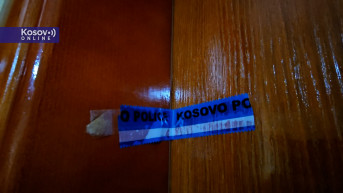
On April 23, Kosovo police raided the offices of the Pension and Disability Insurance Fund, the National Employment Service, the Republican Health Insurance Fund, and Kopaonik Put in Leposavic. The facilities were sealed, and employees found on site were brought in for questioning. That same day, police also entered the premises of the New Public Utility Company in Strpce.
The offices of the Centers for Social Work in Leposavic, North Mitrovica, Zubin Potok, and Zvecan were closed by the police two months ago.
Since then, around 1,500 social welfare beneficiaries from Leposavic have faced difficulties obtaining the necessary documentation. The Social Work Center from Leposavic has since resumed operations in Rudnica, but reaching it requires both time and money.
"It costs me 3,000 dinars to go to Rudnica to get the paperwork needed to receive my social assistance. Now that everything is closed, I don't even know where to gather the documents," said Ana Vulicevic, a mother of three who lives off social support, speaking to Kosovo Online.
Commenting on the latest police actions, the spokesperson for the European Union told Kosovo Online that “the status of structures and services supported by Serbia is to be resolved through dialogue and normalization of relations.”
The German Embassy in Pristina told Radio Kosovo and Metohija that the abrupt closure of institutions providing essential social services is unacceptable because it negatively affects the daily lives of Kosovo Serbs and other non-majority communities.
“We have consistently advocated for an inclusive approach that involves the affected communities and ensures the establishment of sustainable alternatives,” the Embassy stated.
What are the “sustainable alternatives,” and has anyone proposed them?
"Despite calls for alternative solutions and different modalities, at this moment, no one knows what the fate of these institutions and the services they provide will be," said Dragisa Mijacic, coordinator of the EU National Convention Working Group for Chapter 35, speaking to Kosovo Online.
He emphasized that the operation of institutions funded by the Republic of Serbia on Kosovo territory is a complex issue and that all three parties—Belgrade, Pristina, and international actors—must take a constructive role and devise creative solutions, with the citizens’ needs as a priority, rather than engaging in “political games.”
"At this moment, however, there is truly no good will from any of the actors," Mijacic stated.
What the international community—including Germany, the EU, and the U.S.—is dissatisfied with, he noted, is the way the Kosovo side is carrying out the closures and the speed at which they are being executed, as citizens are left without any alternatives to access services they have used for years.
He added that the topic is always on the agenda in the dialogue, but neither Belgrade has the means to force Pristina to implement anything, nor do international actors have tools to make Pristina halt the closure of institutions under current conditions.
“Of course, it was expected that with the establishment of the Community of Serb Municipalities (CSM), some of these institutions would fall under its jurisdiction, as envisaged in the Brussels Dialogue, while the other institutions would be phased out, as outlined in the 2013 Brussels Agreement, which stipulated that Serbia would dismantle institutions it funds on Kosovo territory. That didn’t happen earlier, but with the withdrawal of Serbs from institutions in November 2022, conditions were created for the Kosovo government to unilaterally close many of these institutions—something that’s been ongoing in recent years,” Mijacic said.
Chapter 35, which Serbia committed to, he pointed out, states that Serbia will cease operating its institutions in the realm of local self-government in Kosovo, and in return, local governments will be formed within the Kosovo system.
"Serbia agreed to that in 2013, but it hasn’t happened in practice. And since it didn’t, a brutal force was used to close these institutions instead of finding a transitional solution. The same is happening with other institutions, especially republic-level bodies of Serbia operating in Kosovo, because, ultimately, Serbia also failed to propose functioning models for those institutions within the Kosovo system, leaving it all to negotiations. When Albin Kurti became Prime Minister, he simply chose not to continue that practice and instead used force to abolish them all. That is the price we’re all paying, especially the citizens who rely on these institutions,” Mijacic said.
What about institutions not covered by the CSM?
He explained that the Community of Serb Municipalities was intended to have competencies primarily in healthcare and education, while institutions funded by the Republic of Serbia go far beyond that.
“There are also issues that fall under local utility companies, as well as culture, sports, the University, and various aspects of the lives of Serbian citizens in Kosovo who use those services. So, the CSM cannot cover the work of all institutions being abolished, and a solution must be found for all,” he emphasized.
As he concludes, forming the CSM would be a partial alternative for some institutions, but the question remains—what about the rest?
“What about sports clubs operating in Serbian areas, or cultural institutions, cultural centers, galleries, museums? At the moment, no one is dealing with finding modalities to resolve the issues of those institutions. That is the tragedy—that the dialogue is not producing solutions in the citizens' interest but is instead focused on political matters in Serbia-Kosovo relations, not what truly concerns people,” Mijacic assessed.
“No plan, no will”
According to Blerim Canaj, university professor in Pristina and former diplomat, the issue of Serbian institutions being unilaterally closed by Kosovo authorities can and must be resolved through dialogue—and for that to happen, the EU must pressure both sides.
Canaj also noted that the issue of Serbian institutions began being addressed in the 2013 dialogue agreement, which foresaw a step-by-step approach, but that little seems to have been implemented to this day.
“We’ve seen in recent years that some institutions have been unilaterally closed. The EU should take a deeper interest in this matter and look at why elements of the 2013 agreement have not been implemented. I have the impression that both the EU and leaders like Vucic and Kurti are playing politics with this, without a plan or willingness to resolve it,” Canaj told Kosovo Online.
He believes such topics should not be used to score political points.
“I think the EU must exert pressure on both sides in the dialogue, because this issue can and must be resolved. The north of Kosovo and similar topics cannot be continuously exploited by politicians seeking to boost their domestic political standing. This applies to both Albanian politics in Kosovo and Serbian politics in both Kosovo and Belgrade,” Canaj concluded.

0 comments