
Ibishi: Kosovo has good laws on preventing terrorism, it is necessary to implement them in practice
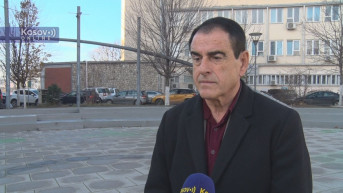
Security expert Nuredin Ibishi commented on the State Department report, in which Kosovo is criticized for small penalties for terrorism, stating that Kosovo had a solid legal basis in the fight against terrorism but that it was crucial to implement these laws in practice.
As Ibishi said for Kosovo Online, the maximum penalty for participating in terrorist organizations is 15 years in prison, and it is up to the judiciary to provide valid evidence.
"Kosovo has a good legal foundation for prohibiting participation in foreign conflicts; the maximum prison sentence is 15 years. About 120 returnees from the conflict zones due to their involvement in terrorist organizations have returned to Kosovo, and another 80 are in camps in Syria, so the State Department's criticism mostly concerns the severity of the penalty. Now it is up to the courts to prove their involvement in terrorist actions in Syria and Iraq earlier or in other organizations that were in Kosovo. The Ministry of Internal Affairs and the government will probably take this into account, but it's more of an issue for the prosecution and the judiciary, which need to prove participation in terrorist organizations," Ibishi said.
As he noted, the Law on Prohibition of Participation in Terrorist Organizations is in line with European countries, but the State Department's criticism came due to the non-application of the law in practice.
"I was a member of the parliament when we adopted the Law on the severity of the penalty in 2015, which is in line with European countries, but due to non-application in practice, there were criticisms from the State Department regarding the severity of these penalties and measures for other conditional penalties and penalties outside prison institutions. The judiciary must independently take that into account, from the perspective of the Law on the Prohibition of Participation in Terrorist Organizations. Of course, the Government of Kosovo must react, especially since there is a possibility of expansion based on ethnic or religious organizations," Ibishi said, emphasizing that the State Department probably had presented the "real situation" in the report, taking into account the case of Milan Radoicic and the attack in Banjska.
He added that Kosovo had a broad branch for preventing terrorist acts, but synchronization with partners was needed for the measures to be adequate in the end.
"We have a law prohibiting the financing of terrorist organizations; we have agencies dealing with it, and we have acted against terrorism together with the United States. Institutionally, we are very well organized. We have a broad branch of preventing terrorist acts and responding to them, as well as good cooperation regarding the return of our citizens who participated in organizations. Still, all of this needs to be synchronized and upgraded to cooperate to make the measures adequate to prevent it, whether on ethnic or religious grounds," Ibishi added.
Regarding how visa liberalization for Kosovo citizens will affect terrorist organizations, considering that the State Department report states that Kosovo citizens are easy targets for recruitment by violent extremist organizations, ethnonationalistic or religious political organizations, Ibishi stated that this issue would only affect the departure of young people.
"Visa liberalization will affect the departure of young people and the sensitive part, those highly educated. Kosovo is not an exception. Like every other country before us that obtained visa liberalization, Kosovo will bear these consequences. It will experience a significant departure of young people," Ibishi concluded.



0 comments