
Visit of the Minister of Foreign Affairs of Ukraine to Serbia: Is Kyiv wavering on the issue of Kosovo?
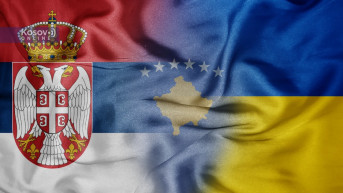
The Ukrainian Minister of Foreign Affairs, Dmytro Kuleba, has made his first visit to Serbia since the outbreak of the war. According to commentators for Kosovo Online, analysts from Pristina and Belgrade, a key topic of discussion was undoubtedly Kosovo.
Kuleba first met with Serbian Foreign Minister Marko Djuric on Monday, followed by meetings with Serbian President Aleksandar Vucic, Prime Minister Milos Vucevic, and Assembly President Ana Brnabic.
The discussions emphasized that both countries insist on respecting international law and the territorial integrity of each nation.
However, since the start of the war, Kosovo officials have repeatedly suggested that Ukraine might change its stance on not recognizing Kosovo's independence.
This possibility was confirmed in early March by the Ukrainian Ambassador to Albania, Volodymyr Shkurov, who stated that recognizing Kosovo was "a matter of time."
"We value Kosovo's assistance. Recognition of Kosovo is on the agenda. Nothing is impossible, but we are currently more focused on how to escape the firefight. The issue of recognizing Kosovo is more of a political nature, requiring consideration of several elements that may not generally appear," said Shkurov.
His colleague, the Ukrainian Ambassador to Belgrade, Volodymyr Tolkach, immediately responded by reiterating that his country would remain consistent in its stance of not recognizing Kosovo.
However, Kosovo's President Vjosa Osmani does not hide the fact that the recognition of Kosovo by Ukraine is a bilateral issue and that the authorities in Pristina will continuously make such requests and will not give up.
"These are bilateral issues; we have always made such requests. We will continue to do so, but with a full understanding of the situation in Ukraine. I am convinced that this moment will come, along with Ukraine's victory," Osmani stated at the "Ukraine - Southeast Europe" conference held in Tirana at the end of February.
At the same conference, Serbian President Aleksandar Vucic emphasized the importance for Serbia of maintaining good relations with Ukraine because they have not recognized the independence of Kosovo, which otherwise, he stressed, would have led at least two more European countries to change their stance.
"I believe we will continue to cultivate friendly relations with Ukraine, as well as with the Russian Federation," Vucic said, adding that the declaration signed in Tirana by all Western Balkan countries clearly states everything that Serbia emphasized by voting for the UN resolution condemning the Russian attack on Ukraine.
Due to starkly contrasting views, the visit of Ukrainian Foreign Minister Dmytro Kuleba to Serbia is significant news, according to former diplomat Srecko Djukic.
"This is significant news because the relations between Serbia and Ukraine suffer from a deficit of regular bilateral visits. There is a deficit of visits, a deficit of contacts and understanding," Djukic told Kosovo Online.
He believes that the bilateral relations between the two countries have not suffered despite this deficit because Serbia managed to "cover" it by supplying ammunition to Ukraine.
"We know some things from public statements, some things we do not know, some can be inferred or concluded from Kyiv's attitude towards Belgrade and even more from Moscow's attitude towards Belgrade because of the supply of this weaponry, namely ammunition," says Djukic.
He adds that Kuleba's visit to Belgrade was likely not just bilateral, but part of a tour in the region where Ukraine is trying to encourage and directly invite countries to a global peace meeting held on June 15 and 16 in Geneva.
"It is a large gathering that will be attended by the UN Secretary General, Biden, Western leaders... It is expected that about a hundred countries will be present," Djukic explains.
Asked whether this visit could also be interpreted as a thaw in relations between Ukraine and Serbia, Djukic says it should be seen as a step in that direction.
"We have no single reason to hinder relations between Serbia and Ukraine. We voted in the UN Organization, at its General Assembly, for resolutions condemning Russian aggression, the occupation of Ukraine, and hence the platform between us and Russia is completely clear and straightforward. There are no doubts about it," Djukic emphasizes.
He adds that the key links between the two countries include the fact that Ukraine has not recognized the independence of Kosovo, and a little-known fact that its armed forces were present in KFOR the longest, with bases in Strpce and Dragas.
"The Ukrainian military contingent within KFOR was in Kosovo and Metohija the longest, excluding the Quint countries that have their permanent forces there. They had their contingent from the aggression in 1999 until 2019," Djukic reminds.
He emphasizes that Ukraine's position on recognizing Kosovo is very clear, and it should not be surprising that there are dissenting voices within the country advocating for a change in this stance with the explanation that it should be done "because Serbia is allegedly on Russia's side in the war."
"These are some members in their Supreme Council, parliament, who are saying this. Something was also mentioned by their ambassador in Tirana. But, these are not voices that can change anything and it is neither surprising nor miraculous," Djukic believes.
The former diplomat has no doubt that Ukraine is not considering the possibility of recognizing Kosovo's independence.
"Ukraine neither thinks of it nor would it benefit them at this moment, while all these problems and processes are ongoing. Even after that. Ukraine is a quite large and significant country in Europe, and it has now shown much wider in the international community that it would not easily change its positions. I think our relations with Ukraine must strengthen faster, broader, and deeper," Djukic evaluates.
Asked whether a potential change in the decision on recognizing Kosovo would bring Ukraine any benefit, this diplomat says that such a decision would not gain anything in the eyes of the international community.
"I think it would not even enhance its potential with allies within NATO and the EU," Djukic concludes.
Expectations from Pristina
On the other hand, political scientist from Pristina, Albinot Maloku, believes that circumstances have changed enough for Ukraine to change its stance on not recognizing Kosovo and to join the countries that have done so as it would be in accordance with international law.
"Kyiv's official policy so far has been not to recognize Kosovo. This has been stated several times by the ambassador of Ukraine in Belgrade. That means that (Ukraine) is trying to maintain its current stance. But, due to circumstances and changes that have occurred, Ukraine should change this course and join the countries that have recognized the independence of Kosovo and respected the opinion of the International Court of Justice on the legality of independence," Maloku says for Kosovo Online.
Commenting on the official visit of the Ukrainian Minister of Foreign Affairs Dmytro Kuleba to Serbia, Maloku says that Kosovo has long been expecting a change in Ukraine's stance and that this country should follow the example of the USA, but also its representatives in the Council of Europe.
"A number of politicians who are representatives, especially within the Council of Europe, have been trying all the time to show and prove that Ukraine should follow the policy of America and recognize Kosovo, to enter into normal diplomatic relations. At the same time, Kosovo has shown diligence, carefulness for all situations that have occurred in Ukraine from the beginning of the Russian aggression to today. It would be time for Ukraine to recognize Kosovo," emphasizes this political scientist.
Maloku says that such a decision would not produce negative consequences for Ukraine but rather the opposite - it would show that this country follows and demonstrates its sovereign approach to decision-making.
"Ukraine would follow its sovereign approach to issues such as recognizing Kosovo. It would show that it is sovereign and can make decisions respecting the International Court of Justice which a few years ago gave an opinion around Kosovo and clearly told all countries of the planet that the independence of Kosovo does not violate international law. Any other approach to this topic, and which some countries that do not recognize Kosovo try, is not based on respecting international law. Such claims are completely of a political nature and have nothing to do with respecting international law when there is already an opinion that declaring the independence of Kosovo did not violate international law," concluded Maloku.
Key goals of Belgrade and Kyiv
For the senior researcher at the Belgrade Centre for Security Policy, Vuk Vuksanovic, the visit of the Ukrainian Minister of Foreign Affairs Dmytro Kuleba to Serbia is primarily an attempt by this country to remain active on the international stage.
"On one hand, it is an attempt by Ukraine to remain active on the international stage, to try to maintain some level of support for its very precarious situation. Of course, the fact is that Serbia is still perceived in the Western political discourse as a country that is unconditionally loyal to Moscow although the reality is much more complicated. In some way, Ukraine can also show this as its effort to make Serbia more empathetic," explains Vuksanovic for Kosovo Online.
He adds that it was primarily important for Serbia to ensure that Ukraine continues to be on the list of countries that have not recognized Kosovo.
"And I think there is no chance of a change in Kyiv's stance as long as it faces the loss of territory. And as the balance of power on the ground has sharply shifted in favor of Russia, there is a danger of losing even more territory, a state in such a situation can hardly change its stance towards a dispute like Kosovo," concludes Vuksanovic.
Responding to a question about the consequences of a potential change in Kyiv's official policy regarding non-recognition, this expert emphasizes that such a change could be considered if Ukraine were not in its current situation.
"If Ukraine were a country that did not have any territorial disputes and problems concerning its territorial integrity, it would not produce anything. But, in this case, it has a divided population. On one side, some clearly identify with or feel a strong sense of brotherhood with neighboring Russia. On the other side is the western part of Ukraine, where a strong Ukrainian identity exists, which in the context of this war is increasingly based on strong anti-Russian sentiment. Along with this, it has a great power as its neighbor, which clearly considers Ukraine key to its strategic interests and national security. In such a context, I cannot say that Ukraine can change anything," explains Vuksanovic.
He says that a change in Ukraine's stance would be "just another pain" for Serbia.
"For Serbia, it would definitely be 'just another pain.' Realistically, at a time when Serbia is trying to keep Kosovo out of international institutions for as long as possible in hopes of strengthening its position and securing a better resolution, any country that joins the list of those recognizing Kosovo automatically constitutes a loss for such a policy," emphasizes Vuksanovic.



0 comments