
War in the Middle East – What are the security and economic risks for the Western Balkans?
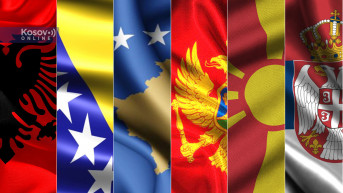
After the United States and Israel launched attacks on Iran, followed by Iran’s response with missile strikes on American bases in the Middle East, speculation has emerged about possible risks for the Western Balkans. Particular attention has been directed toward Albania, which has strained relations with Tehran, and Kosovo, where the U.S. military base Camp Bondsteel is located. Analysts from the region told Kosovo Online that a direct attack on the Western Balkans is unlikely, but warn that the conflict could bring serious economic consequences.
Written by Jelena Novakov
Iran’s ambassador to Spain, Reza Zabi, recently stated that Tehran has the right to “respond to unlawful aggression” and, accordingly, to attack American bases in Europe if necessary. A British base in Cyprus was attacked on March 2, after which Israel’s ambassador to Croatia, Gary Koren, warned that Southeastern Europe is also exposed to serious risks, given the range of certain Iranian missiles, which he said can reach distances of up to 2,000 kilometers.
Israeli officials also published a map of the range of Iranian missiles, claiming they could reach Europe, including Kosovo.
During conversations with world officials, Serbian President Aleksandar Vucic expressed concern over the escalation of the conflict in the Middle East and emphasized that preserving peace and stability is crucial not only for that region but also for global security.
Serbia strongly supports the de-escalation of tensions, restraint, and the resolution of all disputes through dialogue and diplomatic means, Vucic has said.
North Macedonia has aligned itself with the United States and Israel, and Foreign Minister Timco Mucunski stated that Skopje stands with its American allies in confronting what he described as destabilizing threats in the Middle East.
“The United States has made it clear that diplomacy is always the first option—but deterrence remains essential when credible risks exist,” Mucunski wrote on the social media platform X.
Kosovo, which hosts the largest U.S. military base in Southeast Europe, has also supported the United States and Israel. Prime Minister Albin Kurti stated that the institutions have taken all necessary measures to maintain order and security in Kosovo and are closely monitoring developments in the Middle East and their possible implications for Kosovo and the region. President Vjosa Osmani said that “the hour of freedom” has come for the Iranian people thanks to U.S. President Donald Trump.
When it comes to the risk from Iran, Albania is in a less favorable position compared to other countries in the region. Authorities in Tirana expelled the Iranian ambassador in 2022 after accusing Iranian authorities of carrying out a cyberattack. Iranian hacker groups issued new threats against Albania last year, and media reports recently suggested that Iran is considering a possible attack on the Ashraf-3 base in Manza, Albania, where the headquarters of the Iranian opposition organization MEK is located.
Additionally, Albanian Prime Minister Edi Rama visited Israel on a working trip last month, confirming strong relations between the two countries. Last week he stated that he supports the U.S. and Israeli operation against Iran and announced that Tirana will declare the Islamic Revolutionary Guard Corps a terrorist organization.
Albania’s Alliance with the United States
Security experts, however, are divided regarding the risks for Albania. Ijir Kula said that Albania must take into account the risk of cyberattacks as well as broader scenarios if the conflict escalates. On the other hand, security expert and professor Xhavit Shala said he does not see the presence of MEK as an additional factor exposing Albania to Iranian attacks, pointing out that the country is a member of NATO.
Political analyst prof. dr. Ziliftar Bregu agrees that Albania is the Western Balkan country that most strongly supports U.S. and Israeli actions against Iran. Nevertheless, he does not expect this to lead to a direct confrontation between Tirana and Tehran. However, he believes the region will feel economic consequences of the conflict, including rising oil and gas prices.
“First of all, we have economic consequences caused by this conflict, and those are global consequences. We cannot escape them. As we see, oil and gas prices are expected to rise, which will immediately affect the economy in all its sectors. This impact, although global, is still the simplest and smallest consequence compared with other consequences of this war,” he told Kosovo Online.
The professor highlighted Albania’s support for the United States and Israel, as well as the severing of diplomatic relations between Tirana and Tehran, but still does not expect an Iranian attack on Albania.
“When we talk about war, the first thing we think about is the consequences for human lives. Consequences are direct and indirect. Direct consequences mean participation in the conflict, and in that sense our region is far from this war. However, in our region we must make distinctions. Albania is geographically distant from the Middle East, but because of its actions and positions it is not as distant politically as other countries in the region. One difference is that Albania hosts a community of the Iranian opposition, which affects relations between Albania and Iran. Is that a motive for conflict between the two countries? No. If it were, the conflict would have occurred earlier. We must also add the fact that Albania has broken diplomatic relations with Iran and expelled the Iranian embassy from Tirana. That is another source of tension,” Bregu said.
He believes there is a possibility that Tehran might consider an attack on Albania, but that current claims about such plans are fake news.
“However, I am not inclined to believe that there will be direct consequences for us or that what is being talked about—that Iran is planning an attack on Albania—will happen. That could theoretically occur, but logic tells us that these reports are false for now. It may be a scenario discussed within the Iranian government, but reliable sources do not confirm it. At the moment, it appears to be fake news,” he said.
Direct Threats and Economic Consequences
Marko Savkovic of the ISAC Fund told Kosovo Online that the Middle East conflict does not pose a direct risk to Western Balkan countries, noting that previous diplomatic tensions between Tirana and Tehran are unlikely to escalate further. The main risk, he said, will be economic consequences—especially inflation and rising fuel prices.
Savkovic said that expanding the conflict onto the territory of U.S. allies would constitute state terrorism, which would provoke a reaction from the European Union, which would expect Western Balkan countries to follow its position. He also noted that among the countries of the region, only Albania has had open disagreements with Tehran.
“I do not believe the Western Balkans itself is directly threatened. The only country that had a very concrete reason for conflict with Iran was Albania. Albania expelled a group connected with the regime in Tehran. Iran responded with a cyberattack, which was one of the most serious cyber incidents in this region. But beyond that, I do not currently see further escalation,” Savkovic said.
Speaking about indirect consequences of the Middle Eastern conflict, Savkovic emphasized that economic effects will be felt quickly.
“The Strait of Hormuz has been closed, oil pipelines disrupted, and oil terminals attacked. That affects a large portion of global oil trade. Prices will rise. The increase is not yet dramatic, but we will see how it affects other prices. Usually, price increases are followed by inflation,” he explained.
There is also speculation about a new wave of migrants, Savkovic said, adding that it is too early to draw such conclusions since there are still no ground operations in Iran and the United States has ruled out that possibility for now.
What should concern Western Balkan countries, he said, is that there are no signs the conflict will end soon.
“On the contrary, analyses suggest this could last for months. If that happens, we may see everything I mentioned—rising prices, migration crises, and disruptions of global supply chains. This conflict could seriously complicate life for all of us,” Savkovic said.
No Direct Risk for the Western Balkans
Political analyst Risto Nikovski believes that the situation in the Middle East generally does not pose a risk for the Western Balkans unless some countries decide to directly participate in Israeli-American operations against Iran.
Nikovski noted that such a situation occurred in Cyprus, where a British base was attacked, but added that he does not expect the war to spread.
“Generally, the region is not at risk except for those who directly participate in operations by the United States and Israel. That was the case with Cyprus. The British allowed their bases to be used by American aircraft and there was already retaliation, with missiles flying toward Cyprus. Others who do not expose themselves are not in danger. Personally, I believe the war will not expand. It will remain confined to the region—and to be clear, that region has been in conflict since the Second World War, actually since 1948 when Israel was created, and that will continue,” Nikovski said.
A Localized Conflict
Political analyst Blerim Burjani shares the assessment that the Western Balkans are not at risk. He told Kosovo Online that the current conflicts in the Middle East have a local character and that there is no real danger of them spilling over into other regions, despite concerns expressed in Europe.
“I do not think the war will spread to other regions. These are local conflicts—cyclical processes that will eventually end. European countries are more afraid than the situation realistically requires,” Burjani said.
Although he does not believe Europe is directly threatened, Burjani notes that EU member states have become more alert, as reflected in increased defense spending within NATO.
“The policy of Donald Trump has led European countries to begin planning new defense budgets. European states must increase the funds allocated to defense,” Burjani concluded.
KFOR Continues Its Mission
KFOR was also asked to comment on the situation in the Middle East and potential risks for the Western Balkans. The NATO mission told Kosovo Online that it continues to carry out its mandate in Kosovo independently of developments in the Middle East.
KFOR stated that it continues to contribute to the security of Kosovo’s citizens in accordance with its UN mandate.
“Despite the conflict, KFOR continues to fulfill its mandate of contributing to a safe and secure environment for all people living in Kosovo, based on United Nations Security Council Resolution 1244,” KFOR said.




0 comments