
What encouraged Marta Kos regarding the recognition of Kosovo, and how realistic is it that the EU quintet will change its position?
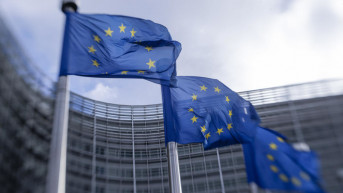
Five EU member states do not recognize Kosovo’s independence, but following the statement by European Commissioner for Enlargement Marta Kos that she is monitoring what is happening and that “developments are encouraging,” the question arises whether this could soon change. The first response came from Bratislava, where the Slovak Ministry of Foreign Affairs told Kosovo Online that it remains committed to its position from 2007 – not to recognize unilateral declarations of independence, on the basis of international law.
Written by: Veljko Nestorovic
Other Kosovo Online interlocutors on this topic also believe that it is difficult to expect Greece, Cyprus, Romania, Slovakia and Spain to change their position on Kosovo, although some do not rule out such a possibility in the future.
In addition to the fact that five EU member states do not recognize Kosovo, further weight is added by the fact that four of those states are also NATO members, without whose consent Pristina cannot become part of the Alliance.
It is true that European Commissioner for Enlargement Marta Kos, who said that she is “monitoring what is happening” regarding the five EU member states that have not yet recognized Kosovo and that “developments are encouraging,” did not specify in greater detail what she meant by that.
In response to our portal regarding its position on recognizing Kosovo’s independence, the Slovak Ministry of Foreign Affairs stated the following:
“As is generally known, our position is based on the Declaration of the Slovak Parliament from March 2007, which provides as follows: the resolution of the future status of the province of Kosovo must be based on respect for Serbia’s legitimate demands, as well as the United Nations Charter and other norms of international law. The Slovak government is expected to seek a joint solution regarding the future regulation of relations in the Western Balkans in cooperation with other EU member states, with a clear perspective of integration of the Western Balkan countries into the EU,” the Slovak MFA said.
The response further emphasizes that the said declaration remains in force.
“Based on the above parameters, Slovakia supports the EU-mediated dialogue between Belgrade and Pristina. Its outcome will be considered by the competent authorities of Slovakia in terms of meeting the requirements of the above-mentioned declaration. Slovakia and its diplomacy also advocate principled positions in other related issues, on the basis of international law, and therefore do not recognize unilateral declarations of independence in other cases, such as Crimea, Abkhazia, South Ossetia, Transnistria and similar situations.”
On the other hand, university professor Mazllum Baraliu believes that the statement by European Commissioner for Enlargement Marta Kos was not accidental and that there is readiness among the EU countries that have not recognized Kosovo to change their position.
“Therefore, there is a disposition, perhaps in four or all five countries that still have not recognized Kosovo’s independence. In that sense, I think Greece is leading, as it recognizes all Kosovo documentation – passports, identity cards and everything else, and it also has a very important economic, as well as political, interest in being the leading and most influential country in the Balkans,” Baraliu says.
Our interlocutor further states that, in addition to Greece, Spain also recognizes all Kosovo documents.
“Since it is both a member of the European Union and a NATO member, and actually also for economic reasons, because many representatives of Greek business are present in the economy of Kosovo, but also Albania. So there is a legal, political and economic interest, primarily of Greece. It has been close to recognition several times. But not only that, Spain has already recognized documents, since it was the toughest on this issue, and perhaps Romania and Slovakia as well, and so on,” Baraliu says.
In conclusion, he says that there is readiness among the five EU countries that have not recognized Kosovo to change their position.
Career diplomat Zoran Milivojevic says that resolving the Kosovo issue is high on the agenda of the European Union and that it is being discussed intensively, but also that it is difficult to expect Spain, Greece, Cyprus, Slovakia and Romania to change their position.
Negotiations with those five states are certainly one of the Commission’s objectives in an attempt to put forward a proposal for resolving the Kosovo issue, Milivojevic tells Kosovo Online, adding:
“The second message is that the issue of Kosovo and Metohija is high on the European Union’s agenda and that this matter is, in a way, accelerating. We see this from some other information, for example from the renewed focus on the issue of Kosovo’s membership in the Council of Europe, as well as from pressure by the Germans and the British in that direction, so I think this statement should also be seen in that context.”
The statement by Marta Kos about encouraging signs regarding the five EU member states that have not yet recognized Kosovo was quite vague and reserved, says Marko Todorovic, a researcher at the Belgrade-based Centre for European Policy.
Todorovic tells Kosovo Online that so far there has been no signal that any of the five non-recognizers within the European Union intends to change its position, which is very firm on this issue.
“I would say that Marta Kos’s statement was quite, let us say, vague and quite reserved and, therefore, she was answering a question from an MEP, that is, the European Parliament rapporteur for Kosovo. Essentially, such a formulation, when, let us say, an official of the European Commission says that the situation is being monitored and that there are encouraging signs, usually means two things, or one of two things,” Todorovic says and continues.
“The first is, in fact, that there is no particular progress and that this is only a diplomatic formulation, and the second is that perhaps something is being discussed through diplomatic channels, but that it is simply not mature enough to be spoken about publicly,” our interlocutor explains.
Todorovic believes that the first scenario is far more realistic, bearing in mind that there has been no signal that any of the five non-recognizers within the European Union intends to change its position.

0 comments