
Milivojevic: Resolving the Kosovo issue high on the European Union’s agenda
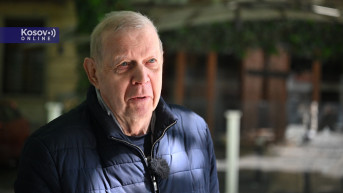
Career diplomat Zoran Milivojevic says that the issue of resolving the Kosovo problem is high on the European Union’s agenda and that it is being discussed intensively, but that it is unlikely that Spain, Greece, Cyprus, Slovakia and Romania will change their positions.
Negotiations with those five countries are certainly one of the Commission’s goals in attempting to put forward a proposal for resolving the Kosovo issue, Milivojevic told Kosovo Online, adding:
“The second message is that the issue of Kosovo and Metohija is high on the European Union’s agenda and that this process is in some way accelerating. We can see that from other developments, for example from the renewed focus on Kosovo’s membership in the Council of Europe, as well as from pressure by Germany and the United Kingdom in that direction, so I think this statement should be viewed in that context.”
He further says that if we analyze the five EU countries that do not recognize Kosovo, it is difficult to expect a change in their positions.
“When it comes to Spain, it is unlikely to change its position because the reasons for not recognizing Kosovo are still relevant, primarily the issues of Catalonia and the Basque Country. As for Cyprus, I think there is the least chance of a change, because it would put Cyprus in a position where it would have to question its own territorial issue, namely Northern Cyprus. Greece is tied to the Cyprus issue. For Greece, this is a matter of Cyprus’ territorial integrity and a Greek national issue. Greece does not recognize the self-proclaimed independence of Kosovo primarily because of Cyprus and its support for Cyprus. As a state, it has no direct reason for such a stance, but the Cyprus issue is a strategic national issue for it,” Milivojevic said.
Regarding Romania, Milivojevic points out that its motive is primarily based on principle.
“In that context, it also takes into account historical issues, including Bessarabia. Recently, the idea of unification between Moldova and Romania and the introduction of the Romanian language as an official language in Moldova has resurfaced. This process gives additional weight to Romania’s principled stance. Romania adheres to this principle and has never abandoned its position on Bessarabia. I believe that is its key motive. Only if the issue of Moldova were resolved could that position potentially change. That leaves Slovakia. Here the issue is Slovak–Hungarian relations. We have a new government in Hungary and we see that national policy is not changing. For Slovakia, this is also a matter of principle and I do not expect a change in position, although there is clearly some pressure and activity in that direction,” Milivojevic stated.
He also says that Kos may have been referring to the Ohrid Agreement when mentioning encouraging signs.
“From the European Union’s perspective, it represents the basis for Chapter 35. The Ohrid Agreement does not explicitly mention de jure recognition, but its elements imply de facto recognition. The first point refers to good neighborly relations. The second refers to mutual respect for territorial integrity based on the Charter of the United Nations, which can be interpreted as de facto recognition. The fourth point refers to free access to international organizations without restrictions. This is the so-called German model, recognition of the existence of a state without formal de jure recognition. It is possible that on this basis Ms. Kos and the European Commission are building their position, because all EU member states accept it and because there is insistence that the Ohrid Agreement is legally binding. This is what obliges Serbia within the negotiating framework as the final act of normalization. It is possible that this is the foundation of the strategy and a way to overcome the fact that five countries do not recognize Kosovo,” our interlocutor said.
Finally, Milivojevic concludes that the issue is high on the agenda, that it is being discussed intensively and that efforts are being made to find a formula.
“This should also be viewed in the context of strengthening the enlargement policy and the interest in encompassing the region. However, it is not possible to encompass the region without Serbia, and it is not possible to encompass Serbia without resolving the Kosovo issue. That is why a formula is being sought. It is no coincidence that our side is also working intensively on the enlargement policy,” Milivojevic stated.

0 comments