
What is the Government in Pristina indicating by appointing a former KLA Commander as the new Minister of Defense?

After the sudden resignation of Armend Mehaj from the position of Minister of Defense of Kosovo, allegedly due to family reasons, former KLA Commander Ejup Maqedonci was appointed to that position. Of the series of questions that this shift brings, one of the most interesting is what kind of message the authorities in Pristina want to send with such a personnel solution when it comes to the Serbs and their further security, according to the interlocutors of Kosovo Online.
Let us remind you that Kurti recently called the Kosovo Police the "successor of the KLA", an organization that was once considered terrorist by the State Department, and whose leaders are currently on trial in The Hague on charges of war crimes and crimes against humanity.
Maqedonci, who completed two military colleges and two master's programs in the United States before becoming a member of the Kosovo Security Forces, joined the KLA at the age of 19. In the KLA, he served as the Commander of the First Battalion of the 153rd Brigade of the Lab Operational Zone. It should be emphasized that some of the most terrible crimes were committed in the Lab zone in the camps where civilians were interrogated, abused, and killed in 1998 and 1999.
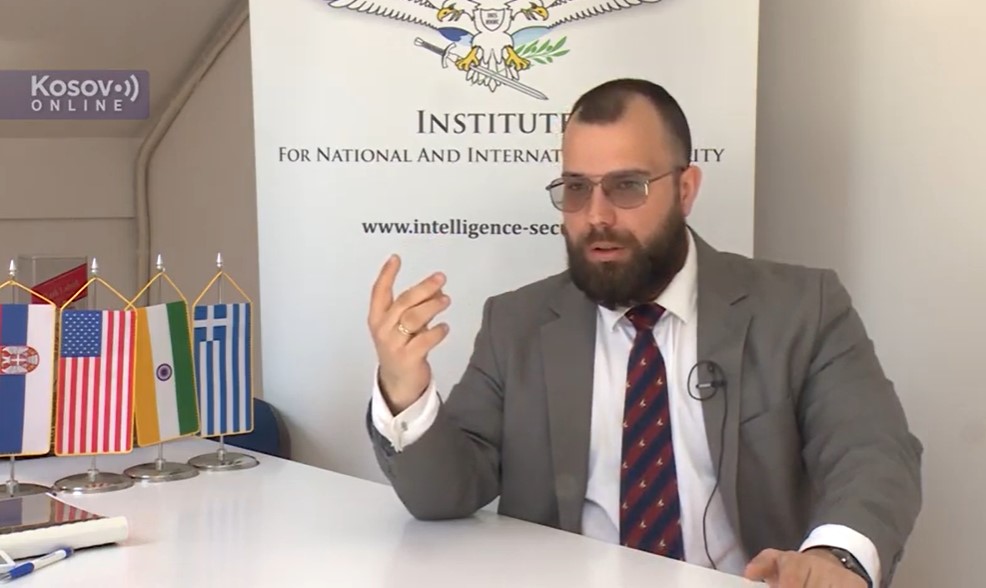
For security expert Darko Obradovic, the choice of a former member of the KLA as the Minister of Defense of Kosovo contains a certain symbolism where, as he states, Kurti relies on his position that all Kosovo Security Forces are the successors of the KLA.
"He deliberately forgets that the KLA was also suspended by Resolution 1244. However, with such iconography and institutional solutions, Kurti is trying to actually turn back time for 30 years, to the time of conflict and persecution, and to say that there is no place for the Serbs in Kosovo. it doesn't even matter if those Serbs accept Kosovo's institutions and documents, but what matters is that they are the Serbs and that they live there, and through such a paradigm of relations between the Albanians and the Serbs, which Kurti tries to present as a universal pattern of mutual relations, the space for compromise actually decreases. The only one who runs away from that compromise is Kurti and we can expect various other moves because he has permanently distanced Kosovo society from the idea of compromise as a long-term, strategically sustainable, and winning solution," our interlocutor says.
He also warns that this personnel decision should also be seen in the context of the Pristina authorities' attempt to ban Telekom and other Serbian companies from operating in Kosovo.
"For example, Kurti's Government can order the confiscation of property, confiscation of equipment, and impose other administrative measures that will make interdependence and the exchange and flow of information difficult. There are always certain provocations in the areas where the Serbs live; Kurti has a wide range of tools that he can use for escalation. Because, as we can see, when one crisis is resolved, another immediately opens, when the problem with the arrested Serbs is resolved, he arrests the next one. It is a spiral of escalation that must be cut and the renewal of dialogue must be started on other grounds," Obradovic says.
According to him, until a permanently binding agreement is reached and until a solution is found in multi-ethnic integration, the unresolved status of Kosovo will always be one of the sources of threats to the security of the Serbs in Kosovo.
"At this moment, as things stand, Kurti imposed the standard that extremism in relation to Serbia and the Serbs is a desirable pattern, and I don't believe that anyone else can lower that ladder and be accepted by the Albanian electorate," Obradovic points out.
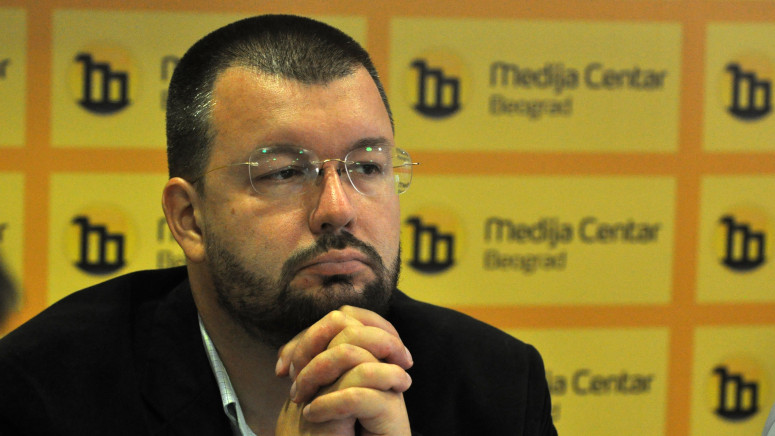
The President of the Serbian Progressive Club and historian Cedomir Antic tells Kosovo Online that the appointment of Maqedonci is important for the Albanian public in Kosovo, and that when it comes to the Serbs and their security, he believes that regardless of who is in the position of Minister of Defense, there is not much difference.
"When we talk about the Serbs in Kosovo, it is clear that there is no concession of any kind, nor any conversation. The Government of Albin Kurti has very clearly said that it did not respect international agreements, as it said that it did not see the Serbs in Kosovo, that it was ready to only formally respect some minority rights, which the Albanian majority would interpret according to need. The picture of everything related to Albin Kurti is the issue of the Decani Monastery, which he classifies as some kind of Kosovo heritage and appropriates, but he is not ready to respect the decisions of the so-called Constitutional Court of Kosovo, even though they blindly adhere to them when it comes to the Brussels agreement. I think that appointing a man with a KLA past to the position of Minister of Defense is just a game. The bottom line is not whether Kurti wants the Community of Serb-majority Municipalities, but the bottom line is who is a bigger patriot than the Albanian officials. It is obvious that without any serious pressure from abroad, Kurti wins that game and we are now further than ever to the agreement between Serbia and the Kosovo Albanians," Antic believes.
He reminds that the KLA was once declared a terrorist organization by the State Department and that today its leaders are being tried in The Hague, who are accused of war crimes and crimes against humanity that occurred even after the end of the war in Kosovo.
According to Antic, the question is what the purpose of the process of normalizing relations between Belgrade and Pristina under the auspices of the EU is, which, as he states, is "politically bankrupt", while, on the other hand, the USA has shown that it sticks to its principles and its treaties.
"In my opinion, Serbia should come out of those negotiations and demand the return of the UN to dialogue, respect for Resolution 1244, to offer the Albanians autonomy, based on the autonomy that the Serbs have in Croatia at the moment under the Constitutional Law and the rights of the national minority," Antic says.
0 comments