
What message was sent by appointing Bajrami as chief negotiator in the technical dialogue with Belgrade?
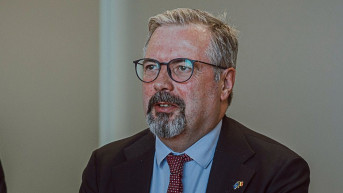
Following economist Besnik Bislimi, the positions of Pristina in the technical talks on normalization of relations with Belgrade will now be represented by Agron Bajrami—a diplomat and journalist with a degree from the Faculty of Fine Arts. He may not have much room to demonstrate creativity in this role, however, as one of Kosovo Online’s interlocutors notes that Albin Kurti remains the “alpha and omega” of the dialogue.
Bajrami’s appointment as chief negotiator has been interpreted in different ways. Some analysts see it as a signal that the Government of Kosovo considers the Brussels process of limited importance, while others argue that the dialogue is currently largely stagnant and lacking substantive developments.
Written by: Dusica Radeka Djordjevic
In Brussels—the venue for both technical and high-level political rounds of the EU-mediated dialogue—Bajrami is not a new figure. He has served as Kosovo’s ambassador to Belgium since February 2022.
Prime Minister Albin Kurti appointed him on Wednesday as chief negotiator in the technical dialogue on normalization of relations with Belgrade.
While a new figure in this role could theoretically inject fresh energy into the EU-facilitated process, observers are skeptical that this will materialize.
According to political analyst Artan Muhaxhiri, the appointment is a tactical move by Kurti, whose will and strategic calculations ultimately determine the course of the dialogue.
“By appointing Mr. Bajrami, Prime Minister Kurti seeks to demonstrate that he is shaping a strategy and actively working on the dialogue, especially after being criticized for neglecting it despite continuous pressure from the international community,” Muhaxhiri told Kosovo Online.
He added that the move is a symbolic indication that Kurti is beginning to take the dialogue more seriously, noting that Bajrami’s diplomatic experience in Brussels could prove useful.
“However, in the end, everything will depend on Prime Minister Kurti. Only he can accelerate or slow down the dialogue, depending on his political calculations, particularly in relation to internal dynamics in Kosovo,” Muhaxhiri emphasized.
Asked whether he expects renewed momentum, Muhaxhiri said Kurti has little choice but to intensify his engagement, having faced a degree of international isolation due to his earlier reluctance to become more politically involved.
He also recalled that former Kosovo President Vjosa Osmani had at times received invitations that were meant for Kurti, which he described as a clear message to the prime minister.
“Kurti has no alternative. He must engage more actively and make rational compromises if he wants to place Kosovo on the European agenda,” Muhaxhiri concluded.
For Aleksandar Rapajic, program director of the NGO Center for the Advocacy of Democratic Culture from North Mitrovica, Bajrami’s new role signals that the Brussels process is of marginal importance to the Kosovo government.
“I think they are lowering it to the lowest possible level. The assumption is probably that, given his connections in Brussels as ambassador, he may be able to leverage useful contacts,” Rapajic said.
He added that frequent personnel changes in the dialogue are problematic, but emphasized that staffing decisions alone cannot produce meaningful progress in the absence of genuine political will.
Aleksandra Joksimovic, Director of the Centre for Foreign Policy in Belgrade, suggested that Bajrami’s appointment may stem from his presence “at the source of information” in Brussels. However, she also noted that the dialogue is currently not a central priority, particularly given the ongoing institutional crisis in Pristina.
Regarding the broader message sent to Brussels and Belgrade, Joksimovic pointed out that interpretations remain speculative, but that the lack of significant developments in the dialogue reduces the need for a negotiator with stronger political weight or coordination capacity at this stage.
Bajrami has previously expressed the view that the notion that “both sides must gain and lose something” can be dangerous, as it risks shifting the focus to territorial issues rather than the well-being of people. He has also argued that political elites have “privatized” the dialogue by conducting negotiations within a narrow circle, without broader public debate or transparency. As ambassador in Brussels, he has repeatedly stated that normalization of relations between Kosovo and Serbia is not possible without mutual recognition.
Before Bislimi, previous chief negotiators at the technical level since the EU assumed its mediating role included Skender Hyseni, Avni Arifi, and Edita Tahiri.


0 comments