
When can Kosovo get a new Parliament and Government – what do the legal deadlines say?
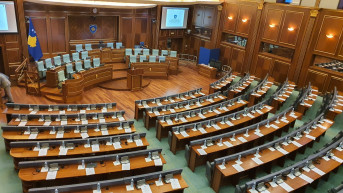
Although Kosovo’s laws and Constitution provide general guidelines and deadlines for the formation of the Parliament and Government, several procedural steps are not time-bound. This makes it difficult to predict when Kosovo will have a new government after the elections held on February 9. Analysts point to two key uncertainties: there is no deadline for announcing the final election results, nor is there a time limit for the winning party to propose a candidate for Speaker of Parliament.
Written by Dusica Radeka Djordjevic
Past experience has shown that forming a government can take up to six months. In 2014, for example, citizens voted on June 8, but Kosovo’s Parliament did not approve the new government until December 9.
It has been ten days since this year’s parliamentary elections, and votes for parliamentary candidates have been counted at about 80% of polling stations.
The Central Election Commission (CEC) has faced numerous criticisms, and its spokesperson Valmir Elezi stated yesterday that in the parliamentary elections of 2014, 2017, and 2021, the CEC took 18 days in each case to announce the final results and an additional eight or nine days to certify them.
However, Melosh Kolshi from the Kosovo Institute of Justice believes the results are delayed, undermining public trust in electoral institutions and increasing the likelihood that political parties may reject the final outcome.
Former Constitutional Court judge Kadri Kryeziu warned of a potential legal vacuum, as there is no set timeframe for the Parliament’s constitution. Meanwhile, one political analyst noted that the general atmosphere in Kosovo suggests that no one is in a hurry to form a new government.
Eugen Cakolli, a researcher at the Kosovo Democratic Institute, told Kosovo Online that in the most optimal scenario, all election results from February 9 could be certified by mid-March. This would mean that the constitutive session of Parliament could be held by the end of March. In this ideal case, he says, a government could be formed in early April or, at the latest, by mid-April.
"However, if we do not have a new government by the end of April, then new, extraordinary elections will have to be called, which should take place by early June, that is, within 40 days, as prescribed by law and the Constitution," Cakolli stated.
He pointed out that although there are strict deadlines for forming the government, they do not start counting until the Assembly is constituted. Moreover, there is no deadline in the prescribed procedure for the winning party to propose a candidate for the Speaker of the Assembly.
Considering the current pace of the Central Election Commission in counting candidate votes and verifying votes of political entities, Cakolli expects this process to be completed by the end of February. After that, political parties will have the opportunity to file complaints with the Appeals Panel and the Supreme Court, a process that could take up to ten days. As he further explains, this means that, in the most optimal scenario, all election results could be certified by mid-March.
According to the law, he adds, once the results are confirmed, the President of Kosovo must convene the constitutive session of the Assembly within 30 days. At this session, the parliament is required to elect its Speaker and Deputy Speakers. However, following a Constitutional Court ruling in 2014, there is no deadline for the winning party to propose a candidate for the Speaker of the Assembly. He recalls that in 2014, this process lasted around six months.
"Therefore, without the constitution of the Assembly, other legal deadlines, including government formation, do not start counting. This means that if, in this case, Self-Determination does not propose someone for Speaker of the Assembly, the entire process is paused, and further deadlines do not begin. Once the Speaker and Deputy Speakers are elected, strict deadlines apply. At that point, the President must give the mandate to the winning party, and the person with the mandate for Prime Minister must present the government lineup to the Kosovo Assembly within 15 days of receiving the mandate from the President of Kosovo," Cakolli explained.
If this does not happen, the President of Kosovo has ten days to consult political parties again and propose a second candidate, who may be from the same party or another party if they can prove they have 61 votes.
"The second candidate, in this case, again has 15 days to propose a new government composition. If this fails, extraordinary elections must be held within 40 days after the government is not elected," Cakolli explained.
Political scientist Ognjen Gogic told Kosovo Online that the formation of institutions could be significantly delayed due to the lack of deadlines for election result certification. He explained that the CEC cannot be compelled to announce final results within a specific timeframe, as the process depends on various procedures, including appeals. Complaints can be submitted to the Election Complaints and Appeals Panel and the Supreme Court, making it impossible to predict how long the entire process may take.
"Once the results are certified, according to the Constitution, the President of Kosovo is obliged to convene the first session of parliament within 30 days. However, there is no clear deadline for when this session should conclude, as the election of the Speaker of Parliament can take time. According to the Constitution, the ruling party nominates the Speaker, but a situation could arise where it lacks opposition support for the election, leading to a deadlock," Gogic explains.
Once the parliament is constituted, he adds, the President of Kosovo grants the election-winning party a mandate to try to form a government, however, there is no deadline for when the President must do this.
"According to Kosovo’s Constitution, the mandate is not given to the party that confirms it has a parliamentary majority but to the party that won the elections, and it has 15 days to propose a government. If it fails, the mandate is given to the runner-up party. If that party also fails, new elections must be held no later than 40 days after it is confirmed that the government was not formed," he states.
Gogic also notes that the political atmosphere in Kosovo suggests that no one is in a hurry to form a new government for several reasons. The first is the lack of a clear parliamentary majority.
Another factor, he says, is the global political landscape, including the new administrations in Washington and Brussels, which makes political actors hesitant to rush into decisions – they prefer to wait and see how things develop.
"It seems there is a tacit agreement to delay the process as much as possible and eventually head to new elections rather than hastily forming a government. The most likely scenario is that this process will drag on, and any majority that is eventually formed will be unstable. Kosovo is entering a period of parliamentary crisis in which maintaining a stable majority will be impossible in the near future," Gogic concludes.
On the other hand, university professor Nexmmedin Spahiu has a different view, believing that Kosovo’s new government will be formed quickly.
"Albin Kurti will manage to form a government with non-Serb minorities and Rasic, and if that is not enough, he will also have Fatmir Limaj and his MPs, however many they have in parliament," Spahiu told Kosovo Online.
However, he sees the election of Kosovo’s president next year as a political challenge and warns that this issue could lead to new elections.
"There may be new elections at that time because the Constitution mandates that if a president cannot be elected, new elections must be held. However, even new elections are unlikely to resolve the problem. This issue will persist until Kosovo changes its Constitution so that the president is elected directly by the people, as is the case in North Macedonia and Serbia. So, if Kosovo’s political class does not work on changing the political system to allow for direct presidential elections, then a political crisis will occur next year," Spahiu believes.

0 comments