
Who stands to benefit from new parliamentary elections in Kosovo in December?
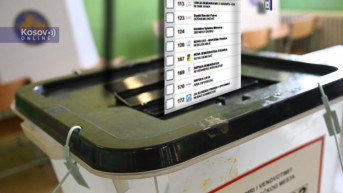
Although a new government has yet to be formed in Kosovo, the possibility of early parliamentary elections this autumn or winter has already become a subject of political debate in Pristina. According to Kosovo Online's interlocutors, Acting Prime Minister Albin Kurti is steering Kosovo toward another electoral cycle in an effort to secure a more comfortable parliamentary majority and completely neutralize the opposition, which, lacking both ideas and political creativity, has effectively allowed him to do so.
Written by: Milena Miladinovic
With 53 seats won by the Self-Determination Movement and the support of eight MPs representing non-Serb non-majority communities, Kurti has the simple majority required to form a government. However, that majority would not be as stable as in the previous parliamentary term, when his party held 57 seats.
The number of parliamentary seats, however, could become irrelevant if Self-Determination and the opposition fail to reach an agreement on the election of Kosovo's next president. In that case, Kosovo would once again be forced to hold early parliamentary elections by the end of this year.
Although all political actors are publicly calling for compromise, no progress has been made so far. Political analysts predict that Kurti could prolong the process until December in the hope of repeating his 2025 electoral success.
Citizens might be willing to return to the polls if doing so could resolve the political deadlock. The question, however, is whether this is truly the objective of the political parties, or whether the real goal is to secure more parliamentary seats, establish a more stable government, or gain control of the presidency at any cost.
New Elections Suit Kurti
Political scientist Ognjen Gogic believes Kurti has compelling reasons to seek new parliamentary elections this autumn or winter, even if they still fail to deliver him a two-thirds majority.
According to Gogic, one of the main reasons early elections would benefit Kurti is that additional electoral support could translate into more parliamentary seats for Self-Determination, allowing his government to function without depending on MPs from non-Serb non-majority communities.
"If he were to form a government now, his majority would be very narrow. It would depend on one or two MPs representing minority communities, making it less stable and more susceptible to external pressure. It would be very easy for the international community to influence such a government by putting pressure on some of those minority representatives or attempting to leverage them. That could make it difficult for the government even to secure the quorum needed to adopt the budget or pass decisions requiring broader parliamentary support. He is already serving as acting prime minister, but it would certainly be better for him to have a government with a larger number of Self-Determination MPs," Gogic told Kosovo Online.
He added that if new elections were held in December and Kurti secured greater electoral support and additional seats, his government would become less dependent on other communities.
"Even if such a government lasted only two months, it would still enjoy a more comfortable majority. The previous Assembly of Kosovo, despite its relatively short term, managed to pass certain laws and decisions because Kurti had a much greater margin of maneuver and did not depend on minority representatives," the political scientist said.
Another reason, Gogic noted, is Kurti's expectation of continued support from the diaspora, whose votes could bring him closer to the coveted two-thirds majority.
"He may not secure a two-thirds majority outright after the elections, but he could come close enough that, through attracting a few MPs from the opposition, he could eventually reach that threshold and approach that symbolic figure," our interlocutor said.
He further argued that Kurti understands that frequent elections gradually weaken and exhaust the opposition.
"Unlike Self-Determination, the opposition's electoral resources are steadily diminishing, whereas Self-Determination relies on its own party infrastructure, substantial donations from the diaspora, and public resources. Kurti campaigns from the position of prime minister and uses public resources in the process. He knows that in this electoral marathon he comes out ahead, while the opposition becomes increasingly unable to withstand the pressures that repeated elections entail. Therefore, Kurti has strong reasons to push for new elections this autumn or winter, even if they still do not produce a two-thirds majority," he added.
Holding New Elections Would Be Pointless
Former diplomat Sylë Ukshini believes it would be meaningless to hold elections, win them, and then immediately call another vote, arguing that such a scenario would produce no real winner.
Commenting on the possibility of parliamentary elections being held again in December if Kosovo fails to elect a president, Ukshini stressed that democracy functions by holding elections first and then establishing institutions.
"It makes no sense to hold elections, win them, and then immediately go back to the polls. In the broader sense, nobody would emerge as a winner. People are tired of elections," Ukshini told Kosovo Online.
He added that the weakness of the opposition has allowed Acting Prime Minister Albin Kurti to behave as he has.
"There is no real opposition leadership. The opposition is weak, lacks ideas and political initiative. If Kurti were in opposition today, he would have used the demonstrations in Albania to bring down the government in Kosovo. The protesters' demands in Tirana are the same as those of citizens in Kosovo. Kosovo's opposition lacks creativity and ideas. Everyone is simply waiting for Kurti to offer them the presidency. Kurti has therefore concluded that the opposition wants positions within the government rather than fulfilling its role as an opposition," our interlocutor said.
According to the former diplomat, the person who has done the most to undermine the spirit of the opposition is LDK leader Lumir Abdixhiku.
"An inert, timid, politically inexperienced and uncreative politician," Ukshini concluded.
Voter Fatigue Is Becoming Increasingly Evident
Dušan Radakovic, Executive Director of the NGO Advocacy Center for Democratic Culture (ACDC), believes Kosovo is heading toward another parliamentary election, most likely in December, or possibly even November.
In his assessment, any future elections could be significantly influenced by a ruling of the Kosovo Specialist Chambers in The Hague, particularly if former leaders of the Democratic Party of Kosovo (PDK) were to be acquitted, which could substantially strengthen the party.
Radakovic noted that voter turnout in the June 7 elections declined compared to the elections held in December and February last year, indicating growing voter fatigue.
He also observed increasing public distrust, arguing that the lack of tangible political achievements and concrete policy plans has only reinforced that sentiment.
"There will definitely be fewer voters because people are exhausted by constant elections. There is widespread distrust because nothing is happening. There are no concrete plans—only empty rhetoric and ultranationalist narratives regarding the north, without any tangible results. Over the past few days I have held several meetings both with representatives of the international community and with political party officials. Unfortunately, I believe we are once again heading toward elections in December, perhaps even in November," Radakovic told Kosovo Online.
He further argued that Acting Prime Minister Albin Kurti is pursuing a strategy based on waiting for international influence—particularly that of the United States—to weaken, while simultaneously leaving difficult political decisions for the future government.
"In addition, one of the first issues any newly formed government would have to address would be the Association of Serb-majority Municipalities, either by establishing it or by submitting its statute to the Constitutional Court, along with the roadmap for EU accession and many other bitter political pills that Self-Determination, or any governing coalition, would have to swallow. This is effectively government without a government—governing as it pleases through administrative instructions, to the detriment of everyone, including Albanians. Therefore, I believe this approach serves only the political interests of Self-Determination," he emphasized.
Radakovic also believes that any future elections could be significantly influenced by the decision of the Kosovo Specialist Chambers, particularly if former PDK leaders were released.
"It will depend on who is released—whether it is Kadri Veseli, Hashim Thaçi, or all four defendants, although I do not believe that all four will be released. That will have a much greater political impact. I think Vjosa Osmani has already reached her current political ceiling. There is now considerable speculation about Osmani and certain party committees that disagree with Abdixhiku's decisions. Overall, I do not expect the general political situation to change dramatically. However, the decision of the Specialist Chambers could have an enormous impact. If, above all, Kadri Veseli—and perhaps Hashim Thaçi—are released, I believe the PDK could certainly gain support, perhaps by as much as ten percentage points," Radakovic concluded.


0 comments