
Why is the European proposal from February considered the "basic agreement" by Albin Kurti?
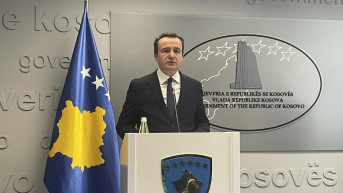
Since the European Union published the European proposal "Agreement on the Path to Normalization of Relations between Kosovo and Serbia" on February 27th of this year, following a meeting between the Prime Minister of Kosovo, Albin Kurti, and the President of Serbia, Aleksandar Vucic, in Brussels, the Kosovo Prime Minister exclusively refers to this document as the "basic agreement". This linguistic acrobatics is particularly noticeable because the agreement from the 2013 dialogue, by which Kosovo undertook the obligation to establish the Community of Serb-majority Municipalities, is officially called the "First Agreement on the Principles Regulating the Normalization of Relations".
If a decade ago, an agreement was officially referred to as the "first", and both Belgrade and Pristina signed it, why would the "basic" agreement from 2023, which also hasn't been signed, be considered as such?
Furthermore, the first Brussels Agreement from April 19, 2013, was ratified by the Kosovo Assembly in June of that year, making it an international legal obligation for Pristina, as European officials have repeatedly pointed out.
Kosovo Online's interlocutors argue that for Albin Kurti, the February 2023 agreement is considered "basic" because he doesn't accept the obligations previously assumed by Kosovo and wants to start a new narrative from it. Additionally, the Basic Treaty from the 1970s between the two Germanies implied de facto mutual recognition, after which both Germanies became United Nations members.
Dragsša Mijacic, Coordinator of the Working Group of the National Convention on the European Union for Chapter 35, believes that Kurti deliberately uses wordplay to impose the narrative that anything previously agreed upon does not apply to Kosovo.
"My opinion is that Kurti calls it the 'basic agreement' because he partially does not accept previously assumed obligations and wants to convey that for him, this agreement is fundamental, i.e., the first in a series that he should implement without accepting the obligations from the Brussels Agreement of 2013 and 2015, as well as the technical agreements previously undertaken by the Kosovo Government", Mijacic says for Kosovo Online.
He further adds that the term "basic agreement" can also be heard in European diplomatic circles not specifically dealing with the relationship between Serbia and Kosovo because, as he says, it is associated with the Basic Treaty between the two Germanies from the late 1970s.
"This is a wordplay because this agreement from February and March is modeled after the agreement between the two Germanies, which is also called the Basic Treaty. So, in some diplomatic circles not primarily focused on the Belgrade-Pristina dialogue, you can hear them referring to it as the basic agreement since it is very similar to that agreement between the two Germanies from the 1970s", Mijacic noted.
However, he believes that Kurti also wants history to start with him and with what he has been involved in, which is the agreement reached in Brussels in February this year. According to Mijacic's assessment, this agreement implies many concessions from Belgrade that favor Pristina and are "music to Kurti's ears", which is why Kurti sees it as the starting point for everything that will follow.
"On the other hand, let's be honest, this agreement makes significant concessions from Serbia's side - accepting Kosovo's international subjectivity, allowing Kosovo to join international organizations, and providing a broad framework for Serbia's relationship with Kosovo. So, in a way, this agreement is music to his ears, and that's why he calls it the basic or foundational agreement for everything that will follow", Mijacic concluded.
The connection with the agreement between the two Germanies is also seen by political analyst Ognjen Gogic. He told Kosovo Online that Kosovo Prime Minister Albin Kurti often used the term "basic agreement" rigidly adhering to the latest agreed-upon plan to resolve the Kosovo issue because he wanted to keep the idea of mutual recognition between the two Germanies as a model for Kosovo alive.
"The Franco-German proposal is designed by analogy with the basic treaty signed by the two Germanies in the 1970s, by which they implicitly recognized each other without de jure official recognition. After their de facto recognition, both became UN members. The proponents of this idea of the Franco-German proposal actually want to achieve the same goal - for Serbia and Kosovo to accept an agreement that would allow them to become EU members at some point, but primarily to send a message through this agreement that Serbia and Kosovo are recognized de facto if not de jure", Gogic said.
He points out that the Franco-German proposal was initially called the basic agreement.
"That term was used. In the meantime, it has been renamed and is now called the Agreement on the Path to Normalization. I believe it was renamed due to Serbia's demand, meaning that Serbia did not want to accept any agreement that referred to the agreement between the two Germanies. What Kurti is trying to do by using the phrase 'basic agreement' is to allude and refer to the fact that this is an agreement modeled after that treaty between the two Germanies. He wants to keep that idea alive that Serbia and Kosovo should mutually recognize each other de facto in the same way and thus regulate their relationship", Gogic said for Kosovo online.
As he adds, Kurti continually refers to this basic agreement because he has certain expectations and plans.
"In fact, he keeps referring to this agreement all the time, hoping that by signing it, a message will be sent to everyone in the international community that Kosovo and Serbia have recognized each other, at least de facto if not de jure. And then, the non-recognizing countries, primarily in the EU and NATO, may also change their position in light of this. It's an attempt, a bluff of his, but it doesn't pass because not only does Serbia not accept such a thing, but this agreement is not called 'basic' in international documents, but the Agreement on the Path to Normalization. Although it's no longer clear how all these various agreements are named. It is also known as the Brussels-Ohrid Agreement, so there is a general confusion", Gogic says.
Stefan Surlic, an Associate Professor at the Faculty of Political Sciences in Belgrade, believes that Kosovo Prime Minister Albin Kurti wants to avoid the Ohrid Agreement because the Ohrid Annex actually states the priorities for the overall implementation of the normalization process between Belgrade and Pristina, which is the Community of Serb-majority Municipalities, i.e., self-government for the Serbs in the form of broad autonomy.
"This is something demanded of Pristina, and all European officials and mediators emphasize that it is the starting point. The Government of Albin Kurti actually deliberately avoids the Ohrid annex and talks only about the February agreement in Brussels, calling it basic because he believes that Belgrade should be the one making the first concessions, not the institutions of Pristina. This is a tactic that is also conveyed in the messages they send, that they would not accept the CSM, that they would buy time, and that they expected Belgrade to be the one to realize and fulfill everything outlined in that, as he called it, basic plan", Surlic says for Kosovo Online.
Political analyst Mimoza Gavrani believes that Kosovo Prime Minister Albin Kurti calls the agreement from Brussels on February 27, 2023, 'basic' because he is now in the Government of Kosovo, while documents from 2013 and 2015 are not seen as the basis for new agreements, such as the European one that was created based on the Franco-German proposal.
She told Kosovo Online that for Pristina, it is politically implicit that the 2013 agreement is the main document regarding the Community of Serb-majority Municipalities.
"When the Community was accepted, it became an international agreement. However, as 10 years have passed, we now have several new proposed versions, such as the Franco-German and European proposals for the normalization of relations between Kosovo and Serbia. Kosovo has lost a lot of time in these 10 years and 'undermined' the political functions of the Community, and no government has implemented the 2013 agreement so far. This unfulfilled promise has damaged Kosovo's image. The Kosovo Government must do everything to move forward with the 'political process', considering the pressures and all international agreements. Kurti is under pressure from the EU and all others who support the dialogue process, but I wouldn't say that Prime Minister Kurti is avoiding the Community. While he was in the opposition, he was against it, and now he is trying to find the best solution", Gavrani says, who believes that Kosovo should demonstrate its readiness to make tough political decisions with concrete political steps, even regarding the CSM agreement.
As she emphasizes, Serbia and Kosovo should be finally able to address difficult issues.
"We need to be aware of the deadlines because there will be elections in the United States and in Europe next year. Therefore, we need to be prepared to conclude the dialogue that has been ongoing with Serbia for years", Gavrani says, who adds that she does not believe that Serbia will do anything regarding the recognition of Kosovo.
0 comments