
Will Albanian parties conduct their election campaign at the expense of the Serbs?
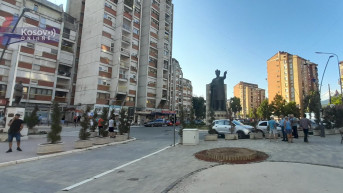
The citizens of Kosovo will elect their representatives in parliament on February 9th, and although the official election campaign will start after January 7th, its contours are already becoming apparent. Opposition parties are already accusing Prime Minister Albin Kurti of using the issue of opening the main bridge on the Ibar for campaign purposes, and the inappropriate statement by opposition DPK member Bekim Haxhiu about killing Serbian police officers could also signal that the political struggle between Albanian parties might be conducted at the expense of the Serbs.
Written by: Dusica Radeka Djordjevic
There are plenty of non-national issues over which parties could clash—ranging from inflation, unemployment, poverty to healthcare, and capital investments. However, interlocutors of Kosovo Online are more inclined to believe that relations with Serbia and Kosovo Serbs will be in focus and that an increase in nationalist rhetoric should be expected.
A member of the Kosovo Assembly, Haki Abazi, stated three days ago that the term of the current Kosovo government has been marked by numerous scandals, stagnation in all areas, a lack of democracy, and the emigration of workers abroad, and that the ruling party is starting a new campaign ahead of the parliamentary elections by insisting on the opening of the Ibar bridge.
"From there, political propaganda will continue," Abazi said.
Regarding the statement by Democratic Party of Kosovo MP Bekim Haxhiu that anyone "who kills a Serbian police officer has his and the respect of the people of Kosovo," no one in Pristina has reacted, which justifies the fear that anti-Serbian stances will not be avoided in the upcoming campaign, especially if it brings in a few more votes.
The former President of the North Mitrovica Municipal Assembly, Nemanja Bisevac, says that during the campaign for the upcoming parliamentary elections in Kosovo, and in the coming months before the campaign officially begins, he expects an increase in nationalist rhetoric from all Albanian parties.
"We have seen increased nationalist rhetoric since Self-Determination came to power, and as the elections approach, we expect this to intensify in every way. We expect even greater pressure on the Serbian people. Of course, the Serbian people have reason to be both frightened and concerned. This increased rhetoric will not only come from Self-Determination as the ruling party but, I believe, from all Albanian parties. Unfortunately, I also believe that it will come from certain Serbian politicians who will try to grab cheap political points by attacking the state of Serbia," Bisevac told Kosovo Online.
Bisevac says that Albanian parties in Kosovo see anti-Serb rhetoric as an opportunity to score easy political points, but he also suggests that it may not end with just statements.
"They obviously see some easy, quick, and cheap points in this; however, I believe that, besides statements, they will also try to demonstrate through concrete actions, particularly in the north, that they have full rule of law in the north, creating a negative atmosphere for the Serbian community. Unfortunately, this won't bring any good to anyone in the north, nor to the entire Serbian population throughout Kosovo," Bisevac points out.
Sociologist Vladimir Vuletic says that we can expect a campaign in which nationalist passions will be intensified and that it certainly won't be a campaign aimed at seeking normalization of relations with the Serbs.
"This means that the campaign will not be focused on searching for constructive solutions to the relations between Belgrade and Pristina. So, the only thing we can expect is a campaign in which nationalist passions will be heightened. In the end, we can say, and unfortunately, Kosovo, as they see it, does not prioritize economic issues or any other topics except those related to nationalism and the national question," Vuletic assessed in a statement for Kosovo Online.
Regarding the position expressed by Haxhiu and whether it indicates the approach certain parties will take in the election campaign, Vuletić says that it is an "undeniable call to terrorism."
"We live in a time when it is crucial to emphasize that there must be zero tolerance for terrorism everywhere. We can debate what his motives were. Whether it was a politically motivated statement meant to show that he and his party are more extreme in expressing the national interests of Albanians, or if it was simply the heat getting to his head. But these things are not important right now, and it would be a form of watering down or an attempt to relativize the content of the statement itself, which is truly unacceptable for anyone, especially for someone holding any kind of political office," Vuletic says.
Regarding Haxhiu's statement, Pristina-based political commentator Fadil Lepaja told our portal that it is "stupid and unsustainable" and that he is convinced the citizens of Kosovo do not share that view.
"Serbian police officers who perform their duties in Serbia, correctly and professionally, deserve the respect of the citizens of Serbia, and police officers of Serbian nationality who serve the citizens of Kosovo within the Kosovo Police, in a professional and correct manner, also deserve the respect of the citizens of Kosovo. A police officer is a profession like any other, and when it is within the framework of the law and professional code, it deserves everyone's respect. Serbian police officers who serve in Serbia today and those who once committed crimes in Kosovo are something entirely different, but it is not appropriate to use such emotions in daily political games," said Lepaja.
As for the election campaign, he emphasized that "if the morning shows the day, then the opposition's campaigns will not focus on the economy and the real problems of the citizens."
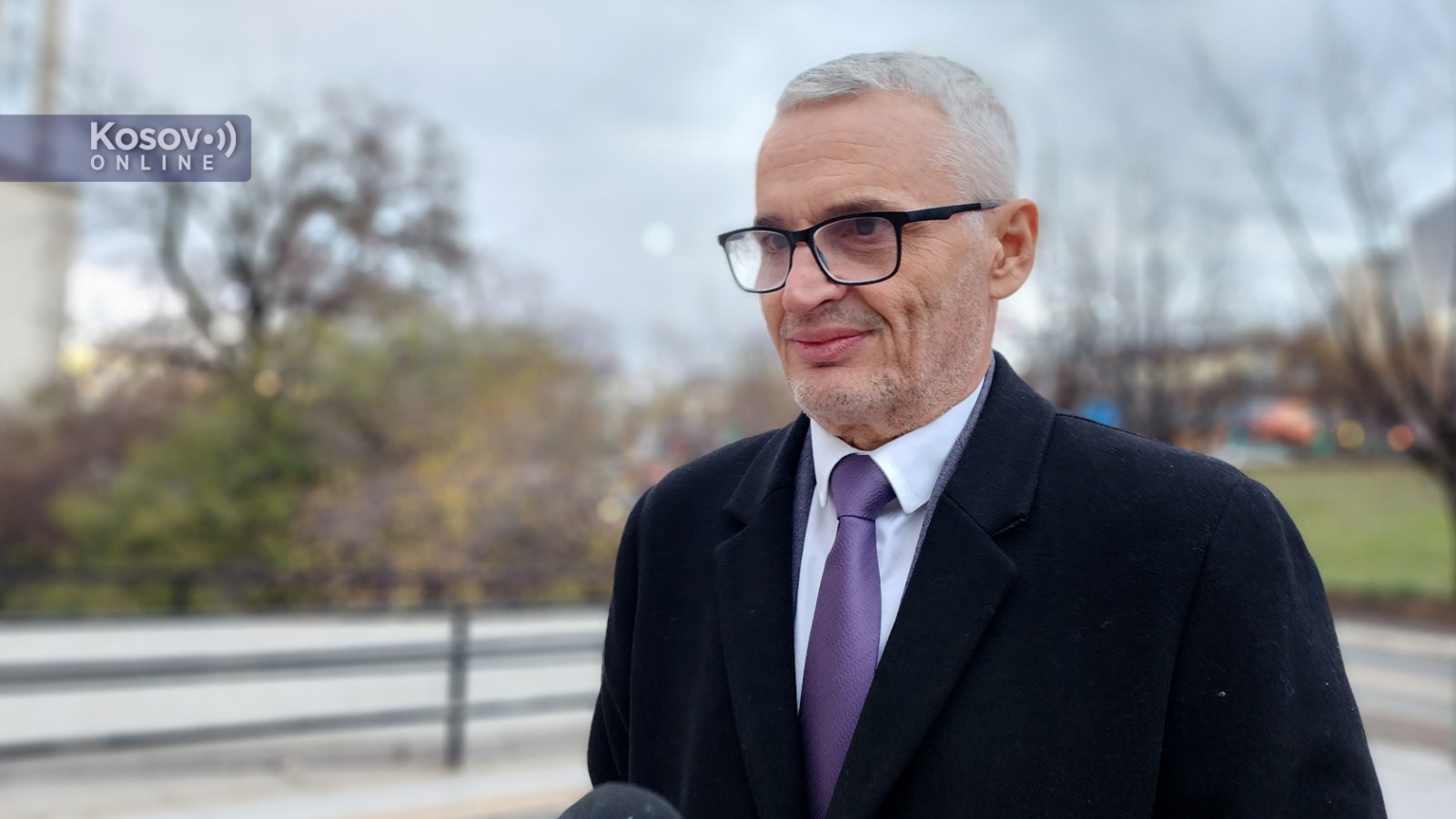
"They will try to overthrow Kurti and Self-Determination at any cost, mainly by playing the card of relations with allies, namely the US and the EU. The issue of normalizing relations with Serbia and with Kosovo Serbs will also be a hot topic, especially since much of the opposition is closer to ideas of territorial exchange and the anti-globalist approach of the US presidential candidate Donald Trump, while the government insists on the integration and participation of Serbs in the socio-political life of Kosovo and on building neighborly relations with Serbia based on European principles. Unfortunately, a large portion of Serbs, particularly in the north, still do not accept their civil rights and obligations according to the Constitution of Kosovo; they believe that their dual citizenship gives them rights in both Kosovo and Serbia. In reality, Serbian citizenship gives them rights in Serbia, not in Kosovo, so they should build their rights in Kosovo through living together with other citizens and nationals of Kosovo and contribute to good neighborly relations with Serbia," Lepaja points out.
He says he hopes that Serbs will participate in the elections and exercise all the rights and obligations granted to them by the Constitution of Kosovo.
"I hope that, together with us, they will build our Kosovo, developed and European, and that no one will feel the need to move elsewhere. The sooner the Serbs engage in the socio-political life of Kosovo, the sooner relations between the two neighbors will normalize, and the European path will be open for both countries, Kosovo and Serbia," this analyst believes.

comments