
Will the start of the procedure for Kosovo's admission to the Council of Europe improve the rights and position of the Serbs in Kosovo?
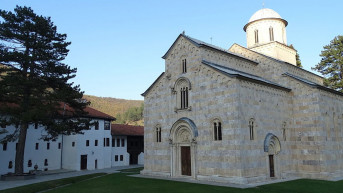
The US Special Envoy for the Western Balkans, Gabriel Escobar, said that the start of the procedure for Kosovo's admission to the Council of Europe was not a victory, but an obligation, because Pristina should ensure progress in the status and rights of Kosovo Serbs and implement constitutional provisions, including the protection of the monastery in Decani. Interlocutors of Kosovo Online, however, warn that the eventual membership of Kosovo in the Council of Europe will not be any guarantee for the improvement of the position of the Serbs and the protection of the property of the Serbian Orthodox Church, but only another promotion of Kosovo "as an independent state".
They also point out that the Serbs in Kosovo have been living in an atmosphere of fear and insecurity for years, that all those rights on which the Council of Europe, the European Union, and all international institutions rest are threatened and violated, so these organizations, they add, have not done much to such treatment of the authorities in Pristina towards the Serbs in Kosovo changes, nor have they sanctioned them for it.
Professor of the Faculty of Political Sciences Slobodan Samardzic told Kosovo Online that any talk about the Council of Europe, including the one concerning Kosovo's membership in that organization, did not in any positive way concern the Serbs in Kosovo and the protection of Serbian cultural heritage.
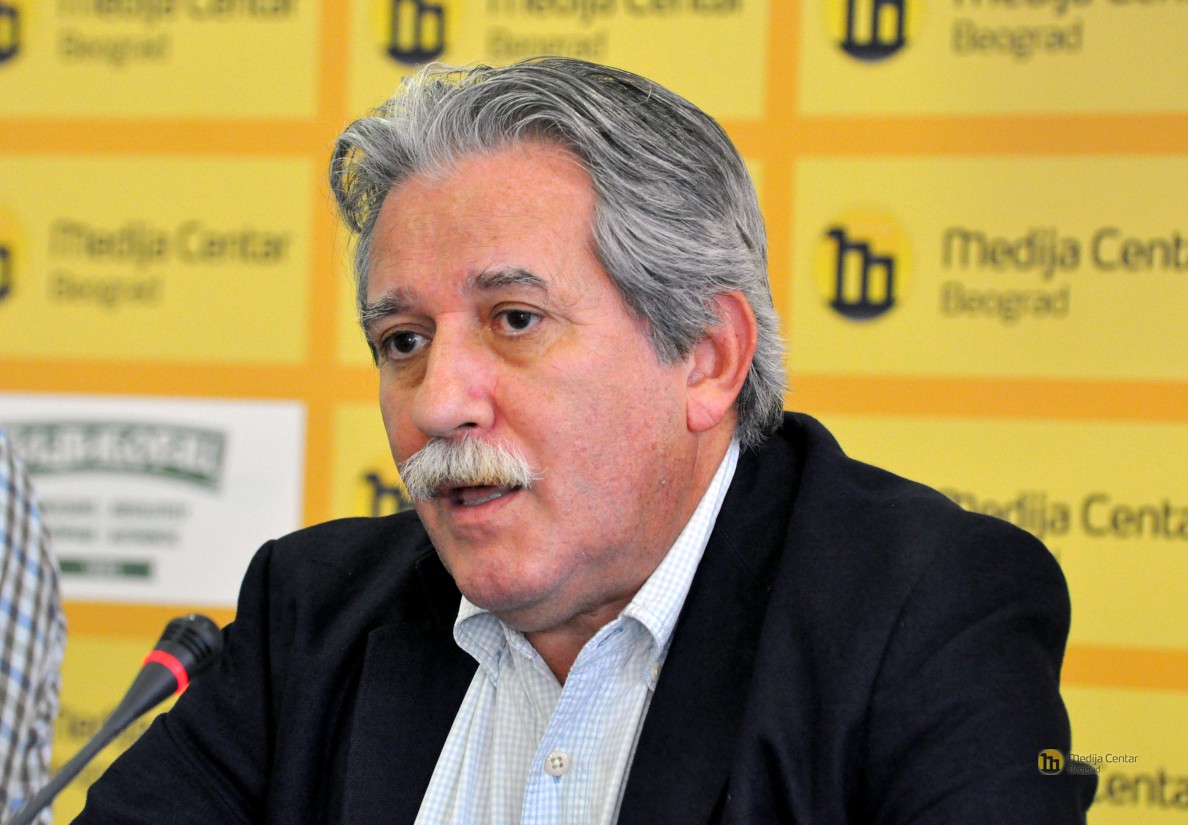
"Only Serbia can protect their interests. The Serbs in Kosovo are second-class citizens, they live in a kind of apartheid, and no international organizations, especially European ones, will contribute anything, because they have not shown goodwill so far. Starting with the EU in many areas, and through the OSCE, which shouldn’t have allowed elections in the north of Kosovo and Metohija, all the way to the Council of Europe, which should take care of democracy and the protection of human rights, which is not there when it comes to the Serbs," Samardzic says, and adds that "the protection of human rights of the Serbs is non-existent".
He emphasizes that it is just "empty talk" that Kosovo's application to the CoE, and later its eventual membership, will contribute to greater respect for the human and democratic rights of the Serbs and protect the property of the Serbian Orthodox Church in Kosovo.
"The best test of the Council of Europe is the attitude of that institution towards its own resolution on examining the accuracy of Dick Marty's report, which was several years ago. That report is convincing and has a large amount of data on the crimes committed by the KLA against the Serbs both before and after 1999, and that's why no one has responded yet. Kosovo's membership in the Council of Europe is no guarantee for improving the position of the Serbs and protecting the property of the Serbian Orthodox Church, it's just another promotion of Kosovo as an independent state," Samardzic said.
Regarding the fact that many European countries still had to resolve the issue of minority rights before admission to European institutions, Samardzic pointed out that such parallel should not be drawn in the case of Kosovo.
"You should compare today with yesterday in Kosovo and Metohija. If the rights of the Serbs have been trampled on all these years and if they live in uncertainty, why would the entry of the so-called Kosovo into the CoE change anything? Do you think that people from the CoE would be interested in it now if they haven’t been all these years? I cited Dick Marty's report that was adopted by the CoE Parliamentary Assembly. There is opportunism there, everyone follows what Berlin or Brussels, or Washington says when it comes to Kosovo. And we shouldn't expect any majorities, especially from EU member countries that recognized Kosovo. Some of them protested, which was a chance for us that for a long time, a two-thirds majority for accepting Kosovo's request for membership in the CoE was not reached at the Committee of Ministers, and this could only be done by pointing out the position of the Serbs and the fact that Serbia will never recognize Kosovo," Samardzic said.
He added that many EU countries would not resent the key Western players, who were doing everything to confirm Kosovo's independence.
"We didn't fully use the pace we had with the cancellation of the recognition of Kosovo. If it had continued, some countries might not have withdrawn the recognition, it is delicate, but they would not have voted for Kosovo to enter the CoE with the argument that human rights are not protected there, and the CoE is in charge of protecting them," Samardzic said.
The professor assessed that the assumption that the protection of the Serbs would improve if they accepted Kosovo into the CoE was "on shaky legs".
"The procedure for their admission will probably take a long time, although they will probably eventually become a member of the CoE. But I don't put any more hope in the CoE as a serious organization that can improve the position of the Serbs in Kosovo and Metohija, because they have not proven themselves in this matter so far. Who in CoE raised the issue of the basic violation of human rights of the Serbs in Kosovo? No one, except Marty, who made a serious analysis, and it was accepted, but there is no application and it is practically a forgotten matter. Albanian Prime Minister, Edi Rama, even asked that it be taken off the agenda and canceled the valid document. They will cancel that document rather than give the Serbs some satisfaction for all that they have survived and hope for a better life," Samardzic believes.
He also stated that it could be expected that only Serbia would be asked to make new concessions, referring to the request of the European Parliament's rapporteur for Kosovo, Viola von Cramon, to ask Serbia to withdraw its vote "against" the start of the procedure for Kosovo's admission to the Council of Europe, which had been included in the final report adopted by the European Parliament.
"Viola von Cramon is an irrelevant politician in the EU; she is one of the 705 members of the European Parliament. Through her, others send certain messages to the President of Serbia, Aleksandar Vucic. It is not her choice, she does not ask about it. It is only a kind of reminder of obligations. And he is experienced enough to know that Von Cramon didn't say that, but someone who told her to say that," Samardzic said.
Historian Aleksandar Rakovic also said for Kosovo Online that "the alleged admission to the Council of Europe does not guarantee any improvement in the rights and status of the Serbs in Kosovo, nor the Serbian Orthodox Church in that area."
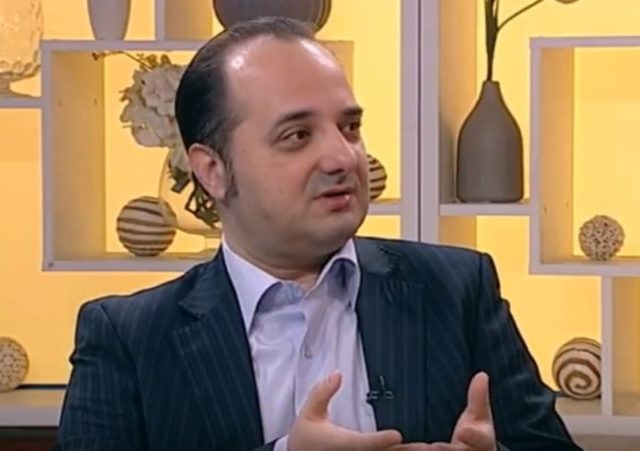
"These are misconceptions that these memberships in Euro-Atlantic and European structures guarantee something to someone. We had the example of Montenegro, which is a member of NATO and the Council of Europe, and no rights were guaranteed to the Serbs or the Serbian Orthodox Church. You also have the example of Slovenia, which does not recognize national minority status for the Serbs even though the Serbs are the second most numerous nation in that country. National minority status is recognized for example for Germans, Hungarians, and Croats. And Slovenia is a member of both the CoE and the EU. Even in the case of the eventual admission of Kosovo into the CoE, that will not do anything "Serbs should continue to fight with Serbia for their own rights in Kosovo and Metohija, to defend what they have and to improve the status of our people and the SOC," Rakovic said.
He added that there were no universal rules for all countries that were members of European institutions and that "double standards" were often applied.
"It is applied selectively and has no concrete connection with CoE in the form of mandatory fulfillment of certain obligations. When it comes to the Serbs, Serbian rights in Slovenia and Croatia, and even in Montenegro, have not been fully affirmed. These are the European institutions that do not guarantee anything. In particular, not all the standards that might be applied to others are applied to the Serbs. Minority rights of those for whom some neighboring countries are interested as their own minorities are sought to be fulfilled. This is more related to the pressures that condition the neighboring countries, rather than to the rule of the Euro-Atlantic institutions," Rakovic says.
He especially emphasizes the case of Croatia and the relationship of this country with the Serbs who live there.
"How was the principle of protection of minority rights applied to Croatia? Not at all. And they are a member of the CoE and the EU. This type of pressure to fulfill something is often applied selectively and as a type of pressure on certain individuals and authorities in some countries. And sometimes it is not applied at all does not apply," Rakovic says.
He cited the cases of separatist aspirations of Catalonia and Kosovo, towards which the international community had had a completely different approach.
"The Catalan political elite ended up in prisons, and nobody cared much about their rights, even though they wanted to apply the same model that the West supported when it came to the Albanian separatists in so-called Kosovo. Here you can see that there is a complete asymmetry, although the Catalan top was made up of the elite of that nation, university, and political, they ended up in prisons or in exile. And that never happened with the KLA. Therefore, there is no basis for claims that the admission of so-called Kosovo to the CoE will improve anything for Kosovo Serbs," Rakovic says.
He estimates that the situation may even worsen for Serbian life in Kosovo.
"They can say - we joined the Council of Europe and that means that we have been recognized with the highest degree of democracy, so there are no problems. This is just another way to legalize Kosovo as an independent state, and everything else is declarative. It will lead to the fact that at some point the SOC will be threatened. This is where we need to find mechanisms to defend the SOC and its property as the heritage of the Serbs, which is still, when it comes to UNESCO, under the jurisdiction of Serbia. Attempts to bring Kosovo into the CoE are still pressure on Serbia and an additional complication of the otherwise complicated situation in relation to Kosovo and Metohija," Rakovic warns.

0 comments