
Would Kosovo's entry into the Council of Europe affect the Cyprus issue?
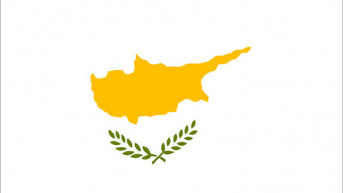
When officials in Turkey call for the Cyprus issue to be resolved in line with the "current reality" instead of the outdated status quo, it irresistibly brings to mind the "well-meaning" advice that international officials have been giving to Serbia for years: to recognize the reality on the ground regarding Kosovo. However, according to Dora Bakoyannis, the Greek parliamentarian who recommended Kosovo's membership in the Council of Europe as a rapporteur for Kosovo, the issue of Cyprus cannot be linked to the issue of Kosovo.
Is this the case? Would Kosovo's accession to the Council of Europe, as a non-member of the United Nations, have any consequences for the Cyprus issue, especially since representatives of the Turkish Cypriot Community already have observer status within the Parliamentary Assembly of the Council of Europe? Can the issues of Kosovo and Cyprus still be related if Turkish President Recep Tayyip Erdogan states that "Turkey will continue its efforts to ensure the equal sovereignty and international equal status of the brothers of the Turkish Cypriots"? And finally, why did Cypriot parliamentarians in the Parliamentary Assembly of the Council of Europe vote against Bakoyannis' recommendation for Kosovo to be admitted as a full member of the Council of Europe?
Panayiotis Pavlos, a research fellow at the University of Oslo, told Kosovo Online that Cypriot parliamentarians in the Parliamentary Assembly of the Council of Europe who voted against Dora Bakoyannis' report know very well why they did so.
"They did so because they know that Turkey is a neighbor that has no intention of showing any mercy if circumstances allow it to demand everything it can," Pavlos said, recalling that Turkish President Recep Tayyip Erdogan recently said it was a mistake that Turkey did not reach the southernmost part of Cyprus in 1974.
"That means it is definitely their desire and that it is on their agenda to control the whole island," Pavlos assessed.
According to him, the concept of strategic minorities is fundamental to Turkish foreign policy "and expansionist strategy in the 21st century".
"Wherever there is a Muslim minority, Turkey tries in very interesting ways to transform them into strategic minorities and make them tools for changing the status of sovereignty in areas where these minorities exist. Turkey considers Muslim minorities in Greece, Cyprus, and the Balkans as remnants of the Ottoman Empire that need to be strengthened," Pavlos says.
Former Greek Prime Minister Antonis Samaras, for his part, sharply criticized Bakoyannis two days ago, emphasizing that her report on Kosovo in the Council of Europe does not represent Greece and Hellenism. Samaras stressed that Greece should focus on marking the 50th anniversary of the Turkish invasion of Cyprus instead of "dragging Hellenism into dangerous paths, as with the resolution on Kosovo".
Former Serbian Ambassador to Greece, Dragan Zupanjevac, tells Kosovo Online that when principles are violated, chaos becomes possible, and every precedent has its repercussions. However, he believes that there is a slim chance that the Turkish part of Cyprus will become part of the Council of Europe or other organizations, given that no member of the EU and the UN recognizes it, except Turkey.
He adds that Turkey will surely analyze what happened in the Council of Europe and try to draw some conclusions that can be useful for Ankara. He also mentions that at some point, Pakistan and Bangladesh considered recognizing the Turkish part of Cyprus, but that was swept under the rug.
"The so-called Turkish Republic of Northern Cyprus is an observer in the Islamic Conference, making some attempts... That's why what is happening with our province and its admission to the Council of Europe is dangerous because it is clear that it goes against the basic principles to admit a 'state' to the Council of Europe that is not a member of the United Nations and not recognized by five members of the European Union. They turn a blind eye, and that is a violation of basic principles. When principles start to be violated, Pandora's boxes are opened, and then everything is possible, and that is why some Greeks fear that this could be detrimental to Greek interests," Zupanjevac says.
The problem, he adds, is that by the unprincipled decision of Dora Bakoyannis, the stance of respecting international law has been abandoned, and when that is abandoned, he points out, it can have a boomerang effect both regarding Greek interests in the Aegean Sea, territorial integrity, and sovereignty, as well as regarding the Cyprus issue.
Bakoyannis' recommendation, as indicated, came as a surprise because Greece does not recognize the unilaterally declared independence of Kosovo.
"Bakoyannis is part of the party in power in Greece, her brother is the prime minister, her father was a famous prime minister, her son is the mayor of Athens, and this is a family that is part of the Greek elite. That fact alone deserves serious attention. Dora Bakoyannis carries a certain weight, and it is to be expected that part of the Greek public will speak up and say 'why did Greece do this?'" says Zupanjevac.
As he emphasizes, Greece has not recognized the independence of Kosovo since 2008 for several reasons, the first of which is because it believed that international public law, which is very important to it, had been violated, as much due to the situation in Cyprus as due to Turkey's dissatisfaction that Greece gained de facto control over all the islands in the Aegean Sea.
"There have been tensions between Greece and Turkey for over a hundred years, and the Turks have certain undisguised aspirations regarding the islands, regarding Thrace, and all these are reasons, including Cyprus, why Greece does not recognize the unilaterally declared independence of Kosovo. Another reason is that Greeks, for the most part, not all, see Serbs as brothers," Zupanjevac notes.
When asked about the interests Athens pursued when MPs from New Democracy, the ruling party in Greece, supported Kosovo's admission to the Council of Europe in the PACE, our interlocutor says that the essential question is what is in Greece's greater interest - to be in the NATO pact and to have key EU members, as France often does, act as protectors of Greek interests against potential threats, or whether there is a danger of the precedent with Kosovo being repeated regarding the Cyprus issue and whether there might be an initiative for the so-called Turkish Republic of Northern Cyprus to be admitted to the Council of Europe in some scenario.
Foreign policy commentator Miroslav Stojanovic tells Kosovo online that the recommendation of the Parliamentary Assembly of the Council of Europe for Kosovo to become a member of that organization is a precedent that many will refer to, and now it can very easily happen that some separatist province in any country demands to join the Council of Europe even though it is not defined as a state.
When asked how justified are the fears that the precedent with Kosovo could influence the Cyprus issue, especially considering that the recommendation for Kosovo's admission to the Council of Europe was made by a Greek member of parliament, Stojanovic says that "establishing precedents is always very dangerous," but Cyprus, although divided, is currently protected.
"Cyprus joined the European Union; however, in any new rearrangement of forces on the international scene, you never know. Turkey has great aspirations and considers itself a strong regional power; it is one of the stronger members of the NATO alliance, and without Turkey, the NATO alliance in that area practically would not exist. Turkey's specific weight is significant even though its doors are completely closed when it comes to the EU. Despite both Turkey and Greece being in NATO, Greece has a major problem regarding the islands. Occasionally, sparks and tensions occur between these two countries, and then the Cyprus issue can flare up, but in dimensions that are really distant at this moment," says Stojanovic.


0 comments