
Rafuna: Citizens taking on debt should be a warning sign of rising prices
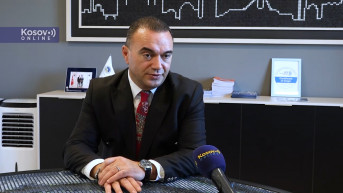
The president of the Kosovo Chamber of Commerce, Lulzim Rafuna, told Kosovo Online that citizens had taken out 42 million euros in new loans from commercial banks, which is a sign that they are struggling with rising prices. He therefore once again called on the Kosovo government to take measures to ease the effects of inflationary pressures. Residents of Pristina complain about food prices, as well as the lack of economic measures by the authorities.
“Inflation here is higher than in the region. Political factors have also had an impact, but Kosovo imports a great deal, with imports amounting to almost eight billion euros, so we are importing inflation as well. We have also contributed to its growth domestically, because the Kosovo government has not taken any measures, such as reducing excise duties or the VAT rate when fuel prices went up,” Rafuna explained.
According to him, if it is not possible to reduce excise duties or VAT for everyone, the government should consider support measures for certain sectors, such as transport or agriculture.
Rafuna added that, according to data from the Kosovo Chamber of Commerce and the Kosovo Agency of Statistics, food prices have risen the most, directly affecting citizens.
“I see a trend across the region, as well as more broadly in the EU, indicating that inflation will continue to rise, especially with winter approaching and electricity and gas prices set to increase. We are asking the government to be cautious and to address rising energy prices through subsidies or administrative measures,” he warned.
For Rafuna, the 42 million euros in new commercial loans and the level of debt among citizens are signs that people are struggling with inflation.
He cannot predict whether fuel prices will continue to rise, as this depends on the United States, Iran and the situation in the Strait of Hormuz. He therefore reiterates that the authorities have an obligation to take fiscal policy measures.
Residents of Pristina complain most about rising food prices and are not convinced that institutions are doing enough to help citizens.
“Food prices have risen the most. Clothing and other things are not a problem, but food is,” Bucaj Sulejman said in a survey for Kosovo Online.
He added that wages are low and everything is “really expensive.”
Shefku Mekolli shares his view, pointing out that prices in Kosovo are nevertheless lower than in Montenegro, where he recently stayed.
Asked whether institutions are helping citizens through various aid packages, Mekolli replied: “There are packages of measures, but they are empty.”
Another resident of Pristina reiterates that food is the most expensive item, but families somehow manage to get by thanks to the fact that everyone has someone in the diaspora.
“The diaspora helps, otherwise it would be difficult,” he believes. Asked whether life is expensive, he replies that it depends on how much a person earns.
The International Monetary Fund has forecast that Kosovo will have the highest inflation rate in the Western Balkans this year, at 6.8 percent, while economic growth is expected to reach 3.5 percent.



0 comments