
Nobel laureate Shechtman in Belgrade: Government support for startups is a worthwhile investment
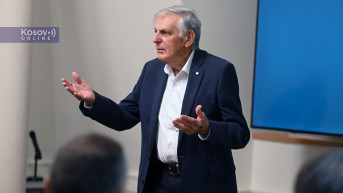
Israeli scientist, Nobel Prize laureate in Chemistry and entrepreneurship expert Dan Shechtman delivered a lecture this evening at the Business Club in Belgrade entitled “Small Country, Big Ideas: The Israeli Model of Entrepreneurship and an Opportunity for Serbia,” identifying substantial government investment in startups at the idea stage, as well as a business culture that values directness and lacks rigid hierarchy, as key factors for success.
For 30 years, Shechtman taught a course on entrepreneurship for scientists and engineers at the Technion – Israel Institute of Technology in Haifa, Israel’s oldest university.
“At the time, it was the largest course at the Technion. For 30 years, I had 600 students in the classroom every week. So thousands of Technion graduates, all of them engineers and scientists, went through my course. And in a study we conducted in recent years, we found that 25 percent of them had been involved in startups,” Shechtman told reporters, Tanjug reports.
He said the Israeli economy was performing very well, largely thanks to entrepreneurship and government support for entrepreneurial ventures.
“In Israel, we have an institution called the Innovation Authority. It provides hundreds of millions of dollars every year for good ideas and startups. If you think you have a good idea, you write it down and submit it to the Innovation Authority. If they like it, they will fund you. If you succeed, you pay the money back. If you fail, you owe nothing,” he said.
Shechtman believes that introducing a model similar to the Israel Innovation Authority in Serbia would contribute to the development of the country’s startup ecosystem. Despite the substantial amount of funding required, he argues that this would not represent an expense for the government but rather a worthwhile investment.
“The head of the Israel Innovation Authority was my student. He told me that for every dollar the Authority invests in startups, the government gets five dollars back—because new products are created and new exports are generated. The people working for these companies pay taxes, and those taxes and export revenues bring in five times as much money as was originally invested. So it is a great deal for the government,” Shechtman said.
In addition to government incentives, Shechtman sees the prevalence of “angel investors” in a country’s business culture as another important factor in developing a successful startup ecosystem.
These are investors who have built successful businesses, sold their stakes and now hold substantial capital that they want to invest in fields in which they already have experience.
“They want to reinvest that money in the economy. They invest it in young people from the same profession and work together with them. Those are the two main ways to obtain funding,” Shechtman said.
The Israeli Nobel laureate said another factor had specifically contributed to the success of Israel’s model of entrepreneurship development: the absence of rigid hierarchy in the country’s business culture. Shechtman believes this is partly a consequence of the fact that many Israelis have served together in the military and taken part in armed conflicts.
“One of the reasons is that Israel is constantly at war with its neighbors, so people go and serve in the military, but they also have their own professions. Let us say you have a student and a professor at a university. The professor is more important, right? But the student is a major in the army and the professor is a corporal. During military service, the student is very important and the professor is guarding the gate. At the university, however, it is the other way around. So in Israel there is no real difference in importance—everyone is equal,” Shechtman said.
As a consequence of such a culture, Shechtman said, it was entirely normal for a production engineer to approach a CEO with a good idea and for the two to develop it together.
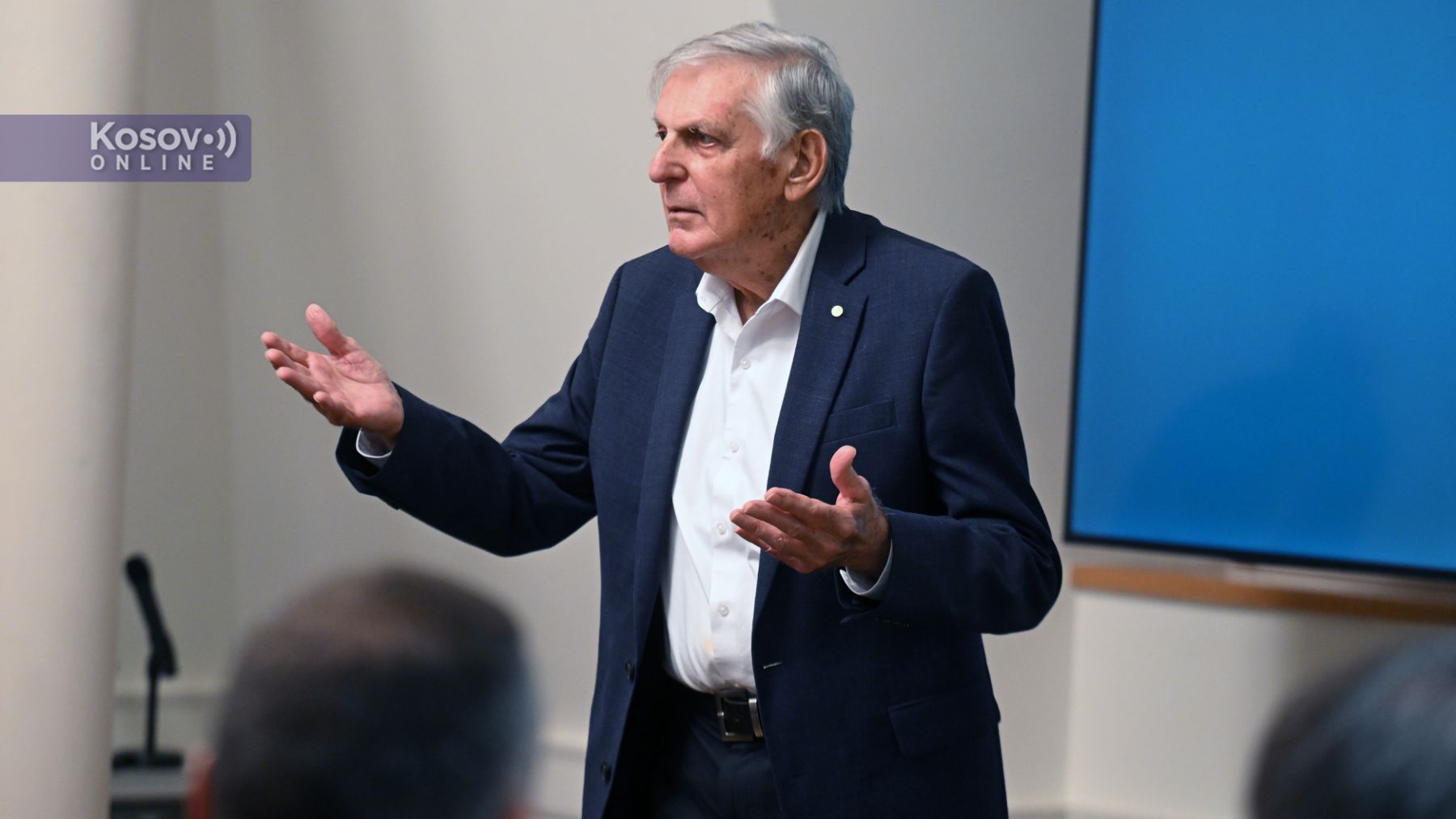
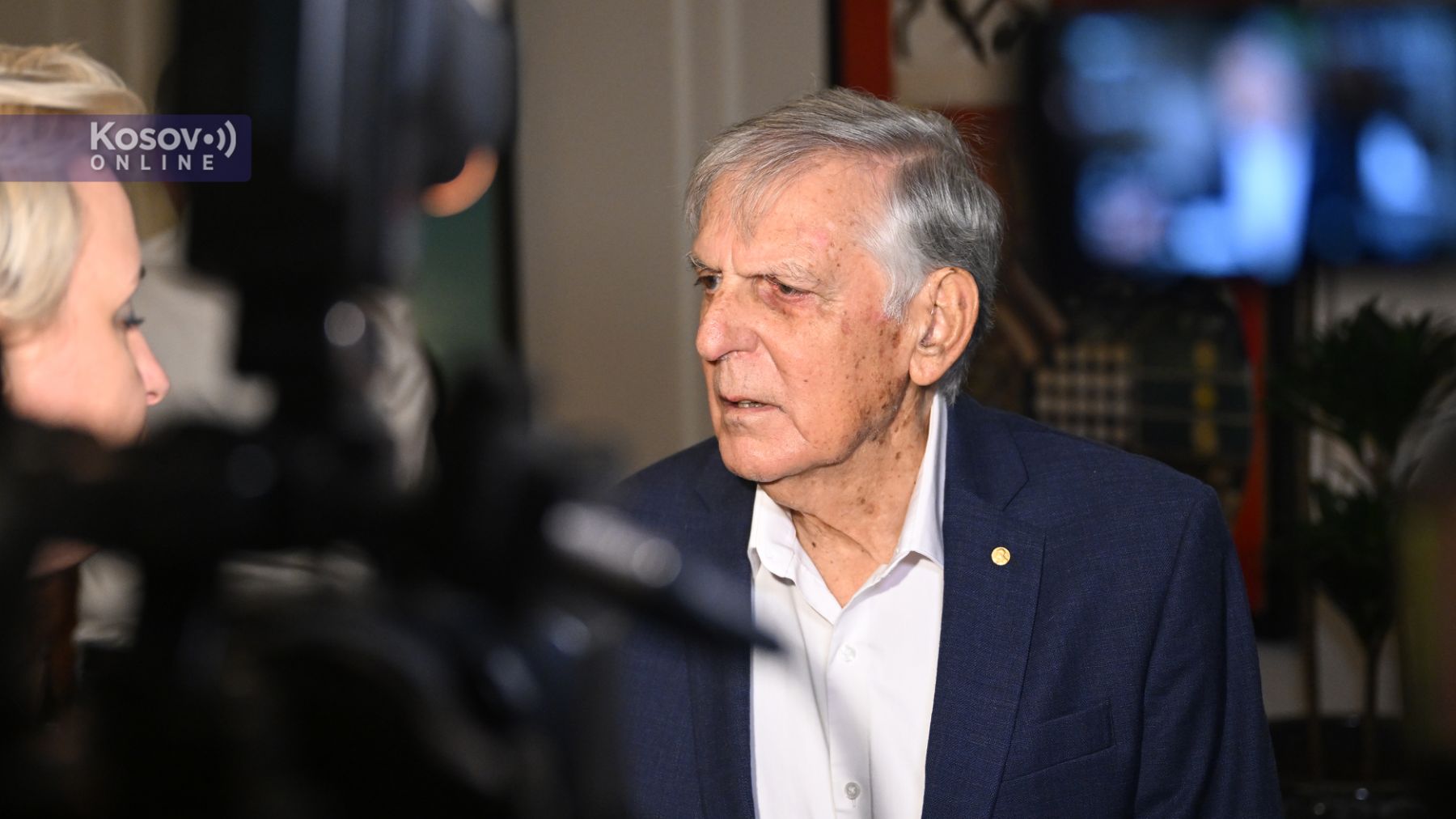
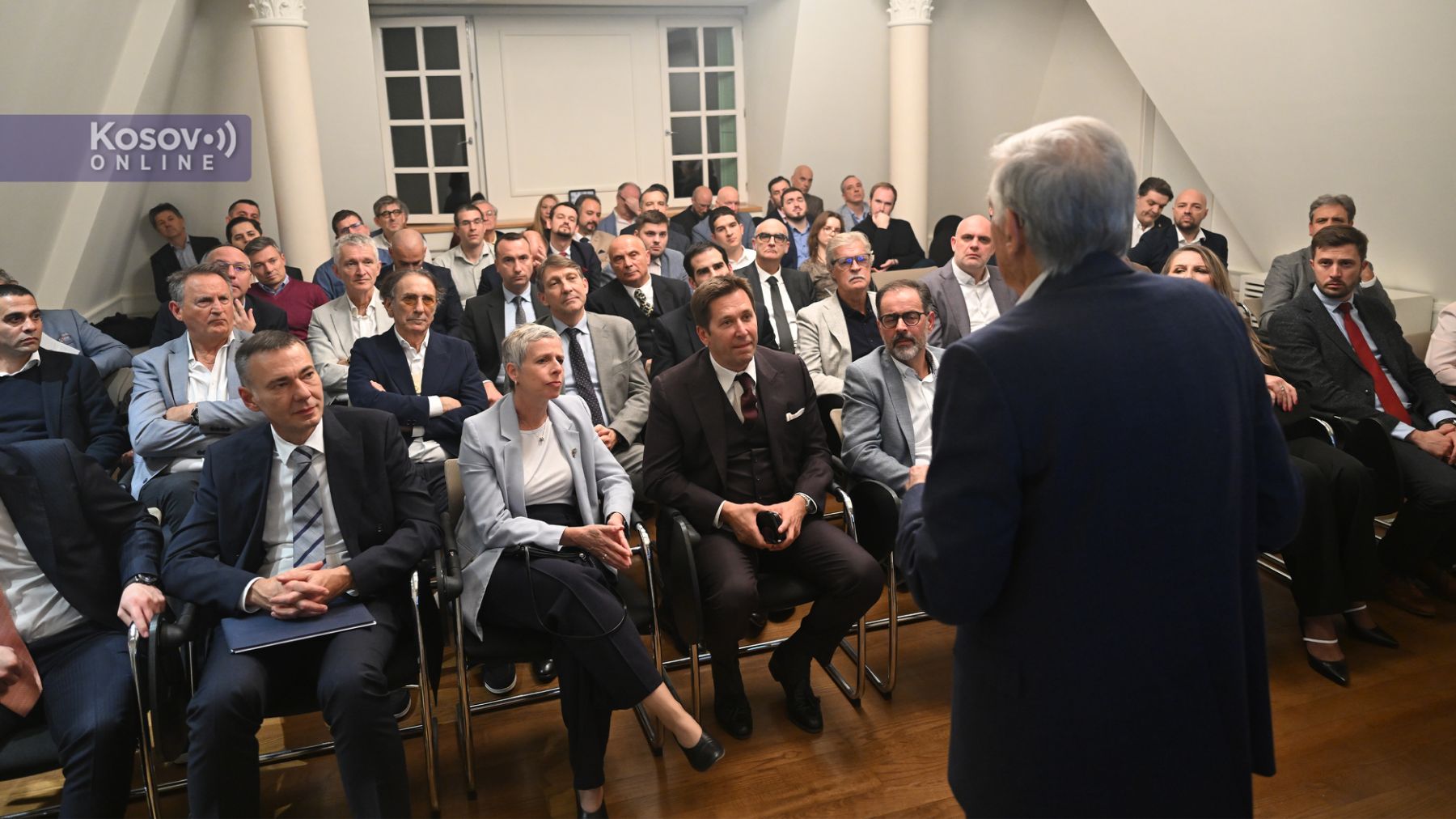


The lecture by the Israeli Nobel laureate, organized by East-West Bridge and the Business Club, was held this evening as part of a series of lectures exploring how knowledge can become a driving force for economic development and what Serbia can learn from the positive experiences of the United States and Israel.
The American experience was presented to Belgrade business leaders by Veljko Milutinovic, a professor at Purdue University and Indiana University, who delivered a lecture entitled “How America Turns Knowledge into Money: The Purdue/IU Model and an Opportunity for Serbia.”
Milutinovic pointed out that 20 years before Shechtman received the Nobel Prize, the Israeli government had asked him to help establish state mechanisms for fostering entrepreneurship in technology, and that today, three decades later, Israel has more than 200 startups valued at over one billion dollars each—so-called unicorns.
Milutinovic also said that Shechtman was a great admirer of Serbia and had visited the country many times.
“He has been here many times, he has great affection for these people, and he has a strong desire to help create something similar here as well,” Milutinovic said.
He noted that the Israeli Nobel laureate has four children and 12 grandchildren and that, according to Milutinovic, family is the most important thing to him.
Shechtman himself expressed concern about Serbia’s low birth rate, noting that women in Serbia have an average of 1.6 children, compared with three in Israel.
Shechtman is a Nobel laureate and professor emeritus at the Technion – Israel Institute of Technology in Haifa. He is a member of the American Academy of Arts and Sciences and the European Academy of Sciences.
At the Technion, he launched courses designed for scientists and engineers, helping them learn how to turn scientific discoveries into commercial ventures and startups.
Shechtman was awarded the Nobel Prize for his discovery of quasicrystals. Unlike conventional crystals, which have a regular arrangement of atoms that repeats periodically, much like a chessboard, quasicrystals have an ordered but non-periodic atomic arrangement. In other words, their structure follows a clear mathematical order and set of rules, but its motifs never form a repeating pattern.
His 1982 discovery was initially met with resistance and skepticism within the scientific community, and some of the world’s leading chemists rejected Shechtman’s findings for years.
Shechtman’s persistence ultimately led to the conclusive confirmation of his findings, redefining fundamental concepts in crystallography and solid-state chemistry. His work on the discovery of quasicrystals was recognized with the 2011 Nobel Prize in Chemistry.



0 comments