
Gogic: Without foreign influence, Kosovo is closer to new elections than to forming a government
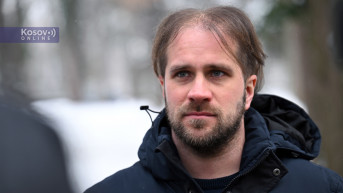
Political scientist Ognjen Gogic told Kosovo Online that if there is no foreign interference, neither the government nor the opposition will rush to form a new government, and that it is much more likely that new elections will take place in the fall or early next year.
"No one is satisfied with these results. Neither Self-Determination nor the opposition parties. They are all in a situation where they cannot form a government they would be happy with. The only thing that could change this is foreign influence. If Western Europe or the US instruct the current opposition to unite in order to send Kurti into the opposition, that could be the deciding factor. Otherwise, no one seems particularly interested in forming a new government," Gogic told Kosovo Online.
For this reason, he does not rule out the possibility of new elections.
"It is possible that there will actually be new elections, which could coincide with the local elections coming in the fall, or they could take place after the Kosovo parliament fails to elect a new president, which is due in just over a year. So, in the next year, we should expect new elections," Gogic emphasized.
He specified that despite the fact that the three opposition parties – PDK, LDK, and AAK – collectively have more votes than the Self-Determination Movement, a post-election coalition should not be expected.
"What prevents them from forming a government are their mutual relations, first and foremost. They have previously formed coalition governments, which were more or less long-lasting. They have differences among themselves, and the only thing uniting them is opposition to Kurti and his policies. That is their only cohesive factor," he said.
He also points out that any potential coalition government they might form would be the result of their greater alignment with the West compared to Self-Determination.
"All three opposition parties are more pro-Western and are not willing to take risks or jeopardize relations with the West. They are more receptive to suggestions or directives coming from the West," Gogic explained.
However, he doubts that such a coalition will materialize, as each of these parties prioritizes strategic thinking.
"The key consideration is whether it is in their interest to form a government that would be unstable, risking it being short-lived, and then having Kurti return to power even stronger than before," Gogic explained.
He says that the election of Kosovo’s new president, scheduled for April next year and requiring a two-thirds parliamentary majority, is a crucial moment.
"With the current level of support in parliament, Kurti can block this process, which means that any coalition they form would be a compromise that satisfies no one, and it would already be known that new elections would be held the following year. They would then enter those elections from a weaker starting position. So, the strategic question is whether it is wise to proceed with this or not," Gogic clarified.
He believes that in this political calculation, the Democratic League of Kosovo (LDK) is the most cautious.
"LDK is the least inclined to enter into a coalition agreement precisely because it expects its ratings to rise in the coming period, putting it in a better position to negotiate a new government after the next elections," Gogic said.
When asked how a future opposition-led government would treat the Serbian community, he emphasized that all three parties – PDK, LDK, and AAK – had previously been in power and had their own prime ministers.
"All of them were more tolerant or had slightly more understanding for Serbs in Kosovo compared to the current government led by Albin Kurti. Their policies toward Serbs were more moderate. Perhaps this was out of respect for the Serbs themselves, but more likely because of the international community. They did not want to risk damaging their reputation. In a way, they sought to prove to the West that they were the ones who respected the rights of communities in Kosovo," Gogic stated.
Despite the fact that all three parties are ideologically similar and positioned at the center-right, he described the Democratic League of Kosovo as the most moderate, positioning itself as a party that advocates for institutional struggle and nonviolent methods.
"Ideologically, they are similar. The difference is that LDK is less nationalist and more moderately civic-oriented. In contrast, PDK and AAK emerged from the KLA and are more militant, nationalist, and populist. However, the Alliance (AAK) is more regionally based in the western Metohija area rather than across all of Kosovo," Gogic explained.
He notes that rivalry between these three parties has existed since the 1990s.
"They are aware of these differences, but they have managed to form governments despite them. However, those governments have never been long-lasting," the political scientist emphasized.


0 comments