
Simic: Preserving unity to prevent the elimination of Serbs in Kosovo
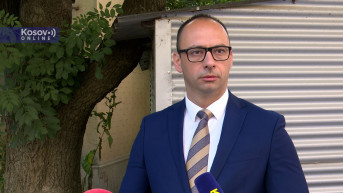
Igor Simic, a member of the Presidency of the Serb List, stated that Serbs in Kosovo were subjected to institutional pressure and attempts at disqualification during the election campaign, while Albanians conducted their campaigns without obstacles. Emphasizing the need to safeguard the political survival of the Serbian people through unity and transparency in the electoral process, Simic called on citizens to turn out on 28 December and vote for the Serb List.
In an interview with Politika, Simic stressed that while Albin Kurti and Albanian parties “conducted their campaigns without any hindrance and promised what they know they will not deliver,” the Serb List was exposed to open institutional persecution and attempts to strip Serbs of a fundamental democratic right—the right to vote and to stand for election.
Instead of a level playing field, he added, they were forced to fight legal abuse, political pressure, and clearly staged attempts at disqualification.
“Our priority these days is not marketing, but defending the political survival of the Serbian people in Kosovo and Metohija, preserving unity, and preventing Kurti, through arbitrariness, from permanently eliminating Serbs from all institutions,” Simic explained.
He pointed out that every electoral cycle follows the same pattern: as election day approaches, organized pressure on Serbs begins.
“The desecration of Orthodox cemeteries, the looting of Serbian homes, and the intimidation of families are not isolated incidents; they are messages of hatred and intolerance sent to the entire Serbian people. Arrests that end with relativization of guilt and ‘accidental’ releases of those responsible only further confirm that the system does not seek justice, but merely the appearance of order. This is a direct consequence of Albin Kurti’s policy, who for years has been creating an atmosphere in which Serbs are a legitimate target and every attack on them is minimized or justified,” Simic said.
He warned that campaigning aimed at the diaspora and the postponement of counting votes cast outside Kosovo justifiably raise suspicions, recalling that such votes had previously been used to reshape electoral will and for political bargaining.
“Do not forget that in this way, in the February elections, one mandate was stolen from the Serbian people, that is, from the Serb List, and awarded to Kurti’s favorite, Nenad Rasic. We do not rule out the possibility that manipulation will be attempted again, in order to secure an advantage for Albin Kurti or even mandates belonging to non-majority communities for the formation of power. That is why we insist on transparency and oversight of the entire electoral process, as trust in institutions has been seriously undermined precisely by the actions of the current authorities. The Central Election Commission long ago lost its legitimacy due to unlawful decisions taken against the Serb List in the previous three electoral cycles,” Simic stated.
He emphasized that the Serb List legitimately expects all 10 mandates, as it enjoys clear and unequivocal support from the Serbian people, the Serbian state, and President Aleksandar Vucic. However, he noted that being prevented from full participation in polling boards and from having their own chairpersons at polling stations opens space for manipulation.
“The experience of 9 February teaches us that nothing must be left to chance. We will not turn a blind eye to the possibility that Pristina will once again try to ‘gift’ one mandate to a politically suitable Serb who does not represent the Serbian people, but the interests of the regime. We are prepared to respond to such scenarios both politically and legally,” he said.
Simic recalled that the issue of the Community of Serb Municipalities (CSM) has for 13 years been the greatest test of credibility for both Pristina and the international community, and that Albanian nationalism is deeply rooted both in Kosovo and in the diaspora—making it illusory to expect Pristina to fulfill its obligations of its own accord.
“The truth is that the international community remained silent for years in the face of Serbian appeals and the gross violations of the Brussels Agreement. Without clear, strong, and continuous pressure, the CSM will not move from a standstill, because it directly exposes all the empty talk about ‘multiethnicity’ that we hear from Pristina,” Simic said.
He believes that if the process around the CSM formally begins, Pristina will attempt new obstructions, primarily via the Constitutional Court, which has already shown itself to be a political instrument rather than an independent institution.
“I will remind you that for three months now that court has failed to decide on the appeal by The Serb List MPs when Kurti’s favorite Rasic was awarded the position of deputy speaker of parliament. However, the sharpened rhetoric from Washington and Brussels leaves room for cautious optimism that maneuvers will not go unpunished this time. Now is the moment for the international community to show whether it is serious, or whether it will once again allow agreed commitments to be swept under the rug. The survival of the Serbian people and respect for our rights are a test for the international community, which must move from words to deeds,” Simic stressed.
He described the international community’s position—that the lifting of EU measures is conditioned on the transfer of authority in the north—as cynical, noting that the transfer of authority was a logical and legally necessary step after elections, not a political concession.
“Linking the fulfillment of legal obligations with ‘rewarding’ Pristina means relativizing everything that has happened over the past three years—institutional violence, unilateral decisions, and gross violations of the rights of Serbs. This sends a dangerous message that rights violations can be tolerated if they are politically convenient,” Simic explained.
He noted that newly elected mayors and councilors from the Serb List inherited a catastrophic situation in municipalities—financial chaos, neglected infrastructure, unqualified personnel who do not speak Serbian, politically hired without any professional competence—and added that what is particularly worrying is the complete neglect of citizens’ interests.
“Without the support of our state and the Office for Kosovo and Metohija, the situation would have been far worse. The first priority will be to normalize municipal operations, return institutions to the service of citizens, and address the most basic problems—water supply, roads, communal services, and social protection. Much work will be needed to repair the damage caused by illegitimate authorities that neither had support nor an interest in working for the benefit of the Serbian people. Nevertheless, I can promise our people that our diligent mayors will form commissions to analyze the situation, annul all unlawful decisions, and hold those responsible for the current state of municipalities to account. The budgets of four municipalities over three years have been spent, yet there are no changes on the ground. If I tell you that the budget for next year has already been planned—for example, in the municipality of Zvecan, of €700,000 earmarked for capital investments, €600,000 is planned for Albanian villages where less than three percent of the population of this Serbian municipality lives—everything becomes clear,” Simic said.
He also believes that the “law on foreigners” and the ban on driving vehicles based on authorizations represent a direct blow to the livelihoods of more than ten thousand Serbs and the majority of vehicle owners in the north, stressing that these are not technical but deeply political issues aimed at additional pressure and the displacement of Serbs.
“The Serb List will use all institutional and political mechanisms, as well as international contacts, to internationalize this issue and prevent the implementation of measures that have a discriminatory and repressive character. That is why these elections are of exceptional importance—to find a solution to this problem, which amounts to ethnic cleansing through administrative decisions. By applying these regulations, you do not need to physically occupy the University or the Clinical Hospital Center to achieve the same result. That would mean the end for all of us, and we must all fight against it together,” Simic said.
He emphasized that the Serb List’s message to Serbs in Kosovo, as well as to internally displaced persons, is clear and unequivocal: it will not allow Serbs to be excluded from the electoral process through any tricks, pressures, or administrative maneuvers.
“We are aware that there is a real danger of new moves by Albin Kurti up to election day, but unity, high turnout, and determination are our strongest response. Only a strong the Serb List means strong protection for the Serbian people and a clear voice against injustice, pressure, and political violence. The future of the Serbian people is in the hands of this generation of Serbs—we must be worthy of our ancestors and proud ancestors to our descendants. That is why I call on everyone to go to the polls on 28 December and vote for the Serb List under ballot number 127,” Simic concluded.


0 comments