
Energy crisis and new measures: What are the consequences for budgets and citizens in the region?
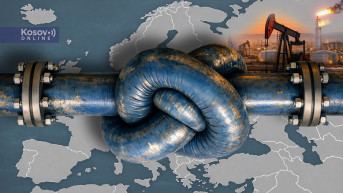
The outbreak of a new war in the Middle East and the partial closure of the Strait of Hormuz, through which around 20 percent of global oil passes, have led to rising prices, causing particular concern in countries that rely on imports, including those in the region. Interlocutors for Kosovo Online note that citizens in the region have not yet been significantly affected, but stress that measures are necessary to prevent further price increases, warning that governments should be prepared for more drastic steps if the crisis persists.
Written by: Jelena Novakov
Experts in Pristina have warned that Kosovo is particularly vulnerable due to the lack of energy reserves, and calls are coming from multiple sides urging the government to take urgent measures, including reducing excise duties and abolishing VAT on fuel. A day after Iran closed the Strait of Hormuz to “hostile vessels,” Kosovo’s Minister of Industry, Entrepreneurship and Trade, Mimoza Kusari-Lila, signed a decision imposing price caps on petroleum products, setting maximum trading margins at up to two euro cents per liter in wholesale and up to 12 euro cents per liter in retail.
Based on the same decision, since 12 March, the maximum price of diesel in Kosovo should not exceed €1.54 per liter and gasoline €1.36. Despite this, some gas stations are not complying with the profit margins set by the ministry, while experts warn of a chain effect of inflation, noting that this is already impacting household and individual budgets.
“If prices are rising despite the margins set by MINT, this indicates problems in implementation and market oversight. In theory, margin caps should stabilize prices, but in practice they are also influenced by international prices, exchange rates, and actual market competition. The solution lies not only in setting margins, but in effective market supervision, price transparency, and real competition,” said economic expert Lulzim Beqiri.
The Director of the Kosovo Chamber of Commerce, Kushtrim Ahmeti, recently stated that companies importing oil from the Middle East have warned that procurement prices could double. However, Kusari-Lila noted that price increases are inevitable, adding that stabilization is expected in the summer and that citizens have no reason for concern.
At the same time, Serbian President Aleksandar Vucic announced that in the coming months “painful measures” would be introduced for the state, though not necessarily for citizens, explaining that excise duties on fuel would be cumulatively reduced by 61 percent. He stated that, thanks to state intervention, the price of diesel would not exceed 212 dinars per liter, and that reserves amount to 587.5 million cubic meters—the largest in the region.
According to the Serbian President, the two key objectives of state measures are ensuring full supply and keeping prices under control. The Government of Serbia has extended the ban on the export of oil and petroleum products until 2 April, while 40,000 tons of diesel have been released from reserves. The U.S. Office of Foreign Assets Control (OFAC) has also issued a new operational license for the Petroleum Industry of Serbia (NIS) until 17 April, allowing uninterrupted operations beyond 20 March, when the previous license expired.
Due to rising oil prices, the Government of Albania has temporarily reduced excise duties by approximately 20 percent and has established a task force to stabilize fuel prices and prevent abuse.
North Macedonia announced that it holds petroleum reserves sufficient for 60 days, stored in the facilities of four companies and in state reserves. According to the Agency for Mandatory Oil Reserves, diesel reserves amount to 138.9 million liters and 95-octane gasoline to 32.1 million liters. The government in Skopje has also reduced VAT on gasoline and diesel from 18 to 10 percent.
Warnings from the Business Sector
The President of the Kosovo Chamber of Commerce, Lulzim Rafuna, stated that fuel prices could decrease by 30 to 40 percent if the government accepted the business sector’s proposal to reduce excise duties and abolish VAT, warning that prices will continue to rise if no measures are taken.
“Taking into account trends in EU countries, rising petroleum prices, and the geopolitical context, we proposed two fiscal measures to the Government of Kosovo: reducing excise duties on petroleum products and temporarily abolishing VAT. Since VAT is ultimately paid by consumers, any reduction or suspension would directly lower fuel prices and ease the burden on citizens,” Rafuna said.
According to Chamber analyses, full implementation of these measures could reduce fuel prices by 30 to 40 percent.
Rafuna warned that, in the absence of concrete measures, further price increases are expected due to geopolitical developments, including tensions in the Middle East and disruptions to key supply routes.
The President of the Kosovo Chamber of Commerce and Industry, Skender Krasniqi, also called for urgent action, stressing that the situation requires immediate response.
“This is an urgent need for at least three months in order to stabilize the situation, as developments in Iran and globally may push prices even higher,” he stated.
Impact on Budgets and Citizens
Bojan Stanic, Assistant Director of the Sector for Strategic Analyses, Services, and Internationalization at the Serbian Chamber of Commerce, stated that no measures are entirely effective in combating the energy crisis, as price controls inevitably affect the state budget.
“There are no fully successful measures, as all of them have fiscal implications. Serbia has banned oil exports while simultaneously reducing excise revenues. At the same time, there is consideration of encouraging savings among both citizens and businesses,” Stanic said.
He emphasized that the situation is driven by external factors rather than domestic system failures, noting that Serbia may benefit from a short-term gas agreement with Russia at lower prices.
According to him, the current situation has not yet significantly affected citizens, apart from a slight increase in prices, and no major changes are expected in the near term. However, prolonged conflict or further escalation—such as infrastructure damage or a prolonged closure of the Strait of Hormuz—would likely lead to additional price increases.
More Drastic Measures
Professor Zoran Ivanovski from the University of Skopje stated that North Macedonia has introduced initial measures to cushion the price shock, but that governments should prepare for stricter interventions if necessary, including price caps and restrictions on fuel purchases.
“These are initial measures aimed at mitigating the shock and protecting living standards. However, further steps may be required, including price controls, reductions in excise duties and VAT, and even restrictions, although these could lead to shortages, which is the least desirable outcome,” he said.
He stressed that, alongside maintaining price stability, governments must ensure continuity of supply, as shortages would have far more severe consequences for the economy than high prices.
Imports and Reserves
Enrico Checco, Head of Business Administration and Information Technologies at the Canadian Institute of Technology, criticized the Albanian government’s decision to establish a Transparency Board and highlighted structural issues related to fuel imports and storage capacity.
He pointed out that Albania faces logistical challenges due to the limited depth of the Port of Durrës, which cannot accommodate large tankers, forcing the country to store fuel in Italy and transport it in smaller vessels.
Checco emphasized that countries in the region have adopted different approaches to the energy crisis. Albania and Kosovo are monitoring markets and reserves, while Serbia, North Macedonia, and Montenegro are combining fiscal measures with direct support to citizens, without imposing strict price ceilings. Bosnia and Herzegovina, on the other hand, has pursued a policy of curbing price increases through tax reductions and both direct and indirect support measures.



0 comments