
Hill: I understand that the barricades appeared as a form of protest because of how the Serbs were treated
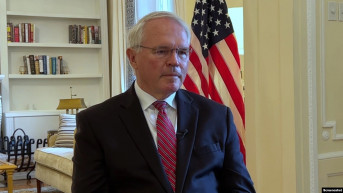
American Ambassador Christopher Hill says that if we leave the past, which had both good and bad moments, and turn to future cooperation, we will achieve great joint success, Republika reports.
In an interview with the Serbian Telegraph, Hill spoke openly about the Kosovo problem, Washington's determination to honor all signed agreements between Belgrade and Pristina, about requests to impose sanctions on Russia, as well as about the bombing of Serbia. Hill expects an even greater number of American investments in Serbia. He is also convinced that the two countries will once again be sincere friends and allies, as they once were.
What are the relations between Serbia and America at the moment?
They are definitely going in the right direction, but there is still a lot that we should do and make up for what we have missed, but I am optimistic because we have progressed and we should continue to progress. It's a natural relationship that will only get better in the future. I would like our economic and trade relations to intensify and for there to be as many investments as possible in Serbia. In addition, I would like more people from Serbia to travel to America and from America to Serbia.
What is our biggest stumbling point? Is it Kosovo or are they sanctions against Russia?
As far as Kosovo is concerned, it is necessary to keep the process within the political framework in order for the negotiations to continue without the crises that seem to appear every other week. When it comes to sanctions against Russia, I understand that it is a complicated issue for many Serbs. However, it is not complicated to understand what Russia did, that it attacked its neighbor in a very brutal way. It is necessary for Russia to understand that it has to stop and the whole world should be united on this issue, and sanctions are the right way. I understand the complexity of the situation, but we must all try to be united in this so that Russia stops this terrible aggression.
The majority of Serbs love Russia, is the insistence on sanctions and distancing from Moscow the reason why the popularity of the West is at a low level here?
I understand that there is a high level of frustration among Serbs due to the fact that they have been waiting so long for membership in the European Union, already 17 years. It is a great source of dissatisfaction. And when we talk about Russia and those emotions, I understand that there is a historical and cultural background to those relationships and feelings. But people should understand that what Russia is doing today is not in accordance with the tradition of Russian friendship. This is a completely different situation and we have to understand that. What Russia is doing to a neighboring country today is terrible. Russia is bombing residential buildings where people live simply to make life difficult for them. As we sit here and talk, people in Ukraine are victims of bombings, they are left without electricity... We must be honest and see what Russia is doing today and act accordingly. I am not saying that one day Russia will not be a normal country again, but today it is not.
Serbs survived the bombing, and they sympathize with Ukrainians very much. Our country condemned the Russian aggression against Ukraine. Do you think that the bombing in 1999 affected the bad image that America has among Serbs?
I have to remind you that it happened 23 years ago. It is the same as if in 1968 we are talking about the events of 1945. I personally am very sorry that this happened in our history and I am not happy about it. But at some point people have to turn to the future, to move on. To try to learn something from the past, but not to be its hostages and slaves to the past. I came here after 23 years, with the expectation that we can do much more together. We share some of the same values and views on the world, and I think we should focus on that, and not on something that happened 23 years ago.
You participated in the Rambouillet talks. Could Serbia have done something then to avoid the bombing?
My role in Rambouillet was to try to get Kosovo back to the degree of autonomy it had in the past. Rambouillet did not deal with the independence of Kosovo, that came much later and I did not participate in that. In Rambouillet, it was important to find common points, something that could bring the two sides closer and see what kind of relations they could build in the future. What happened to prevent it, I have my own opinion on that, but I would leave that to the historians because it is much more important for me to see what can be done for the future.
We all want peace in Ukraine as soon as possible, it is normal and human. What confuses the citizens of Serbia is the question of how it is possible to respect the territorial integrity of Ukraine and not respect the territorial integrity of Serbia. And Resolution 1244 confirms that.
If you look from the perspective of a historian, and you probably do, then you look back and think about what could have been achieved. However, if you are a diplomat, you try to look ahead, to find elements in today's world and see how these elements can be put together in a way that countries can live together. That's my job here, and I'd like to develop the relationship between the US and Serbia, and we've had some good times as well as some bad times, and we should try to move forward. That's the point I'm trying to make to you and your readers and viewers.
If we leave the past and look at the current situation, we will see that we have Serbs at the barricades, the patriarch of the SOC has been banned from entering Kosovo. It is obvious that there is no peace, no progress, that this is holding both Serbs and Albanians back.
A lot needs to be done to find a way out. We support the activities of the EU in the dialogue process, but we also support that, when some agreements are reached in the dialogue process, then we must work in accordance with those agreements. One of those agreements that was reached is to create the Community of Serb-majority Municipalities (CSM). It is known that Serbs live there, that they have lived there for centuries, and it is very important that while those Serbs in Kosovo live there, they must know what their future will be, on what basis their life in Kosovo will be organized. CSM is very important for them, it must be adequately implemented. Serbs living in Kosovo must feel that they can keep their ties with Serbs in Serbia itself, that they can move freely and with such problems we must try to find a solution through the political process. I understand that with the barricades, I understand very well that those barricades appeared as a form of protest because of how the Serbs were treated there, and I know that it is important to draw attention to that. But I also think it is important that those people who put up the barricades, now that the international community has clearly understood their message, should also remove those barricades. Regarding the ban on the entry of the patriarch to Kosovo, it is absolutely crucial for the Serbs living in Kosovo who are believers, members of the SOC, to have the opportunity to meet the patriarch. I sincerely hope that what happened the other day will never happen again.
And what do you say about Kurti's statement that there are members of "Wagner's group" at the barricades?
First of all, let me say that Mr. Kurti's statement speaks for itself. I would not comment on it, I am not his spokesperson.
President Vucic, with whom you have good communication, recently said that we had six agreements regarding Kosovo, but that the international partners did not respect those agreements, and that we did't actually know which one was valid, which one needed to be fulfilled, which one was the most important?
When agreements have already been reached, the mediators, especially Mr. Escobar, as the representative of the United States, have made it clear that the United States believes that all agreements should be implemented. We can now look back and argue about who is to blame, but that would take a lot of time. What is important and what is in the interest of everyone, including the Government of the United States of America, and I represent it, is to move forward and do some new things that will help all our peoples have a better life.
Washington, you, Escobar openly supported the "Open Balkans".
When we talk about the "Open Balkans", it is clear that the Balkans will benefit from open borders. If you from Serbia, for example, live in Novi Sad and are planning a vacation, you should be able to just get in your car and drive all the way to Albania without stopping at various borders and arrive at the beach in Durres and enjoy it there. We should make an effort so that borders unite us, not divide us. The bigger the market is established here, the more American and other companies will be interested in coming here.
Can we expect new American investments in Serbia?
There is no question at all that there will be even more investments. American companies see what is happening in Serbia and see inspiration in it. The fact that all our IT companies have established their research departments (R&D) here shows that they have full confidence not only in the value of their investments but also in the value of Serbia and its new generation. In the technology centers that American companies have opened here, people from Serbia work, not from America. The reason for this is that we have great confidence in the workers from Serbia.
What will be the focus of cooperation in the coming year?
If you ask me about 2023, I would say that the main things will be in the field of energy because we need clean, green energy. I would ask for changes there because I think that Serbia needs help in that field, and American companies have a lot to offer Serbia.
Of course, I'm not a businessman, I'm not giving out business information, I'm just saying my opinion that I think this is the area where we can cooperate the most.
You announced the strengthening of cooperation. They get the impression that Washington will not pursue a policy of pressure and blackmail as it has been experienced so far. And that makes us happy.
I really don't believe in pressure or blackmail. I believe in the power of logic and good will and in the feeling of optimism. Because without optimism you can't even make progress.
Is military cooperation between Serbia and America possible?
I have repeated many times that we value Serbia, as a friend and as a partner, and depending on what Serbia decides in the future, we would also value it as an ally, again as an ally because we were once allies. I would like to see more military cooperation, but we can't just push it from our side. We must be sure that Serbia also wants it.

comments