
Lajcak: EU Intends to relaunch talks between Belgrade and Pristina at the leadership level
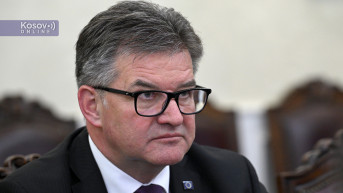
Miroslav Lajcak, the outgoing EU Special Envoy for the Serbia-Kosovo Dialogue, has stated that the dialogue between Belgrade and Pristina is in a better state than when he started his mandate in the spring of 2020, although normalization of relations has not progressed. In a farewell interview with RTS, he mentioned that the EU plans to relaunch talks at the leadership level following elections in Kosovo. He emphasized that the Union is preparing proposals for both sides in a process that will be led by the European Chief of Diplomacy, Kaja Kallas, with the support of experienced Danish diplomat Peter Sorensen.
Lajcak cited "enormous mistrust between the two sides," violence in Zvecan, and a "terrorist act" in Banjska during 2023, as well as a series of unilateral moves by Pristina detrimental to the Serbian population in Kosovo, as reasons for the failure in implementing agreements from Brussels and Ohrid.
Lajcak acknowledged that in 2024 the dialogue lost momentum and was not a main priority for leaders during a year that was electoral both in Europe and America.
Mr. Lajcak, how do you assess the current state of the Belgrade-Pristina dialogue and the normalization of relations compared to the spring of 2020 when you began your mandate?
I began dealing with the normalization of relations between Kosovo and Serbia in April 2020. At that time, dialogue did not exist; there had been no dialogue since 2018. My first task was to revive the dialogue and bring it back to Brussels. We managed this quite quickly, with the first leaders' meeting in July of that year.
To date, we have had 14 leaders' level meetings and 31 at the level of chief negotiators. I have visited Belgrade and Pristina 28 times each. We have also had numerous meetings with leaders at international gatherings. We have achieved concrete results: a solution for the issue of missing persons, a resolution for the energy situation in northern Kosovo, and travel with personal ID cards.
The most important outcome is the so-called Ohrid Agreement on the path to normalization that we reached in February and March 2023. This is a roadmap towards normalization that is in everyone's interest. Unfortunately, although the dialogue is in a much better state than before the start of my mandate, normalization has not occurred.
The answer to why is that we have had numerous crises, and very often, instead of making progress in relations and normalization, we had to deal with crisis management and de-escalation. It is not realistic to think that normalization can occur in an atmosphere of escalations and crises.
Belgrade and Pristina reluctantly and under pressure accepted the agreement on the path to normalization, but they never implemented it. What is the main reason for this?
We proposed the agreement to both sides, and both sides accepted it. I think it is the best possible agreement under the current circumstances, resolving many issues. It is true that, although the agreement concluded the negotiation process, we were not able to enter the implementation process. The main reason is a lack of trust between the two sides in the dialogue and a lack of trust that if one side does what is required of them, they will receive what has been promised.
We tried to bridge this lack of trust by proposing as many as eleven versions of a paper with a schedule of steps. The philosophy was that one side takes a step, and the other side takes a step, so that it proceeds in parallel and we can immediately see where we stand.
This principle was accepted, but to this day we have not been able to make a real step forward for several reasons, due to the political crisis that has been practically dominant since the second half of 2023. On the other hand, I must admit that both sides did not have trust that the EU had an attractive offer for them that would follow if they did their part. That needs to change in the next phase.
Are you referring to progress towards the EU or other benefits?
Yes, the dialogue is absolutely connected to the European path and must be seen in the context of the European paths of Serbia and Kosovo. We have numerous conclusions from European bodies stating that for Serbia and Kosovo, the path goes through the normalization of their relations, which is logical, as the EU cannot introduce members who do not have normalized relations.
As we know, this perspective has not been very visible and concrete in the last decade. The motivation that existed at the beginning of the dialogue, that each step in the dialogue means progress towards the EU, was no longer there. And that is the strongest instrument that the EU has.
However, that has changed: the European perspective and enlargement policy are back. They need to be more strongly connected with the dialogue and influence the dialogue.
Is it key to the failure to implement that after 12 years since the agreement on the formation of the CSM it has still not been formed, which Belgrade insists on? On the other hand, Pristina's objection is that the agreement was never signed and does not lead to membership in international organizations. Were these two issues key to blocking the agreement?
It is important to understand that the implementation of the agreement does not happen in a vacuum. We had a strong deterioration in the atmosphere very quickly after Ohrid. The Ohrid Agreement was in March, and by April we had local elections in Kosovo and Metohija, where Serbs did not participate, and we got the results we got.
Then in May, we had an attack on KFOR and protests in Zvecan, then EU measures against Kosovo, then the terrorist act in Banjska. This so worsened the atmosphere and trust that it was not possible to have a leaders' level meeting.
Prime Minister Kurti set three prerequisites for his further engagement in the dialogue. We spent the entire year 2024 conducting talks at the negotiator level, solving specific problems, but these big issues can only be resolved at the leaders' level.
In that context, there was no room for a breakthrough and progress. Of course, 2024 was an electoral year both in the EU and in the USA, so the issue of dialogue and normalization was not a key issue for top leaders on either side. I am glad that the dialogue has continued, but normalization has not.
Does this mean that the dialogue lost momentum last year? During 2024, you were mainly involved in unsuccessful attempts to resolve certain unilateral actions, related to the use of the dinar and the functioning of Serbian institutions.
The dialogue did lose momentum, unfortunately, it's no secret, as a result of the escalations we had from April, May 2023. On one hand, the violence, and on the other hand, unilateral actions by the government of Kosovo, shutting down and closing institutions financed by Serbia and providing essential services to Serbs in Kosovo and Metohija, all this should happen within the framework of dialogue, not unilaterally.
You are well aware that the EU reacted to this and we tried to find a solution. We had eight or nine meetings where we exclusively dealt with the issue of banks and the use of the dinar, unfortunately, we failed to come to a mutually acceptable solution.
Last year was really more about not allowing the entire process to regress and showing that dialogue can yield concrete results. We are now in the election campaign phase in Kosovo and it is not a logical time to continue the dialogue, but the EU is preparing to very actively restart the process at the highest level.
What awaits your successor Peter Sorensen, what should he and High Representative Kaja Kallas do to achieve results?
We have a very good analysis of the situation and we know well that, especially since last fall when Kosovo entered the election campaign, we need to deal with specific issues. We had three main negotiator meetings during the fall and winter.
We sat for hours and discussed a range of issues very specifically. The public doesn't see much of this and I know that the leaders' meetings are the most attractive. We are preparing for the EU to start discussions at the highest level after the elections in Kosovo. The new EU High Representative for Foreign Affairs and Security Policy, Kaja Kallas, has clearly stated that she will be directly involved and that she wants to lead this process. The EU's position is being prepared, a proposal for both sides. I cannot, of course, talk about it in detail now. My successor Peter Sorensen, who is an experienced diplomat and well-acquainted with the Balkans, will be there to assist Kaja Kallas in this task.
What impact will the new administration of President Donald Trump have on the dialogue? During his last term, there was no coordination between Brussels and Washington, how crucial will this be this time?
I would not like to speculate. It is evident that "Trump 2" is different from "Trump 1", that the work is much better organized and that people know what they want to achieve. Experiences from the previous administration cannot be mechanically transferred for this reason.
Secondly, for the Balkans, there is only one positive perspective, and that is the European perspective. This is known to Americans, both Democrats and Republicans, and they have never disputed that their role is to help in this. I expect that to be the case in the coming months.
It is important that contacts at the EU and US level are established as quickly as possible and that an agreement is reached on a joint approach towards the Western Balkans, where the EU should lead, for objective reasons, but can rely on the support and understanding of America.
You have already mentioned the broader context of the EU enlargement policy. There has been talk for some time about a new momentum for the admission of the Western Balkans. How well positioned is Serbia to take advantage of this momentum? Can the current political crisis affect the accession negotiations, as it reveals weaknesses in the functioning of democracy and the rule of law?
Enlargement has returned to the EU agenda. It may have taken 15 years when we talked about it, but it was not one of the priorities. Today it is. This commission is the enlargement commission. It is actively preparing for this, we have some new instruments such as phased integration, a growth plan for the Western Balkans.
It took about two years to convince partners in the Western Balkans that this time the EU's intention is truly serious. It should be openly said that the reason for this is geopolitical – the war in Ukraine and the EU's readiness to open its doors to Ukraine, thereby reopening the doors for the Balkan countries.
Geopolitics has created the moment we now have, but geopolitics will not bring individual countries into the EU. Now the question is which country will seize this moment to finish the job and enter the EU while the doors are open, because they will not be open forever.
Serbia is a serious country with great potential. It was very close to opening cluster 3 in December. This process continues. The Director-General Koopman was recently in Belgrade and I think he conveyed clear messages about what is expected. It is important, of course, that the conditions from the negotiating framework are met.
The current political crisis needs to be resolved through dialogue among domestic actors. Goodwill should be demonstrated and democratic principles and the rule of law respected. This is very important and I believe that Serbia has the potential to solve the problem with its own strengths and move forward.
0 comments