
Rohde: Kosovo should implement the agreement on the Association, Serbia should accept that Kosovo is a sovereign state
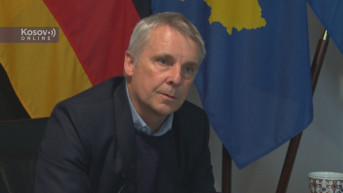
German Ambassador Jorn Rohde will leave Pristina on Friday after five years in Kosovo, and he will be succeeded in this post by Rainer Rudolph. In his farewell interview with Kosovo Online, Rohde spoke about the Brussels dialogue, the establishment of the Community of Serb Municipalities, Banjska, Serb self-governance of health and education institutions within the Kosovo system, and that Serbia should accept that Kosovo is a sovereign state in every respect.
During the last months, we have often witnessed the closure of Serbian institutions in Kosovo, the indignation of the diplomatic corps in Kosovo that it was done in such a way and without coordination, but these actions and closures continued.
Can the Quint, that is, the international community, prevent such actions and measures by the Government of Kosovo?
Germany, the Quint, and especially the EU have been working tirelessly to assist Kosovo and Serbia in normalizing their relationship and implementing the binding agreements on the establishment and integration of communities and institutions. The goal of both the international community and the Kosovar government is to even the path towards accession to the EU and international organizations, whilst ensuring sustainable peace. In my five years as ambassador, we have come a long way. Ten years after the original agreement on normalization was signed in 2013, we played a key role in initiating an EU-led follow-up agreement in 2023 – the Ohrid agreement – where the roadmap to normalization was substantiated. Both the Kosovar and the Serbian Governments agreed. I see successes: we have an Energy agreement ending the absurd situation that nobody in the North paid water/energy bills. We are working on legalizing documents. I admit, I wish the process would go faster, and decisions are often executed like a campaign and not as an administrative undertaking. We have never questioned the goals like, i.e., recognizing license plates or basically using one currency, but we criticized the mode of operation.
Now it is up to the elected policy makers to follow through with their commitments, which include, i.e., the creation of the Association of Serb-majority municipalities and the integration of health and education institutions into Kosovo’s institutional system. Germany, the EU, and the international community stand by Kosovo’s side, ready to advise and assist. But only Kosovo itself can do the work, establish the communities, and ensure that vital health and educational institutions remain functioning.
Is the position of the Serbian community in Kosovo at this moment better or worse compared to when you first arrived as the German ambassador?
This is first a question for the Kosovo-Serbs to reply to. After five years in Kosovo, clearly, the situation remains challenging. I think the Kosovo-Serb minority feels sandwiched between demands from Pristina to fully integrate and opposite signals from Belgrade, which continues to propagate narratives along the lines ‘Kosovo is Serbia’.
The Banjska attack was a big drawback. The main political representatives of the Serb List from the Kosovo-Serb community unfortunately never distanced themselves from this terror-style attack carried out by the self-confessed ring leader Milan Radoicic, the former deputy SL chairman. Using violence to achieve political means is and remains unacceptable. With the Brussels/Ohrid agreements, we clearly have a roadmap to normalization, which could positively affect the lives of Kosovo-Serbs. One clearly cannot represent and improve the lives of the minority community if you withdraw your representatives and elected officials, as SL did after 2023. Boycott was and is surely a recipe for disaster.
“Kosovo should begin implementing the Association of Serb-majority Municipalities”
If only Governments on both sides would act accordingly and negotiate in good faith. The Government has to reach out to the minority and accommodate them, and vice versa. The minority has to demonstrate that they see Kosovo also as their state. A good example was the decision by the Kosovo Government to finally implement the Constitutional Court decision on the Visoki Decani Monastery. That clearly is proof that minority rights will be upheld and enforced. Acting in good faith for me means that Kosovo starts implementing the ASMM - meaning to have self-governing Kosovo-Serbian health and education institutions within the Kosovo system, and Serbia accepting that Kosovo is a sovereign state in all its forms. It was an anomaly to have post offices of another country in Kosovo or to have used only the dinar in the North. The Danish minority in Germany also uses German post offices or the Euro, and the German minority in Denmark naturally uses the Danish Kroner and Danish banks/post offices. That is the normalcy all citizens need. It is good to see that for the upcoming local elections, there is a good number of Kosovo-Serb parties competing for votes. This is a message I wish for: participation, integration and cooperation. Only then it is possible to positively shape your destiny – and hopefully in the near future live and work together as EU citizens. In the EU, citizens follow the motto ‘unity in diversity’: nobody has to give up their ethnic, religious, or cultural identity.
Do you expect the Brussels dialogue to be successfully concluded within a reasonable period of time, and when will the Government of Kosovo establish the Community of Serb Municipalities?
As I just stated, it is in the interest of the international community and the Kosovar government alike, as well as all Kosovar citizens and communities, to swiftly advance the Dialogue and lay the path for accession to the EU. However, each party must do their part and fulfil their commitments. Kosovo must first and foremost constitute its assembly and form a new government. Kosovar citizens have been waiting for over half a year to be duly represented and the country is slowly losing financial and political support the longer this democratic representation of its citizens is missing. Again, Germany and the EU are ready and eager to assist, but Kosovo must first show it is taking the Dialogue and its commitments to normalization, like starting to implement the Association of Serb-majority Municipalities, seriously.
What message would you send to the Albanians in Kosovo, and what message to the Serbs, before you leave Pristina?
My messages would be to all citizens and their political representatives in Kosovo. We want you – Kosovo and all Western Balkan countries – in the EU asap. We see so much potential for a peaceful and prosperous region, integrated into the international community and institutions and already surrounded by EU countries. And this potential is shaped by each and every citizen. I have seen young people setting aside their differences, coming together and working on a shared vision of the country’s and the region’s future, uniting through art and activism. I see so much capability, hope, and hard work in each Kosovo citizen, regardless of religious or ethnic background. My message to all Kosovo citizens is to aim to see the commonalities, not the differences, the individual human, not the ethnicity, and to strive towards a common goal of peace and respect. To the political leaders, my message is to develop and improve the skill of compromise. That is a sure path to realize normalization and, at the same time, make your EU aspiration come true. Because together, citizens of Kosovo can achieve so much. I will always believe in Kosovo’s potential and keep each and every citizen of Kosovo close to my heart.
0 comments